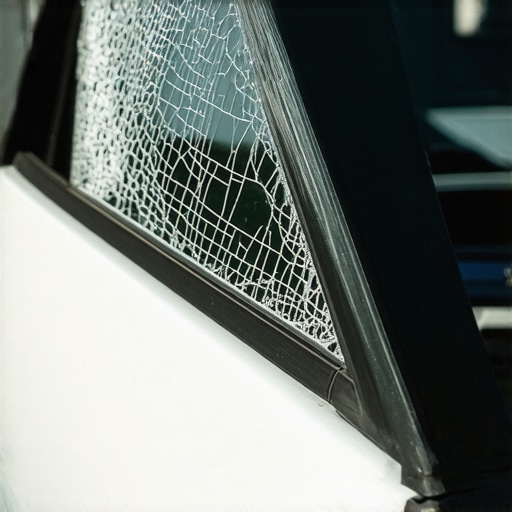
The specific reason your diesel vibration keeps cracking your windshield glass
The Specific Reason Your Diesel Vibration Keeps Cracking Your Windshield Glass
You’ve seen it before: a tiny chip appears on Monday, and by Friday, a jagged line has migrated across your entire field of vision. For owners of diesel-powered trucks and SUVs, this isn’t just bad luck – it is an expensive, recurring nightmare. Many drivers assume it’s simply the harsh roads of New Mexico or a stray pebble from a passing semi-truck. However, as an expert in engine management systems and automotive electronics, I’ve seen a much more insidious culprit at work. My name is Billy Matlock, and I’ve spent years diagnosing the complex relationship between mechanical frequencies and structural integrity. The truth is, your windshield isn’t just breaking; it is being “shaken to death” by your engine.
The unique vibration profile of a diesel engine creates a high-stress environment that most automotive glass isn’t designed to withstand indefinitely. When your vehicle has a pre-existing weakness, such as a minor chip or a compromised seal, the constant mechanical energy from the engine acts like a hammer, driving the crack further into the glass every time you turn the key. If you are constantly searching for auto repair near me because your glass just won’t stay intact, it is time to look under the hood rather than just at the road.
The Physics of Diesel: Why It’s Harder on Glass Than Gasoline
To understand why diesel engines are so much harder on windshields, we have to look at the fundamental physics of combustion. In a standard gasoline engine, a spark plug ignites a fuel-air mixture in a relatively controlled explosion. Diesel engines, however, utilize compression ignition. They compress air to such an extreme degree that the resulting heat ignites the fuel spontaneously. This requires much higher cylinder pressures – often double or triple those of a gasoline engine.
These massive “combustion forces” make diesel engines the workhorses of the automotive world, but that power comes at a significant cost: intense mechanical shaking. Every time a cylinder fires in a diesel engine, it sends a shockwave through the engine block, the frame, and ultimately, the glass. This is why diesel trucks have that characteristic “clatter” and a more pronounced vibration at idle. These vibrations are not merely cosmetic; they are structural stressors.
Environmental factors in our region exacerbate this issue. In the high desert, extreme temperature swings are common. This thermal stress interacts poorly with mechanical vibration. For instance, there is a specific reason why a cold windshield cracks faster when the defroster hits it; the rapid expansion of the inner layer of glass creates tension that the engine’s vibration then exploits to “zip” a crack open. When you combine the violent combustion of a diesel engine with the intense heat of the Southwest, your windshield becomes a focal point for mechanical failure.
The “Specific Reason”: Harmonic Resonance and Torsional Vibration
While general shaking is a problem, the “specific reason” your glass keeps failing often comes down to unbalanced engine parts and the concept of harmonic resonance. Within your engine, the pistons, connecting rods, and crankshaft are all moving at incredible speeds. If these components are not perfectly balanced, they create rhythmic pulses of energy. In the world of high-end diagnostics, we refer to this as “Torsional Vibration.”
Torsional vibration is the subtle twisting and untwisting of the crankshaft as it reacts to the power strokes of the pistons. If the engine is poorly maintained or if internal components have begun to wear, these vibrations become erratic and powerful. Every object has a “natural frequency” – the speed at which it naturally wants to vibrate. When the torsional vibrations of an unbalanced engine match the harmonic resonance of your windshield glass, the energy is amplified. This is the same principle that allows an opera singer to shatter a wine glass. Your engine is essentially “singing” at a frequency that your windshield cannot handle.
Research into diesel engine vibration analysis shows that these imbalances cause significant fatigue in vehicle components and can even lead to loose fasteners throughout the chassis. If your truck is experiencing these issues, you need a specialist who understands the intricacies of heavy-duty powerplants. Seeking out a qualified diesel mechanic las cruces is the first step in identifying whether your engine is out of balance. Without addressing the root cause of the vibration, you are simply treating the symptom every time you replace the glass.
How Engine Misfires and Fuel Injection Faults Accelerate Glass Failure
A “rough idle” is often dismissed as a minor annoyance, but for your windshield, it is a death sentence. In a diesel engine, fuel injection timing is everything. If one injector is “lazy” or if there is a slight misfire, the engine no longer produces a smooth, continuous flow of power. Instead, it creates “periodic spikes” in vibration. These spikes are much more damaging than a steady hum because they represent sudden, violent shifts in the load placed on the vehicle’s frame.
In the Las Cruces environment, we deal with intense solar radiation that causes automotive glass to reach high temperatures. When glass is hot, it expands and becomes more flexible, but it also becomes more sensitive to sudden shocks. A fuel injection fault that causes the engine to “lope” or shudder at a stoplight sends a series of percussive waves directly into the windshield frame. If you have been searching for an Auto Repair Shop las cruces to fix a recurring engine stutter, you might be saving your windshield in the process.
These misfires often go unnoticed by the average driver because modern diesel engines are so powerful they can “mask” a weak cylinder. However, the chassis feels it. The glass, being the largest rigid surface on the vehicle, acts like a drumhead, absorbing and amplifying these injection-driven vibrations until the molecular bonds of the glass – or the resin used in a previous repair – simply give up.
The Role of the Chassis: From Engine Mounts to Windshield Frame
The path the vibration takes from the engine to the glass is just as important as the vibration itself. Your vehicle is equipped with engine mounts – heavy-duty rubber or hydraulic insulators designed to “soak up” the engine’s movement. Over time, especially in high-heat climates, these mounts dry out, crack, or collapse. When this happens, the engine’s shaking is no longer isolated; it is bolted directly to the “ears” of the frame.
The windshield in a modern truck is not just a piece of glass to look through; it is a structural component of the vehicle’s cab. It provides up to 30% of the structural integrity of the roof. When engine mounts fail, the cab begins to twist and vibrate in direct sympathy with the engine. This puts immense “shear stress” on the edges of the glass. If the seal is compromised, the problem is even worse. Knowing how to spot a bad windshield seal before it leaks can save you from both water damage and vibration-induced cracks.
If you notice your steering wheel or rear-view mirror shaking excessively at a red light, your engine mounts are likely failed. This is a critical time to look for Car repair shops near me to perform a full chassis and mount inspection. If the mounts aren’t doing their job, the windshield becomes the primary shock absorber for the engine’s torsional energy.
Why “Cheap” Repairs Can’t Withstand Diesel Vibrations
Many drivers opt for the cheapest possible glass repair, often through mobile services that prioritize speed over quality. While a “parking lot fix” might work for a small gasoline-powered sedan, it rarely holds up on a diesel truck. The reason lies in the chemistry of the repair. High-frequency diesel vibrations can actually prevent repair resin from bonding correctly if the environment isn’t perfectly controlled.
Professional technicians understand that the specific way professional resin cures under a UV lamp is vital for creating a bond that can withstand mechanical stress. If the resin is low-quality or if the technician skips steps, the vibration of the engine will cause the resin to “pop” or pull away from the edges of the original crack. This is also the reason your windshield resin didn’t clear the visual break – vibration during the curing process introduced micro-bubbles into the repair.
Furthermore, why professional glass techs use a primer before the glue is a matter of longevity. On a vibrating diesel platform, the bond between the glass and the frame must be absolute. Cheap repairs often skip the high-quality primers and specialized adhesives required to dampen vibration. Ultimately, the real cost of a cheap mobile glass repair is having to pay for a full windshield replacement just a few months later when the engine’s harmonics finally win the battle against the sub-par resin.
Diagnostic Steps: Is Your Engine Killing Your Glass?
If you suspect your engine is the reason for your glass woes, there are a few diagnostic steps you can take before visiting a Mechanic Shop Near Me. Use this checklist to determine if your engine’s vibration profile is out of spec:
- The Idle Growth Test: Does a small crack seem to grow specifically while you are sitting at a stoplight with the engine idling? This is a classic sign of harmonic resonance.
- The RPM “Popping” Sound: Do you hear a faint “cracker” or “popping” sound coming from the dashboard when you accelerate through a specific RPM range? This indicates the frame is flexing the glass.
- Mirror and Steering Shaking: Look at your side mirrors while idling. If they are blurred or shaking visibly, your engine mounts or internal balancing (piston slap/unbalanced crankshaft) are sending excessive energy through the chassis.
- Impact Compounding: In Las Cruces, hitting a pothole or a speed bump adds a “large vibration” to the existing “minor vibrations” of the engine. If a crack only spreads after hitting a bump while the engine is under load, the engine’s base vibration has already “primed” the glass for failure.
If your vehicle fails any of these tests, simply replacing the glass is a temporary fix. You need a comprehensive diagnostic to ensure your engine is running smoothly and your mounting system is intact. Searching for auto repair near me should lead you to a shop that looks at the vehicle as a complete system, not just a collection of unrelated parts.
Conclusion: Solving the Root Cause
While road debris is a common cause of glass damage, the recurring nature of windshield cracks in diesel vehicles is almost always linked to engine vibration and harmonic resonance. By addressing unbalanced engine parts, fuel injection faults, and worn mounts, you can protect your vehicle’s structural integrity. Visit Mango Automotive today for a full diesel diagnostic and stop the cycle of broken glass for good.