Why your windshield might whistle at high speeds
There is a specific, piercing frequency that only a glass professional truly understands. It is that high pitched tea kettle whistle that begins the moment your speedometer crosses the 60 mph threshold. For most drivers, it is a nuisance. For a master glazier with 25 years of experience, it is a siren song of a failed installation. When your windshield whistles, it is not just making noise; it is telling you that the structural integrity of your vehicle’s most important safety component has been compromised. A windshield is more than just a piece of transparent material; it is a structural member of the vehicle that is engineered to manage wind pressure, support the roof in a rollover, and provide a surface for airbag deployment. When that seal is broken, even by a microscopic margin, the physics of air pressure take over.
The Installation Autopsy: A Case of Neglected Priming
I once inspected a late model sedan where the owner complained of a whistle so loud they had to wear earplugs on the highway. They had gone to a budget mobile service that promised a same-day turnaround. I pulled the cowl and the side moldings, and what I found was a classic example of why the caulk-and-walk methodology is a plague on our industry. The previous glass installer had used a cold knife to strip the old urethane but had been careless, scoring the paint on the pinchweld down to the bare metal. Instead of applying a proper corrosion inhibiting primer, they simply laid a fresh bead of urethane over the scratches. Over six months, moisture became trapped, oxidation set in, and the bond between the urethane and the metal failed in a three inch section. That gap was the source of the whistle. This is why I always tell my clients that a cheap glass installer is the most expensive mistake you can make. You are not just paying for the glass; you are paying for the chemistry of the bond.
“The seal between the glazing unit and its frame must be continuous and free of voids to ensure both the structural and acoustic design parameters are met.” – NFRC 101: Procedure for Determining Thermo-Physical Properties
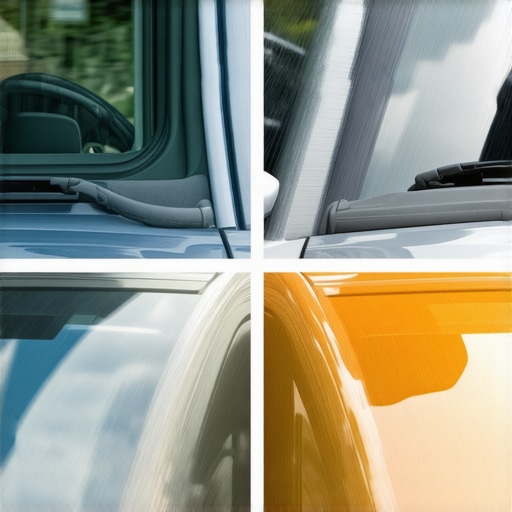
To understand the whistle, you have to understand Bernoulli’s principle. As your car moves forward, it displaces air, creating a high-pressure zone directly in front of the glass and a relatively low-pressure zone inside the cabin. If there is a void in the urethane bead, the air is forced through that narrow opening at high velocity. This creates a vibration, much like the reed in a woodwind instrument. The smaller the hole, the higher the pitch. If the hole is large, you might just hear a rush of wind, but a whistle indicates a tiny, pressurized leak that is often the result of a skipped step during the installation process. This is common in same-day services where the technician is pressured to move to the next job and doesn’t allow for the proper flash time for primers or fails to ensure the glass is perfectly centered in the rough opening of the vehicle frame.
[image_placeholder_1]
The Role of Chip Repair and Surface Integrity
Sometimes the whistle doesn’t come from the seal at all, but from the surface of the glass itself. A rock chip or a deep pit can disrupt the laminar flow of air across the windshield. When air hits a jagged crater left by a stone, it creates turbulence. If that chip is deep enough, it can create a localized whistle. This is where a professional chip repair becomes critical. A master glass installer doesn’t just fill the hole with resin; they ensure the resin is vacuum-injected to remove all air and then polished flat to the original plane of the glass. If the repair is left proud of the surface, or if it is concave, the wind will catch it. This is why I am skeptical of DIY kits; they lack the precision tools to restore the aerodynamic profile required for high speed travel. In our shop, we treat every chip repair as a structural restoration, ensuring that the refractive index and the surface tension are matched to the factory specifications.
“Any deviation in the bead consistency or a failure to properly prime the pinchweld substrate will lead to a compromise in the air-barrier integrity.” – ASTM E2112 Standard Practice
Urethane Chemistry and the Physics of the V-Bead
The secret to a silent windshield is the geometry of the urethane bead. A professional glass installer uses a V-cut nozzle to apply the adhesive. This specific shape ensures that when the glass is set, the urethane collapses outward from the center, forcing out any air pockets. If a technician uses a round bead, air can become trapped inside the adhesive, creating a tunnel that eventually leads to a whistle or a leak. Furthermore, we have to consider the Shore A hardness of the cured urethane. If the adhesive is too soft, the glass will shift under wind load, potentially opening up gaps. If it is too brittle, it may crack under the thermal expansion and contraction of the metal frame. We use high-modulus, non-conductive urethanes that are designed to maintain their shape even under the extreme pressure of 80 mph winds. This isn’t just about stopping a noise; it is about ensuring that the glazing bead remains a permanent part of the car’s structure. We also pay close attention to the weep hole locations in the cowl. If these are blocked by excess adhesive or debris, water can back up and eventually find its way into a tiny pinhole in the seal, which then leads to both a whistle and a wet floorboard.
The Critical Importance of the Pinchweld and Shims
When we perform a full frame tear-out for a windshield replacement, we are looking at the pinchweld like a builder looks at a rough opening. It must be clean, flat, and structurally sound. We use plastic shims to ensure the glass is held at the correct height while the urethane cures. If the glass sinks too low into the frame, the moldings will not sit flush, and the air will catch the edge of the trim, creating a whistle. Many modern vehicles use complex moldings that act as a glazing bead to divert air over the roof. If these are not seated perfectly, or if the clips are broken during a rush job, the wind will vibrate the plastic against the glass. This is the difference between a mobile service that is done in thirty minutes and a professional installation that takes the time to check every tolerance. A whistle is a diagnostic tool that tells us exactly where the installer failed. Whether it is a lack of primer, a poorly cut urethane bead, or a misaligned molding, the sound is an indicator of a job that was not done to the highest glazing standards. If your windshield is whistling, do not wait. It is not just the sound of air; it is the sound of a seal that could fail when you need it most. Seek out a specialist who understands that the science of glass is the science of safety.