The 2-minute check for a safe windshield repair
The 2-Minute Check for a Safe Windshield Repair: Technical Standards for Glass Integrity
When you have spent over two decades as a master glazier, you stop seeing glass as a static object and start seeing it as a dynamic structural component. In my 25 years of installing everything from curtain walls in skyscrapers to residential sash replacements, I have learned that a breach in the surface of any glass system is a countdown to failure. Most people look at a small chip in their windshield and think of it as a cosmetic annoyance. I look at it and see a compromise in the laminated safety system. I once sat across from a high-pressure mobile glass salesman who was trying to convince a customer that a three-inch long crack could be perfectly restored in a parking lot during a thunderstorm. I had to step in and explain the physics of the ROI on a proper replacement versus a cheap fix. He was selling a quick cure; I was looking at the structural load-bearing capacity of the glass. The homeowner didn’t realize that a windshield provides up to sixty percent of the structural integrity in a rollover accident. Buying into his pitch was like putting a vinyl window into a historic rough opening without a sill pan and expecting it not to rot the house out from the inside. It simply does not work that way. A windshield is not just a piece of glass; it is a sandwich of two layers of soda-lime glass bonded by a polyvinyl butyral (PVB) interlayer.
“Installation is just as critical as the window performance itself. A high-performance window installed poorly will fail.” – AAMA Installation Masters Guide
The Anatomy of a Breach: Why the 2-Minute Check Matters
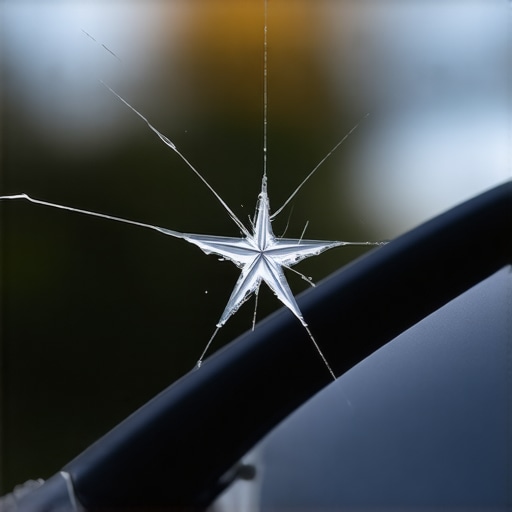
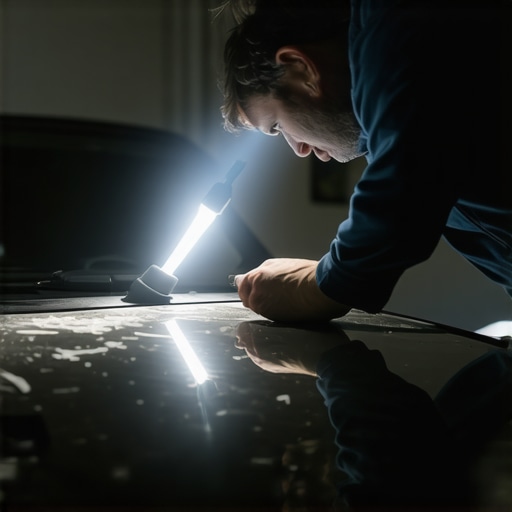
Before you commit to a chip repair or call a glass installer for mobile service, you must perform a technical autopsy of the damage. This takes two minutes but requires the eye of a professional. First, we look at the diameter. If the chip is larger than a quarter, the structural tension within the glass has already been compromised beyond the point where a resin can restore the original shear strength. Second, we examine the depth. If the impact has reached the PVB interlayer, moisture has likely already begun to cause delamination. This is where the “Shingle Principle” of glazing comes into play. Just as water flows down a roof, moisture trapped in a glass chip will migrate through capillary action into the laminate, eventually causing the glass to turn milky. A mobile service technician who ignores this is doing the equivalent of a “caulk-and-walk” window installation, where they hide the rot behind a bead of cheap sealant. A proper glass installer will check for the presence of micro-cracks radiating from the impact point. These are stress risers. In a cold climate like Chicago or Minneapolis, the moment you turn on your defroster, the thermal shock causes the glass to expand. If those stress risers are not properly filled with a resin that matches the refractive index and the thermal coefficient of expansion of the glass, the chip will spider-web across the entire surface instantly.
Thermal Dynamics and the Enemy of Glass
In the world of architectural glazing, we talk about the U-Factor and Solar Heat Gain Coefficient (SHGC). In automotive glass, we face the same enemies: heat loss and radiant energy. When your vehicle sits in the sun, the glass acts as a thermal collector. A chip in the glass creates a point of concentrated thermal stress. If you are in a southern climate like Phoenix, the SHGC is your primary concern. The glass is expanding at a different rate than the metal frame of the vehicle. Without a proper glazing bead of high-quality urethane, the glass cannot move independently, leading to a crack. When we perform a same-day chip repair, we are essentially trying to restore the glass’s ability to handle these thermal loads. The resin must be injected under vacuum to ensure no air bubbles remain. An air bubble is a pocket of insulation that creates a temperature differential. If that differential becomes too great, the glass will fail.
“The success of a glazing system depends on the compatibility of all components including the sealant, the glass, and the frame.” – ASTM E2112 Standard Practice
The Technical Checklist for a Same-Day Repair
To ensure a safe repair, you need to verify three technical aspects. First, is the location. If the chip is in the “acute area” directly in front of the driver’s vision, a repair is often insufficient because the resin, while clear, has a different refractive index than the original glass, which can cause ghosting or distortion. Second, check the distance from the edge. If the damage is within two inches of the perimeter, it is in the high-stress zone. This is the equivalent of a window’s flashing tape failing at the corner. The structural bond between the glass and the frame is under the most pressure here. Third, check the age of the chip. A fresh chip is clean; an old chip is full of road oils and windshield washer fluid. A glass installer cannot get a molecular bond if the rough opening of the chip is contaminated. Even the best mobile service cannot fight the laws of chemistry. If the resin cannot bond to the silica, the repair is purely cosmetic and offers zero structural reinforcement. We use shims in window installation to level the frame, but in glass repair, our “shim” is the hydrostatic pressure of the resin injection. If the pressure isn’t held for the correct dwell time, the repair will fail under the first sign of mechanical stress. Water management is a science, and glass integrity is a discipline. Do not settle for a service that doesn’t understand the dew point or the importance of a clean substrate. A safe windshield is your first line of defense, much like a properly installed sill pan is the first line of defense for your home’s framing.