The simple test for a high-quality glass resin
Why Most Glass Repairs Fail the Longevity Test
In my twenty-five years as a glass installer, I have seen the evolution of glazing from simple single-pane putty-glazing to complex, multi-layered laminate structures. When we talk about a chip repair, we are not just ‘filling a hole.’ We are performing a structural intervention. A window, whether it is in your car or your living room, is a managed barrier against environmental stress. When that barrier is breached by a rock chip or a stress crack, the structural integrity of the entire pane is compromised. Most people think any clear liquid will do the job, but that is the ‘caulk-and-walk’ mentality that destroys reputations and properties.
“Installation is just as critical as the window performance itself. A high-performance window installed poorly will fail.” AAMA Installation Masters Guide
A homeowner called me in a panic because their new windows were ‘sweating’ and the small chip repair they had done by a mobile service a month prior had turned a milky, opaque yellow. I walked in with my hygrometer and showed them the humidity was 60%, but the real culprit was the resin. It wasn’t the windows; it was their lifestyle and the low-grade material used by the previous tech. That resin had a refractive index that didn’t match the glass, and it lacked the UV stabilizers needed to prevent solar degradation. In the glass world, we don’t guess; we measure. Whether you are dealing with a sash in a historic home or a modern operable window, the physics of glass remain constant.
The Molecular Reality of Chip Repair
To understand why a high-quality glass resin matters, we must ‘Glaze Zoom’ into the chemistry. Glass is essentially a supercooled liquid, mostly silica. When it breaks, the jagged edges of the crack create air pockets. These air pockets have a different refractive index than the glass, which is why you see the dark line of a crack. A professional chip repair involves injecting a polymer resin into that void. But here is the catch: if that resin does not have the same Refractive Index (RI) as the soda-lime glass (typically around 1.51 to 1.52), the repair will always be visible. Cheap resins use lower-quality monomers that shrink significantly during the curing process. When the resin shrinks, it pulls away from the walls of the crack, creating a ‘daisy’ or a secondary halo that is often worse than the original damage.
The Simple Test: The Glass Slide Refraction Check
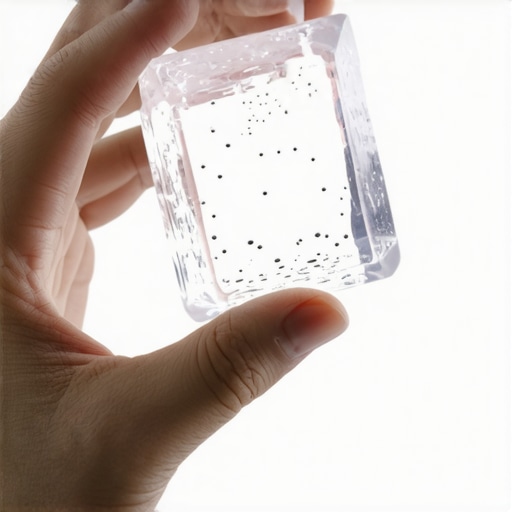
If you want to know if your glass installer is using the good stuff or the cheap bulk resin, ask for this simple test. Take a clean glass slide or a piece of scrap glass from a standard glazing bead. Place a single drop of the resin on the glass. If the drop disappears almost completely and becomes indistinguishable from the surface of the glass, the refractive index is a match. However, the real test is the UV exposure. A high-quality resin is engineered to resist the ‘yellowing’ caused by long-wave infrared radiation and UV light. If you cure a sample of that resin and it turns brittle or discolors after a few hours of sun exposure, it will fail in your window or windshield within months. This is particularly critical for a mobile service that performs same-day repairs; they often rely on fast-curing resins that sacrifice long-term stability for speed.
“The selection of sealants and resins must be compatible with the substrate’s thermal expansion coefficients to ensure long-term adhesion.” ASTM E2112 Standard Practice
Climate Logic: Why Resin Choice Depends on Your Zip Code
In the North, where I’ve spent many winters, the enemy is the freeze-thaw cycle. If you have a chip in a window near a rough opening that isn’t properly insulated with flashing tape or a sill pan, the glass will experience massive thermal swings. In Minneapolis or Chicago, the U-Factor is king. You need a resin with high elasticity. When the glass contracts in the cold, the resin must stretch. If it’s too rigid, it will pop out like a dry shim. In the South, like Phoenix or Texas, the Solar Heat Gain Coefficient (SHGC) is the priority. The radiant heat on a window can reach 150 degrees Fahrenheit. If the resin has a low Tg (Glass Transition Temperature), it will soften, lose its bond, and allow moisture into the laminate, leading to delamination.
The Importance of Professional Tools over DIY Kits
I often see homeowners trying to save a buck with a store-bought kit. These kits usually come with a simple suction cup and a syringe. A professional glass installer uses a bridge and injector system that can create a vacuum. You cannot just push resin into a crack; you must first evacuate the air. If air is trapped, the resin will never fully penetrate the ‘legs’ of the chip. Furthermore, professionals understand the ‘Rough Opening’ of the repair—the area of impact must be cleaned of microscopic glass dust and moisture. If you trap moisture in there, it’s like leaving a leak in a sill pan; eventually, the rot will set in, or in this case, the repair will cloud. Whether the window is fixed or operable, the mechanical pressure applied during the injection phase must be precise to avoid ‘flowering’ the crack further.
Structure and Integrity: Beyond the Surface
A window is an assembly. From the muntin bars to the glazing bead, every component serves a purpose. A chip repair is no different. We use a ‘Pit Filler’ for the surface impact and a thinner, high-capillary action resin for the internal cracks. This is the difference between a ‘same-day’ hack job and a master glazier’s work. The thinner resin must have a viscosity low enough to flow into cracks thinner than a human hair, yet strong enough to provide structural reinforcement. When we talk about the ‘Rough Opening’ of a window installation, we talk about tolerances. In resin repair, we talk about microns. If your installer doesn’t mention viscosity or curing wavelengths, they are just a ‘Tin Man’ with a different product.
The Final Verdict on Quality
Don’t be fooled by the ‘same-day’ promise if it doesn’t come with a technical guarantee. A high-quality resin repair should be virtually invisible and should last the lifetime of the glass. It should handle the expansion and contraction of the sash and the wind load pressures of a storm. Water management is a science, and so is glass repair. If you see a mobile service technician pulling out a bottle with no label, ask questions. Ask about the NFRC ratings of the glass they work on. Ask about their curing process. A true professional doesn’t mind the questions; they welcome the chance to show they aren’t just another caulk-and-walk installer.