The exact moment a windshield chip becomes an unfixable crack
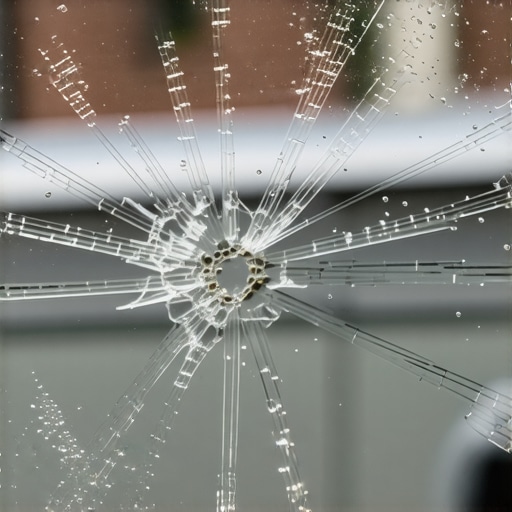
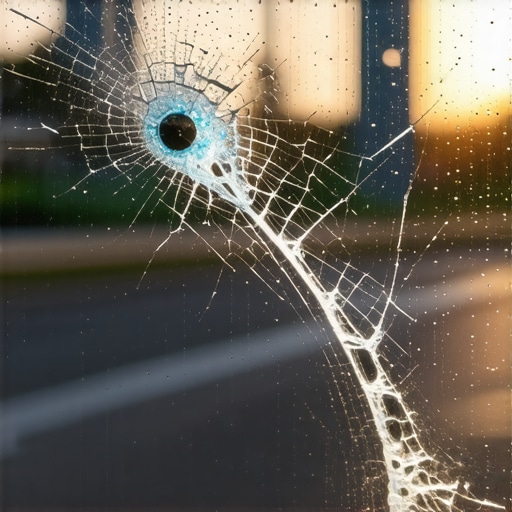
The sound is unmistakable. It is a sharp, metallic crack that resonates through the vehicle cabin when a piece of road debris strikes the glass at sixty miles per hour. Most drivers check their line of sight, see a tiny star or a bullseye the size of a nickel, and breathe a sigh of relief. They assume that because the glass did not shatter, the danger has passed. As a master glass installer with over two decades in the glazing industry, I can tell you that the moment of impact is only the beginning of a complex physical struggle between internal tension and external pressure. A windshield is not a static piece of material; it is a high-performance structural component under constant stress. Understanding the exact moment a chip transitions into an unrecoverable crack requires a deep dive into the molecular behavior of laminated safety glass and the thermal dynamics of your vehicle.
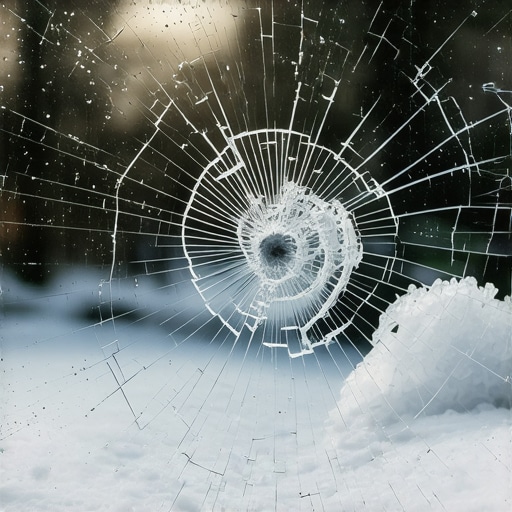
A vehicle owner called me recently in a state of utter confusion. Their car had been parked in the driveway for three days with a minor chip in the lower passenger corner. On the fourth morning, which happened to be one of our first freezing transitions of the season, they walked out to find a jagged line bisecting the entire glass surface. I arrived with my hygrometer and thermal sensors to explain the physics at play. It was not the wind or a second impact; it was the simple act of the morning sun hitting the dark frit of the glass while the interior remained at a freezing temperature. This thermal gradient created a stress fracture that the compromised glass could no longer resist. It was a classic case where a same-day mobile service visit could have saved the glass, but waiting for the weekend turned a fifty-dollar repair into a five-hundred-dollar replacement.
“The primary goal of a repair is to restore the structural integrity of the windshield and prevent the damage from spreading.” – National Windshield Repair Association (NWRA)
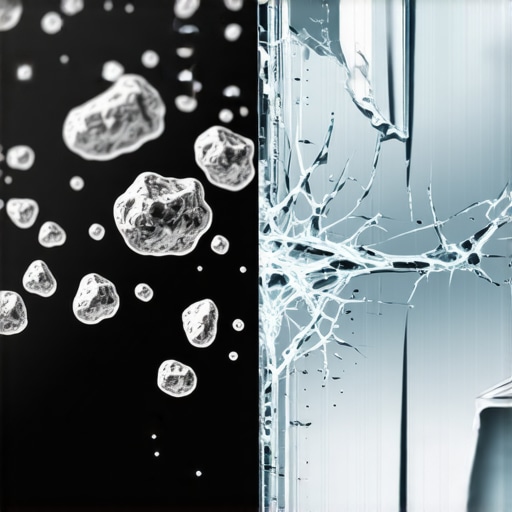
To understand why this happens, we must look at the anatomy of your windshield. Unlike the tempered glass in your side windows, which is designed to shatter into tiny cubes, your windshield is a sandwich. It consists of two layers of soda-lime glass bonded together by a polyvinyl butyral (PVB) interlayer. This PVB layer is the hero of the story; it holds the glass together during an accident and prevents the occupant from being ejected. However, when a stone hits the outer lite of glass, it creates a void or a separation between the glass and the PVB. This is what we call the pit. Once that seal is broken, moisture and dirt begin to infiltrate the laminate. In colder climates, that moisture undergoes a freeze-thaw cycle. Because water expands when it turns to ice, it acts like a microscopic wedge, driving deeper into the glass with every drop in temperature. This is the first catalyst for the transition from chip to crack.
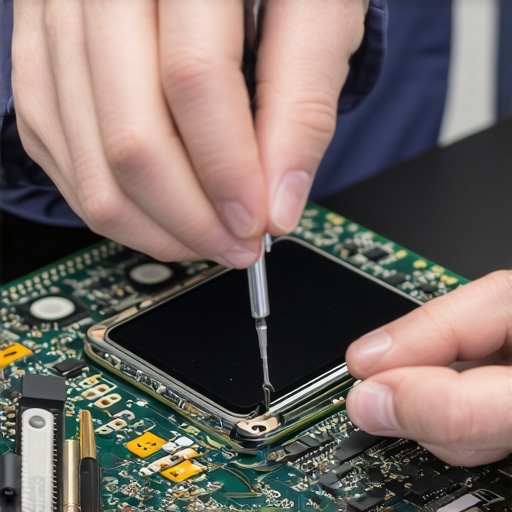
The second catalyst is the U-Factor and the specific heat capacity of the glass. Glass is a poor conductor of heat. When you turn on your defroster on a freezing morning, the bottom of the windshield expands rapidly while the top remains contracted. In a healthy windshield, the glass can accommodate this expansion through its inherent elasticity. But when a chip is present, the structural continuity is gone. The stress concentrates at the sharpest point of the chip, a phenomenon known as stress concentration. The physics are identical to why a tailor makes a small snip in fabric to make it easier to tear. The chip is that snip. The moment the internal tension exceeds the bond strength of the glass molecules, the chip zips across the surface in a matter of milliseconds. This is why a mobile service specializing in chip repair is critical. We do not just fill the hole; we use a vacuum pump to remove the air and moisture from the break and inject a specialized resin with a refractive index nearly identical to the glass itself.
“Any repair that interferes with the driver’s critical vision area (CVA) must be evaluated with extreme caution to ensure optical clarity is maintained.” – ANSI/NWRA ROLAGS 001-2014
As a glass installer, I often see customers who try to use DIY kits found at big-box stores. These are often the precursor to a total failure. These kits lack the mechanical pressure required to fully penetrate the microscopic fissures of a star break. If you leave even a fraction of a millimeter of air inside the break, the repair will fail under thermal stress. Professional chip repair involves a multi-step process: cleaning the pit, flexing the glass to open the legs of the break, and using UV-curing resins that chemically bond to the glass surfaces. We look for the “flow” of the resin. When the resin fills the void, the dark shadows of the crack disappear. This is not just cosmetic; it is structural restoration. If you can see a dark line after a repair, the air is still there, and the glass is still at risk.
The threshold for an unfixable crack is generally dictated by the size and location of the damage. Once a crack exceeds the length of a credit card, or if it reaches the edge of the glass, the structural integrity of the entire lite is compromised. Edge cracks are particularly dangerous because they interrupt the perimeter seal that helps the airbag deploy correctly. Modern vehicles use the windshield as a backstop for the passenger-side airbag. If the glass is cracked to the edge, the force of the airbag deployment can actually push the entire windshield out of the frame, rendering the safety system useless. This is why a same-day response is not just about convenience; it is about maintaining the safety envelope of your vehicle. A chip is a manageable flaw; a crack is a structural failure.
When selecting a glass installer, you must ask about the viscosity of the resins they use for different temperatures. A resin used in the heat of July will not perform the same as one used in the depths of January. The glass expands and the rough opening of the break changes size based on the ambient temperature. A professional will stabilize the glass temperature before beginning the injection. This level of precision is what separates a long-lasting repair from a temporary fix that will eventually spider across your field of vision. Do not wait for the line to appear. The moment you hear that sharp pop on the highway, the clock is ticking against the laws of thermodynamics.