The paper towel test for checking if your chip repair resin actually cured
In my two decades as a master glazier, I have seen the industry shift from heavy wood sashes to high-performance polymers. One thing remains constant: the chemistry of a repair is unforgiving. When you are operating a mobile service for same-day chip repair, you are at the mercy of the environment. Whether it is the stagnant heat of a Phoenix summer or the damp chill of a Seattle morning, your resin does not care about your schedule. It only cares about the molecular transition from a liquid monomer to a solid polymer chain. If that transition is incomplete, your repair is a failure waiting to happen.
I pulled a vinyl window out of a house in a coastal town once and the header was completely black with rot. Why? The previous installer relied on the nailing fin instead of proper flashing tape. That same level of negligence exists in the mobile glass repair world. Installers often rely on the visual ‘disappearance’ of a chip as proof of success. But a chip that looks gone is not necessarily cured. This is where the paper towel test becomes your most vital diagnostic tool in the field.
“Installation is just as critical as the window performance itself. A high-performance window installed poorly will fail.” AAMA Installation Masters Guide
The Molecular Reality of Chip Repair
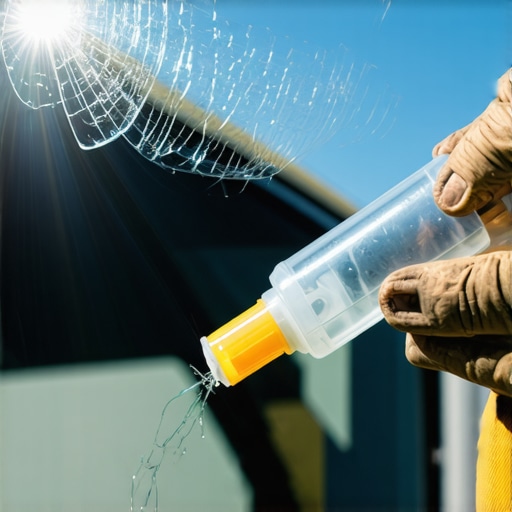
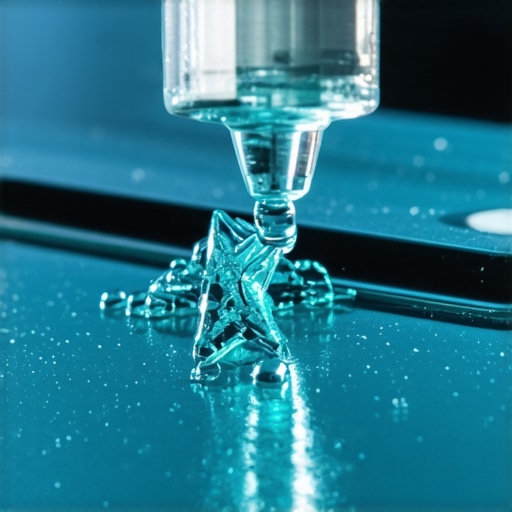
To understand why the paper towel test is necessary, we have to look at the chemistry of the resin. Most professional glass installer resins are UV-cured acrylic acids or methacrylates. These liquids stay stable until they are exposed to specific wavelengths of ultraviolet light, typically in the 365nm range. When those photons hit the photo-initiators in the resin, a chain reaction begins. The liquid molecules begin to cross-link, forming a dense, hard plastic that bonds to the silica of the glass.
However, there is a phenomenon known as oxygen inhibition. Oxygen in the atmosphere can actually interfere with the curing process at the very surface of the resin. This is why we use curing tabs or finishing films to block out the air. If the oxygen is not excluded, or if the UV lamp has a weakened bulb, or if the solar heat gain is so high that the resin begins to outgas before it solidifies, the surface will remain tacky. To the naked eye, the repair looks solid. But underneath, the bond is weak and will eventually separate from the glass walls, leading to a ‘flow-out’ or a complete structural failure of the repair.
Performing the Paper Towel Test
The paper towel test is a simple but definitive way to ensure your mobile service job is actually done. After you have completed your curing cycle and removed the curing film or tab, you take a clean, dry, white paper towel. You press it firmly against the site of the repair and drag it across. If the paper towel catches, drags, or leaves behind tiny white fibers on the resin, the cure is incomplete. A fully cured resin should be as smooth and slick as the surrounding glass. It should offer zero resistance to the paper towel. This indicates that the polymer chains have fully linked and the oxygen inhibition layer has been successfully managed.
If you find that the resin is still tacky, you cannot just ‘caulk and walk.’ You need to re-evaluate your UV source. In many mobile service scenarios, the glass installer relies on ambient sunlight. In high-heat climates where the Solar Heat Gain Coefficient (SHGC) of the windshield is high, the glass might be too hot for the resin to stabilize. You must cool the glass to a workable temperature, often by shading the area or using a blower, before attempting to re-cure. If the glass temperature exceeds 100 degrees Fahrenheit, the resin viscosity drops so low that it can seep out of the rough opening of the chip before the UV light can lock it in place.
“A window’s thermal performance is only as good as its structural integrity. If the seal or the glass repair fails, the U-Factor is irrelevant.” NFRC Performance Standards
The Physics of Climate and Curing
In hot, southern climates, the enemy is not just the temperature but the UV intensity. While you might think more sun is better for a UV-cured resin, an over-intense exposure can cause the resin to shrink too rapidly. This creates internal stresses at the bond line. When a glass installer performs a same-day mobile service in these conditions, they must manage the SHGC of the glass. The glass acts as a heat sink. If the glass is too hot, the resin will flash-cure on the outside while remaining liquid on the inside. This creates a brittle repair that will crack the first time the vehicle hits a pothole or goes through a car wash.
Conversely, in colder climates, the U-factor logic applies to the repair site. The glass will hold the cold, making the resin thick and sluggish. It will not flow into the microscopic fissures of the break. You might get a successful paper towel test on the surface, but the ‘legs’ of the crack are still empty. This is why a professional glazier always uses a heat bridge or a localized warmer to bring the glass to a temperate state before injection. You are managing the micro-environment of that hole in the glass just as you would manage a rough opening in a wall for a window installation.
The Role of the Glazing Bead and Finishing
Once the paper towel test confirms a hard cure, the job is still not finished. You must scrape the excess resin down to the surface of the glass using a fresh razor blade. This creates a flush glazing bead that prevents the wiper blades from catching on the repair. If the resin was not fully cured (failed paper towel test), the razor blade will actually pull the resin out of the pit, leaving a divot that will collect dirt and moisture. This moisture can then freeze and expand, much like water in a weep hole that has been blocked, eventually blowing out the repair entirely.
A professional glass installer knows that shortcuts in the curing process lead to call-backs. In the mobile service world, a call-back is a profit killer. By implementing the paper towel test as a mandatory part of your workflow, you ensure that every chip repair has the structural integrity to withstand the thermal expansion and contraction that every window undergoes. You are not just filling a hole; you are restoring the safety of the structural envelope.