How a tiny rock chip destroys your glass in the winter
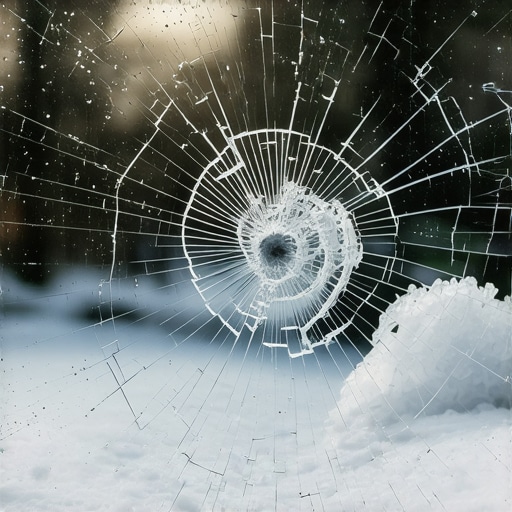
You are driving down the highway at 60 miles per hour when a piece of aggregate flies off a dump truck and strikes your windshield with a sickening crack. At first, you feel relieved. It is just a tiny pit, barely the size of a grain of sand, located near the bottom edge of the glass. You decide it can wait until spring. As a master glazier with over two decades in the trade, I am here to tell you that this is the exact moment you have invited a structural failure into your vehicle. In the glazing industry, we do not view glass as a static shield; we see it as a high-tension membrane constantly battling the laws of thermodynamics. When you introduce a chip, you are not just looking at a cosmetic blemish. You are looking at a localized stress riser that is waiting for the first sub-zero night to tear your glass in half.
“Installation is just as critical as the window performance itself. A high-performance window installed poorly will fail.” AAMA Installation Masters Guide
The Physics of Thermal Shock and Glass Tension
To understand why winter is the executioner of damaged glass, we must look at the molecular behavior of soda-lime glass. Glass has a specific coefficient of thermal expansion. In the North, where temperatures frequently drop below freezing, the exterior surface of your glass (Surface #1) contracts rapidly. Meanwhile, the interior surface (Surface #4 in a standard laminated automotive setup) is being blasted by your heater. This creates a violent thermal gradient. The molecules on the outside are huddling together, while the molecules on the inside are trying to expand. I remember a specific case in Chicago where a homeowner called me because their windshield literally ‘exploded’ while they were defrosting it. I brought out my hygrometer and thermal camera to show them the 80-degree difference between the vent output and the glass exterior. It was not a ghost or a defect; it was a microscopic chip that acted as the epicenter for a thermal fracture. When that ΔT (delta temperature) hits a certain threshold, the tension at the tip of that tiny rock chip exceeds the glass’s ability to hold itself together.
The Anatomy of the Chip: Why Surface Tension Matters
When a rock hits your glass, it often creates a ‘bullseye’ or a ‘star break.’ These are not just shapes. They are disruptions in the compression layer of the glass. In laminated safety glass, you have two layers of glass sandwiching a layer of Polyvinyl Butyral (PVB). This PVB is what keeps the glass from showering you in shards during an accident, but it also acts as a moisture trap if the outer layer is breached. During the winter, moisture from snow or sleet enters that tiny pit. When that water freezes, it expands by approximately nine percent. This expansion acts like a hydraulic wedge, driving itself deeper into the glass. This is why mobile service is not just a convenience; it is a necessity. A professional glass installer needs to evacuate that moisture and air using a vacuum pump before injecting a specialized resin that matches the refractive index of the glass. If you wait, the moisture contaminates the PVB, leading to delamination that no chip repair can fix.
“ASTM E2112 emphasizes that any compromise in the glass surface or framing integrity can lead to catastrophic failure under environmental loading.” ASTM International Standards
The Math of Early Intervention
Many drivers avoid calling a glass installer because they fear the cost of a full replacement. However, the ROI on a same-day repair is astronomical compared to the alternative. A standard chip repair stabilizes the structural integrity of the pane, preventing the need for a full tear-out. In my 25 years, I have seen ‘caulk-and-walk’ amateurs try to smear clear nail polish into a chip. This does nothing for the structural ‘hoop stress’ around the break. A true mobile service technician uses a bridge tool to apply pressure to the break, opening the microscopic fissures just enough to accept the resin. This resin is then cured with a specific UV wavelength, essentially welding the glass back together at a molecular level. If the chip is within the driver’s critical vision area or larger than a quarter, the NFRC (National Fenestration Rating Council) standards for clarity and safety suggest that the structural integrity is already too far gone for a simple patch.
Winter Survival: Protecting Your Glass
If you have a chip and cannot get a same-day appointment, do not blast your defroster on high immediately after starting the car. This sudden spike in temperature is the leading cause of ‘running’ cracks. Instead, gradually increase the temperature. Avoid using boiling water to de-ice your glass, which is a common but disastrous mistake that causes immediate thermal shock. The most effective defense is a proactive chip repair. By sealing the breach before the first freeze-thaw cycle, you preserve the factory seal of your windshield. Once that factory seal is broken for a full replacement, you have to worry about the rough opening of the vehicle frame, proper shim placement, and ensuring the weep hole or drainage channels in the sash or cowl are not obstructed by excessive urethane. Don’t buy the hype of ‘infinite’ glass strength; buy the physics of early repair. The cold is coming, and your glass is already under tension. Don’t let a three-millimeter pit turn into a three-foot crack when a certified glass installer can solve the problem in thirty minutes on your own driveway.