The mistake most drivers make when a rock hits their glass
In my twenty-five years as a master glazier, I have seen every possible iteration of glass failure, from the catastrophic collapse of improperly tempered curtain walls to the slow, insidious rot caused by a single poorly placed shim. But the most consistent and preventable heartbreak I witness happens not on a construction site, but in the driveway. Most drivers treat a small rock chip as a cosmetic nuisance rather than a structural emergency. This is a fundamental misunderstanding of fenestration physics. A windshield is not merely a transparent shield; it is a structural component of the vehicle, much like a high-performance window sash is integral to the thermal envelope of a building. When a projectile strikes your glass, it creates a point of localized stress that immediately begins to interact with the environment.
“Installation is just as critical as the window performance itself. A high-performance window installed poorly will fail.” – AAMA Installation Masters Guide
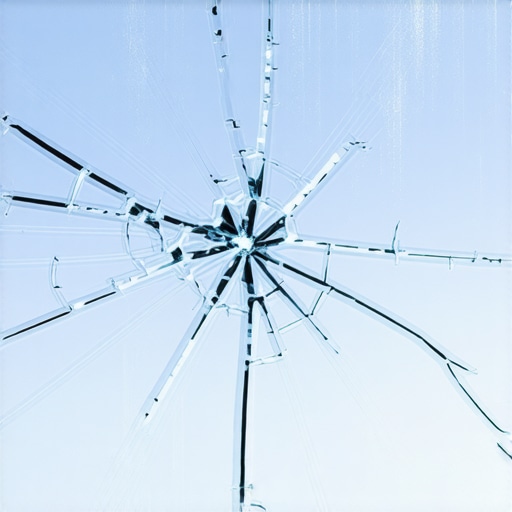
A homeowner called me in a panic because their new windows were ‘sweating.’ I walked in with my hygrometer and showed them the humidity was 60%. It wasn’t the windows; it was their lifestyle. I see the same thing with auto glass. A driver came to me with a ‘foggy’ patch around a chip. They had been power-washing the car with an open chip. The moisture wasn’t just on the surface; it was saturating the laminate. When a rock hits the glass, it often creates a ‘bullseye’ or a ‘star break.’ The mistake is waiting. People think they have time. In a northern climate like Minneapolis or Chicago, you do not have time. The enemy here is the thermal gradient. In the winter, you have 0-degree air hitting the exterior surface and 70-degree air from your defroster hitting the interior. This creates a massive expansion differential across the 2.1mm thick glass layers. Because the glass cannot expand uniformly due to the fracture, the stress concentrates at the tip of the crack, causing it to ‘run’ across the entire rough opening of the frame.
The science of the chip repair is fascinating if you understand the refractive index. When we perform a same-day chip repair, we aren’t just ‘filling a hole.’ We are using a mobile service to inject a specialized polymer resin into the break under vacuum. This resin must have a refractive index identical to the soda-lime glass to restore optical clarity. But more importantly, the resin must displace all air and moisture. If you wait, road oils and windshield washer fluid (which contains alcohols and surfactants) seep into the PVB (Polyvinyl Butyral) interlayer. Once that interlayer is contaminated, the bond strength of the repair resin is compromised. It is like trying to apply flashing tape to a wet, rotten header; the adhesion simply won’t be there. This is why a glass installer insists on a clean, dry break. If you’ve been driving around in the rain with a chip, you’ve already made the job harder and the outcome less certain.
“The integrity of the fenestration system relies on the continuity of the seals and the stability of the substrate.” – ASTM E2112 Standard Practice
Let’s talk about the ‘Glazing Zooming’ aspect of why this matters. Your windshield is a sandwich: two layers of glass held together by a plastic interlayer. This design is intended to keep the glass from shattering into large shards during an impact, much like the laminated glass we use in hurricane-prone coastal regions. However, the glass layers are under constant tension. When the car hits a pothole, the frame of the car flexes. This flex is transferred directly to the glass. If the glass has a chip, it acts as a stress riser. Think of it like a piece of paper; it’s hard to tear until you make a tiny snip at the edge. Then, it zips right through. That is exactly what happens when you hit a bump with a neglected chip. The structural sash of your vehicle’s greenhouse is compromised. The mistake is thinking that ‘mobile service’ is just for convenience. It is actually a preventative measure to seal the glass before the hydrostatic pressure of rain or the vibration of the road turns a twenty-minute fix into a three-hundred-dollar replacement.
In a cold climate, the U-factor of your glass is irrelevant if the seal is broken. While we don’t talk about Argon gas fills in windshields, we do talk about the thermal stress of the ‘black frit’—that black painted border around your windshield. That frit is there to provide a surface for the urethane to bond to the rough opening, but it also absorbs heat faster than the clear glass. This temperature difference can be the final straw for a small chip located near the edge of the glass. If the chip is in the ‘acute’ area—directly in the driver’s line of sight—the repair must be perfect. Any distortion in the resin’s curing process, which we manage with specific UV light wavelengths, will create a lens effect that can be dangerous at night. This is why you don’t use a DIY kit from a gas station. Those resins are often low-viscosity and lack the UV stabilizers needed to prevent yellowing. A professional glass installer uses a bridge tool to create a localized vacuum, pulling the air out of the microscopic fissures before forcing the resin in. It’s a precision operation that mirrors how we would repair a glazing bead on a high-value architectural piece. Don’t let a small rock strike dictate your safety; address the chip before the physics of the North turn it into a replacement.