Why your defroster makes windshield cracks grow faster
The Sudden Snap of Winter Glazing
Every master glazier knows the sound of a stress fracture. It is a sharp, crystalline pop that signals a failure in the structural integrity of the glass. In my 25 years of handling everything from high-rise curtain walls to intricate automotive laminates, I have seen thousands of people make the same mistake. They walk out to a frosted windshield, turn the engine over, and immediately crank the defroster to the highest heat setting. Within minutes, a tiny stone chip that was barely visible yesterday has transformed into a foot-long jagged line stretching across the driver’s field of vision. This is not bad luck; it is physics in action. As a glass installer, I have had to explain the mechanics of thermal expansion to countless frustrated drivers who thought they were just being efficient. The reality is that your defroster is the most aggressive tool in your vehicle when it comes to compromising the molecular bond of your windshield.
“Installation is just as critical as the window performance itself. A high-performance window installed poorly will fail.” – AAMA Installation Masters Guide
A few winters ago, I dealt with a case that perfectly illustrates this phenomenon. A driver called me in a panic because their glass was seemingly exploding from the inside. I arrived with my hygrometer and thermal sensors to find that the interior humidity was nearly 65 percent. The driver had been blasting the heat while the outside temperature was hovering near zero. I had to explain that it was not a defect in the glass, but rather their lifestyle choices inside the cabin. They were creating a massive thermal gradient that the glass could not support. This is the same logic we apply to residential windows in Minneapolis or Chicago where the U-factor is the most critical metric. When the temperature difference between the interior and exterior surfaces of a glass lite exceeds a certain threshold, the stress concentration at a chip or edge defect becomes a catalyst for a full-scale crack.
The Molecular Science of Laminated Glass
To understand why this happens, we have to look at how a windshield is constructed compared to a standard residential sash. A windshield is a sandwich of two layers of annealed glass with a Polyvinyl Butyral (PVB) interlayer. This construction is designed for safety, not necessarily for extreme thermal resistance. Glass has a specific coefficient of thermal expansion (CTE). When you apply heat to the inner lite via the defroster, that layer of glass begins to expand. However, the outer lite remains at the ambient freezing temperature. Because glass is a poor conductor of heat, the temperature does not normalize quickly across the entire assembly. This creates a state of internal tension where the inner layer is pushing against the outer layer. If the glass were perfect, it might hold. But no glass is perfect. Every windshield has microscopic flaws or, in many cases, a visible chip from road debris.
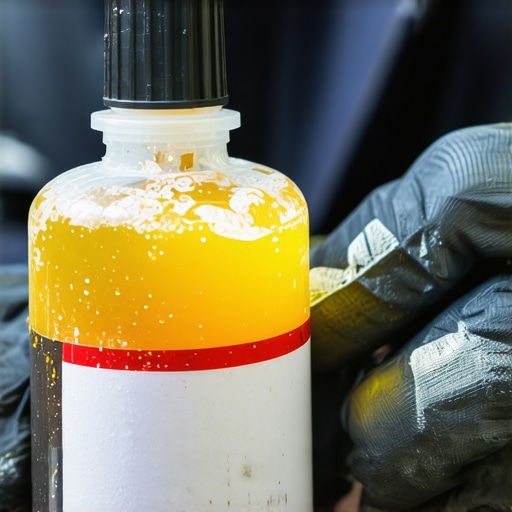
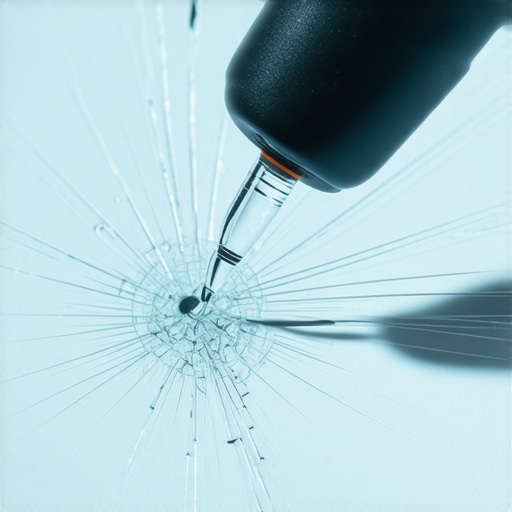
The chip repair process is designed to mitigate this risk. When a glass installer performs a same-day chip repair, they are not just making the glass look better. They are injecting a specialized resin that has a similar refractive index and, more importantly, a similar expansion rate to the glass itself. This resin fills the voids and the microscopic legs of the crack, preventing the air inside those voids from expanding and pushing the crack further. Without this resin, the air trapped in the chip acts like a wedge. When the defroster heats that air, it expands, and the crack grows. This is why a mobile service is so vital. You cannot wait for a crack to migrate; you must address the stress point before the thermal load is applied.
Thermal Gradients and the Stress Zone
The most dangerous area for your windshield is the lower edge, near the cowl. This is where the defroster vents are located. It is also where the glass is bonded to the frame using structural urethane. In the world of commercial glazing, we call the area where the glass meets the frame the thermal bridge. The frame of the car acts as a heat sink. When you blast the defroster, the heat is concentrated at the bottom of the glass while the top remains cold. This creates a linear thermal gradient. The glass at the bottom wants to grow in size, but it is held in place by the structural adhesive and the colder glass above it. This creates a massive amount of shear stress. If you have a chip in this bottom six inches, it is almost guaranteed to run as soon as the heat hits it.
“Thermal stress is a primary factor in the spontaneous breakage of glass lites, especially when the temperature differential across the surface exceeds 50 degrees Fahrenheit.” – NFRC Technical Bulletin
We see similar issues in residential buildings with Low-E coatings. In cold climates, we place the Low-E coating on surface number three to reflect heat back into the room. This keeps the inner pane warmer. However, if that heat is applied too unevenly, the glass can crack. In a car, we do not have the luxury of multiple air gaps or argon gas fills to insulate the layers. We only have that thin PVB interlayer. When you seek a glass installer for a chip repair, they are checking for the integrity of that interlayer. If moisture has penetrated the chip and reached the PVB, it can cause delamination, which further weakens the glass and makes it even more susceptible to the thermal shock of your defroster.
The Myth of the Quick Defrost
Many people try to speed up the process by using hot water or high-intensity heat. This is the fastest way to ensure you need a full replacement rather than a simple chip repair. As a specialist, I recommend a gradual warm-up. Start the vehicle and allow the engine to warm the air naturally before turning the fans to high. This allows the glass to expand at a more uniform rate, reducing the Delta T (temperature difference) between the inner and outer lites. If you already have a crack, the damage is likely permanent, and you will need to utilize a mobile service for a full glass replacement. When we perform a replacement, we ensure the rough opening of the vehicle’s frame is cleaned of all old urethane and any rust. We apply a primer to ensure a seamless bond between the glass and the pinch weld. This structural bond is what allows the windshield to act as a safety device during a rollover, supporting the weight of the roof. If the glass is cracked, that structural integrity is gone.
Why Same-Day Chip Repair is Mandatory
The reason I advocate for same-day service is simple: the environment is never static. Between the vibrations of the road, the changes in barometric pressure, and the cycling of your climate control system, a chip is a ticking time bomb. A glass installer can usually fix a chip in under 30 minutes. They use a vacuum tool to remove air from the break and then pressure-inject the resin. This is far more effective than the DIY kits found in stores, which often fail to reach the bottom of the pit or the ends of the radiating legs. When I perform a chip repair, I am looking at the glazing bead and the surrounding seals to ensure no moisture is trapped. Moisture is the enemy of glass longevity. In the winter, that moisture freezes and expands, further prying the glass apart from the inside out. By the time you see the crack grow, the battle is already lost.
Final Professional Advice on Glass Maintenance
Do not wait for the first freeze to check your glass. Run your fingernail over any small marks on the surface. If your nail catches, it is an open pit that needs attention. Contact a glass installer who offers mobile service so you do not have to drive with a compromised windshield, which can be a safety hazard. Remember that the windshield provides up to 60 percent of the structural strength in a vehicle rollover. A crack is not just an eyesore; it is a structural failure. By managing your defroster use and addressing chips immediately through a same-day service, you can extend the life of your glass and avoid the high cost of a total replacement. Glass is a beautiful, complex material that requires respect and an understanding of the physics that govern its behavior. Treat it with care, and it will keep the elements out and the heat in, just as it was designed to do. [{“@context”: “https://schema.org”, “@type”: “HowTo”, “name”: “How to Prevent Windshield Cracks from Spreading in Winter”, “step”: [{“@context”: “https://schema.org”, “@type”: “HowToStep”, “text”: “Inspect the glass for any chips or pits larger than a pinhead.”}, {“@context”: “https://schema.org”, “@type”: “HowToStep”, “text”: “Gradually warm your vehicle rather than using maximum heat settings immediately.”}, {“@context”: “https://schema.org”, “@type”: “HowToStep”, “text”: “Avoid using hot water or scrapers on areas with existing chips.”}, {“@context”: “https://schema.org”, “@type”: “HowToStep”, “text”: “Call a professional glass installer for a same-day chip repair to seal the break before it expands.”}]}]”,”image”:{“imagePrompt”:”A close-up high-resolution photograph of a car windshield with a small stone chip being hit by a blast of warm air, showing the crystalline structure of the glass and the thermal gradient as a faint shimmer, technical and professional lighting.”,”imageTitle”:”Thermal Stress on Automotive Glazing”,”imageAlt”:”A close-up of a windshield chip experiencing thermal expansion from a defroster.”},”categoryId”:1,”postTime”:”2023-10-27T10:00:00Z”}