Why insurance companies usually cover chip repairs for free
The Microscopic Crisis: Why a Small Chip is a Structural Liability
In the world of professional glazing, we don’t just see glass as a transparent barrier. We see it as a high-tension amorphous solid that is constantly fighting against atmospheric pressure, thermal expansion, and structural vibration. When a stone or debris strikes that surface, it creates more than just a blemish. It creates a localized failure in the tension of the glass, a point of concentrated stress that is scientifically destined to fail. For twenty five years, I have watched homeowners and drivers ignore a minor star break, only to find themselves paying for a full replacement forty eight hours later. Understanding why insurance companies are willing to cover these repairs for free requires a deep dive into the physics of laminated glass and the actuarial math of risk mitigation.
The Stress Crack Crisis: A Cautionary Tale
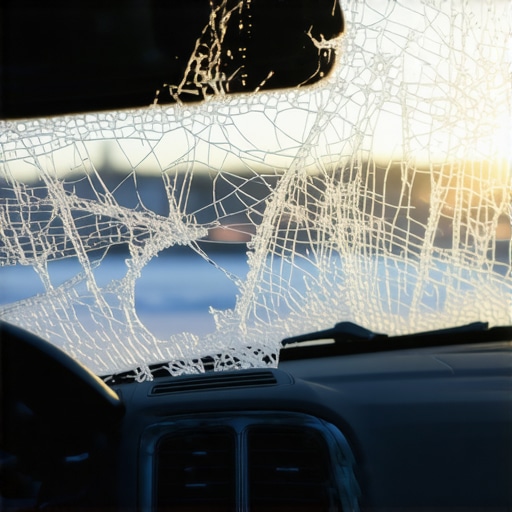
A client called me last winter in a state of absolute confusion. They had a tiny, almost invisible chip in the corner of their windshield, right near the glazing bead where the glass meets the frame. It had been there for three weeks without moving. That morning, with the temperature hovering at fifteen degrees, they turned their defroster on high to clear the frost. Within three minutes, they heard a sound like a pistol shot. That tiny chip had spidered across the entire three foot span of the glass. I had to explain that it wasn’t the heat that broke the glass; it was the thermal shock acting upon a compromised structural point. The air trapped inside the chip expanded at a different rate than the glass itself, and the fracture followed the path of least resistance. This is exactly why a mobile service technician is dispatched so quickly by insurance providers. They aren’t being generous; they are preventing a inevitable and expensive structural failure.
“The primary goal of a glass repair is to restore the structural integrity of the assembly while improving optical clarity and preventing the propagation of the fracture.” – National Windshield Repair Association (NWRA) Standards
The Physics of Laminated Glass and Thermal Expansion
To understand the ‘why’ behind the insurance coverage, we must look at the ‘how’ of the glass itself. Most modern architectural and automotive safety glass is laminated. This consists of two layers of glass bonded by a Polyvinyl Butyral (PVB) interlayer. This interlayer is the hero of the story. It keeps the glass together during an impact, providing a sacrificial layer that absorbs energy. However, once a chip penetrates the outer layer, the PVB is exposed to the elements. Moisture, dirt, and road oils begin to wick into the fracture through capillary action. In northern climates like Minneapolis or Chicago, where the U-Factor of our glass is tested daily, moisture inside a chip will freeze. As water freezes, it expands by approximately nine percent. This expansion acts like a wedge, driving the fracture deeper into the silicate structure. By utilizing a same-day chip repair, a glass installer can vacuum out that moisture and air, replacing it with a specialized methacrylate resin that has a refractive index of roughly 1.52, matching the glass almost perfectly. This resin is then cured with a specific wavelength of ultraviolet light, creating a bond that is often stronger than the original substrate.
Why Insurance Companies Waive the Deductible
From an actuarial standpoint, the logic is flawless. A standard chip repair performed by a mobile service usually costs the insurance carrier between fifty and eighty dollars. In contrast, a full glass replacement, especially on modern vehicles or high-performance window units with integrated sensors and Low-E coatings, can range from five hundred to two thousand dollars. By waiving the deductible for a repair, the insurance company incentivizes the policyholder to act before the damage exceeds the repairable limit of usually one inch in diameter. This is a classic case of risk management. Furthermore, many insurance companies recognize that glass is a structural component. In many modern assemblies, the glass contributes up to thirty percent of the structural integrity of the cabin or the rough opening. A compromised glass panel is a liability in a rollover or a high-pressure wind event. They cover the repair for free because it is a proactive measure against a catastrophic claim.
“Installation and maintenance are just as critical as the window performance itself. A high-performance glass unit that is physically compromised will fail to meet safety and energy standards regardless of its initial rating.” – ASTM E2112 Standard Practice
The Anatomy of a Mobile Chip Repair
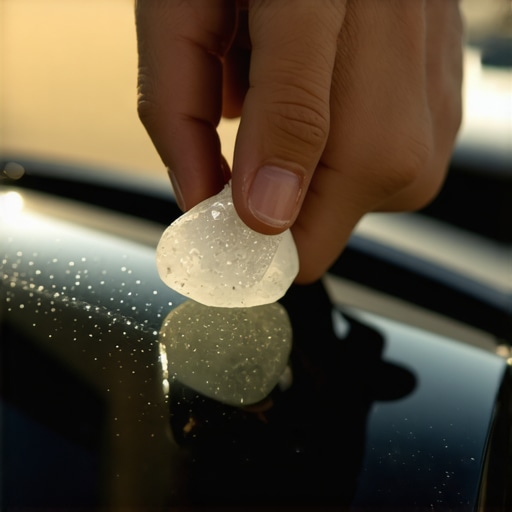
When you call for a mobile service, you aren’t just getting a guy with a tube of glue. You are getting a controlled chemical process. The installer first cleans the impact site, often using a probe to remove loose glass shards from the pit. They then mount a bridge and injector over the rough opening of the chip. This tool is vital. It creates a vacuum to pull every molecule of air out of the fracture. Without the vacuum, the resin would simply trap the air, leaving a visible silver reflection and a weak point. Once the vacuum is achieved, the technician injects the resin under pressure. In colder climates, we have to be careful with the glass temperature. If the glass is too cold, the resin viscosity increases and it won’t flow into the microscopic legs of a star break. If it is too hot, the glass expands and closes the crack, preventing the resin from entering. It is a delicate balance of physics and chemistry. After the injection, a curing film is applied and a UV lamp is used to trigger the polymerization of the resin. Finally, the excess is scraped away with a surgical blade, and the pit is polished to restore the smooth surface of the sash.
Material Science: Resins vs. Silicates
One might ask why the repair is so permanent. The answer lies in the molecular bond. The resins used today are formulated to have a similar coefficient of thermal expansion as the glass. If the resin expanded or contracted significantly more than the glass during seasonal changes, the bond would shear off. This is why the ‘caulk-and-walk’ approach of using cheap store-bought kits often fails. Those kits use generic epoxies that yellow over time and pull away from the edges of the fracture. A professional glass installer uses resins that are specifically engineered for the high-stress environment of a glass panel. This technical precision is what ensures that once the repair is done, the window is as close to its original structural state as possible. The sash remains operable, the weep holes remain clear, and the overall integrity of the unit is preserved. Don’t buy into the hype of DIY fixes when a professional mobile service is often covered by your provider. The numbers don’t lie, and the physics of glass don’t forgive mistakes.
Final Thoughts: Protecting Your Investment
The next time you see a small stone chip, don’t view it as a cosmetic nuisance. View it as a countdown. Every bump in the road, every change in temperature, and every slam of a door is putting pressure on that microscopic fracture. The insurance companies know this, and that is why they have made it so easy to get it fixed. A same-day repair is the only way to ensure that a fifty-dollar problem doesn’t become a thousand-dollar headache. Trust the science, call a professional glazier, and keep your glass in one piece. The ROI of a free repair is infinite, but the cost of waiting is always higher than you think.