Why your windshield whistles after a bad install
The Aerodynamics of a Failed Seal
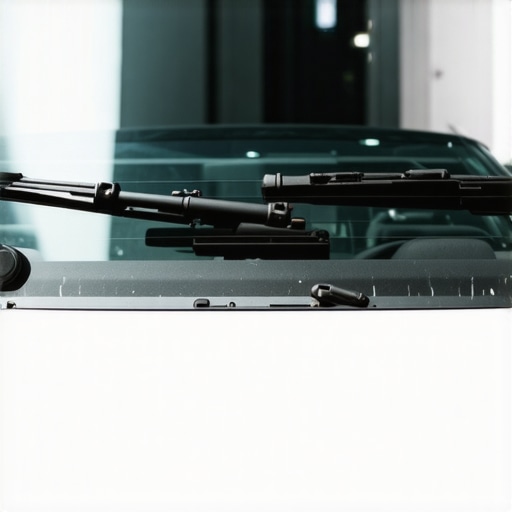
That high-pitched, reed-like whistle emanating from your dashboard or the corner of your window frame isn’t just an annoyance; it is a siren song of structural failure. As a glazier with over two decades in the field, I can tell you that a whistle is the audible evidence of a pressure differential. When you are driving at 60 miles per hour, or when a 40-mile-per-hour gust hits the side of your home, the air is searching for the path of least resistance. If your glass installer took a ‘caulk-and-walk’ approach, that path is likely a microscopic void in the sealant bead. This phenomenon is known as an aeolian tone, where air passing over a sharp edge or through a narrow aperture creates a vortex shedding effect. In the automotive world, this often happens because a mobile service technician rushed the preparation of the pinchweld. In the residential world, it happens because the rough opening was out of square and the installer relied on a thin bead of low-grade caulk rather than proper shimming and flashing.
The Narrative Matrix: A Lesson in Structural Rot
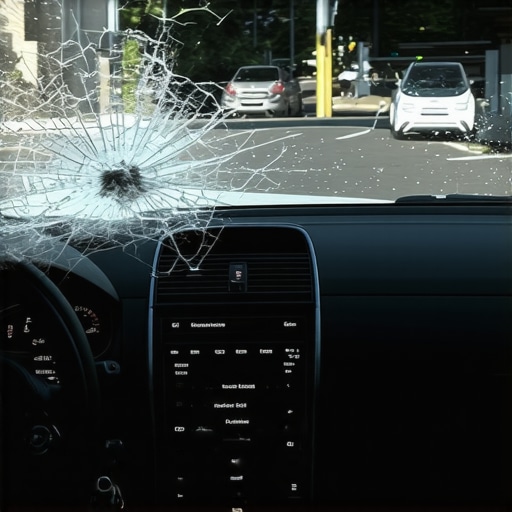
I recall a project where I was called to inspect a series of windows in a luxury development. I pulled a vinyl window out of a house and the header was completely black with rot. Why? The previous installer relied on the nailing fin instead of proper flashing tape. They had ignored the basic physics of water management. The whistle the homeowner reported was actually air being forced through the same gap where water was siphoning into the wall cavity. This wasn’t just a bad install; it was a total failure to respect the building envelope. When a same-day glass installer prioritizes speed over the curing requirements of the substrate, the structural integrity of the entire opening is compromised. We see this in chip repair too; if the resin isn’t injected under the correct vacuum pressure, the air pocket remains, and the crack eventually spiderwebs under thermal stress.
“Installation is just as critical as the window performance itself. A high-performance window installed poorly will fail.” – AAMA Installation Masters Guide
The Physics of Air Infiltration and the Rough Opening
To understand why your glass is failing, you have to understand the rough opening. This is the structural frame that houses the window or windshield. If the rough opening is not plumb, level, and square, the glass unit will not sit neutrally. When you force a glass lite into a distorted opening, you are introducing ‘racking’ stress. For a mobile service glass installer, this often manifests as a windshield that doesn’t sit flush against the urethane bead. In a home, it means the sash will not operate correctly within the frame. Every window must be supported by a shim at specific intervals to ensure that the weight is transferred directly to the structure without bowing the frame. Without a proper shim, the glazing bead can pop out, or worse, the insulated glass unit (IGU) can lose its hermetic seal, leading to fogging between the panes. In cold climates, such as the North, this is a disaster. A low U-Factor window becomes worthless if air is bypassing the frame entirely.
Thermal Logic: U-Factor and Surface Coatings
In colder regions, the enemy is heat loss. We focus on the U-Factor, which measures the rate of non-solar heat loss. To combat this, we use triple-pane units with argon or krypton gas fills between the lites. However, the placement of the Low-E coating is critical. For a Northern climate, we apply the Low-E coating on Surface #3. This allows the sun’s short-wave infrared radiation to enter the home during the day but reflects the long-wave infrared radiation (heat) back into the room. If an installer flips the glass or uses the wrong specification for the climate, you might as well have installed a single pane of clear glass. The same logic applies to the warm-edge spacers. If the spacer is highly conductive, like old-school aluminum, the perimeter of the glass will reach the dew point, and you will see condensation forming on the interior glazing bead. This is often misdiagnosed as a leak, but it is actually a thermal bridge failure.
“The air leakage of a window or door is measured in cubic feet per minute per square foot of area. Even the best glass cannot compensate for a poor perimeter seal.” – NFRC Performance Manual
The Installation Autopsy: Why Mobile Service Often Fails
The rise of the same-day mobile service has led to a decline in installation quality. Whether it is a car windshield or a residential sash, the chemistry of the adhesive is non-negotiable. Most high-performance urethanes and silicones require a specific temperature range and humidity level to cure. When a technician performs a chip repair or a full replacement in a driveway during a humid afternoon, the moisture in the air can cause the sealant to ‘skin over’ too quickly. This prevents the bond from penetrating the pores of the substrate. Furthermore, the use of a sill pan is a lost art. A sill pan is a flashing component that sits at the bottom of the rough opening. It is designed to collect any water that bypasses the primary seals and direct it back to the exterior through a weep hole. Without a sill pan and integrated flashing tape, any moisture that enters the system is trapped against the wooden framing, leading to the rot I mentioned earlier.
Components of a Professional Glazing System
A professional installation involves more than just a tube of caulk. We look at the muntin bars for structural rigidity, the glazing bead for glass retention, and the operable hardware for long-term functionality. If you are hearing a whistle, it is likely that the weatherstripping is not being compressed sufficiently. This can be caused by a sash that is ‘out of square’ or a frame that was installed without a drip cap. A drip cap is an L-shaped flashing that sits above the window to shed water away from the top of the unit. In my experience, 90 percent of ‘leaking windows’ are actually ‘leaking walls’ where the water is entering through the gap between the window frame and the siding because the flashing tape was omitted or installed in the wrong order, violating the shingle principle where every layer must overlap the one below it.
Conclusion: Don’t Buy the Hype, Buy the Science
When you are looking for a glass installer, whether for a chip repair or a whole-house replacement, stop listening to the sales pitch about ‘lifetime warranties’ and start asking about their installation protocols. Ask about their shim spacing. Ask if they use a neutral-cure or an acid-cure silicone. Ask how they handle the rough opening preparation. A whistle is not a mystery; it is a mathematical certainty when air is forced through a gap left by a technician who didn’t understand the physics of the building envelope. Water and air management is a science, and your home (or car) deserves more than a ‘caulk-and-walk’ solution.