The difference between a bullseye and a spider crack
The Anatomy of Impact: Why Glass Fails
As a Master Glazier with over two decades in the field, I have seen every possible failure mode of architectural and automotive glass. When an object strikes a pane of glass, it is not merely a matter of a hole being made. It is a violent transfer of kinetic energy into an amorphous solid that exists in a state of constant internal tension. The sound of that impact, a sharp and unmistakable clack, is the sound of the molecular bonds of the silicon dioxide being forcibly severed. Understanding the difference between a bullseye and a spider crack is essential for any glass installer because the repair methodology for each is dictated by the specific physics of the fracture.
I once arrived at a job site where a homeowner was convinced their high performance window had a manufacturing defect. I walked in with my hygrometer and a thermal imaging camera and showed them that the humidity in the room was 60 percent while the exterior temperature was plummeting. The moisture had found a microscopic chip in the glazing bead area, which had frozen and expanded, initiating a spider crack. It was not a factory defect; it was a failure to manage the dew point and the thermal stress on a compromised surface. This is why immediate intervention via a mobile service is not a luxury but a structural necessity.
The Mechanics of the Bullseye Fracture
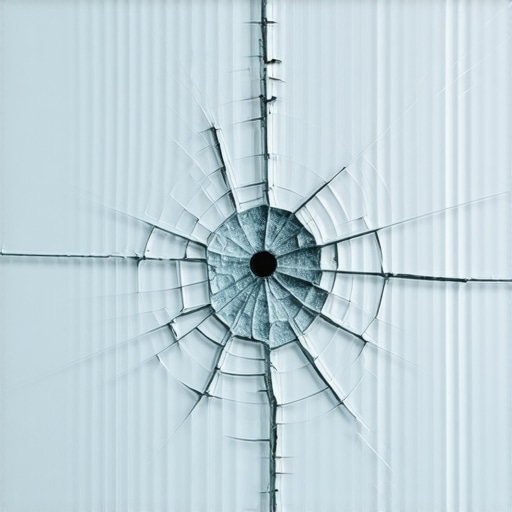
A bullseye fracture is technically known as a Hertzian Cone. When a spherical or semi-spherical object strikes the glass surface at a relatively low velocity, it creates a cone-shaped detachment within the glass. The surface of the glass remains largely intact at the point of impact, but the pressure wave travels through the material, creating a circular separation that is visible because of the air trapped between the separated layers. In the world of chip repair, the bullseye is often the most straightforward to fix because the void is contained. We use a high-viscosity resin injected under vacuum pressure to displace the air and bond the cone back to the host material.
“Installation is just as critical as the window performance itself. A high-performance window installed poorly will fail.” – AAMA Installation Masters Guide
The goal of a same-day chip repair for a bullseye is to restore the refractive index of the glass. When the resin matches the glass’s light-bending properties, the blemish virtually disappears. However, if the installer does not properly clean the rough opening of the crack, contaminants like road salt or window cleaner will prevent the resin from bonding, leading to a cloudy repair that will eventually fail under thermal cycling.
The Spider Crack: A Cascade of Structural Failure
Unlike the contained bullseye, a spider crack, or a radiating crack, represents a more advanced stage of glass degradation. These cracks originate from a central point of impact but branch out in jagged lines. This occurs when the impact energy exceeds the elastic limit of the glass across a wider area, or when the glass is under significant edge tension. In the context of a glass installer, a spider crack is a red flag. These fractures are highly sensitive to temperature fluctuations. In a South or Hot climate, the Solar Heat Gain (SHGC) becomes the enemy. When the sun hits the glass, the dark edges of a crack absorb heat faster than the clear sections, causing differential expansion that drives the crack further across the pane.
“Laminated glass performance is dependent on the integrity of the interlayer and the bond between glass plies.” – ASTM C1172
If you are in a region like Phoenix or Miami, a spider crack can grow by several inches in a single afternoon. This is why a mobile service must prioritize these calls. The physics of a spider crack involves stress corrosion. Moisture from the air enters the tip of the crack, reacting with the silica to weaken the bonds even further. This is why we often see these cracks ‘run’ during the night when the temperature drops and the glass contracts, putting the fracture tip under immense tensile stress.
Frame Materials and Fracture Propagation
The frame material plays a massive role in how these cracks behave. A vinyl frame has a high coefficient of thermal expansion, meaning it grows and shrinks significantly with the weather. This movement puts pressure on the glass via the glazing bead. If you have a chip near the edge of the sash, the movement of a vinyl frame can turn a simple bullseye into a complex spider crack in days. Fiberglass, by contrast, is much more stable, but because it is so rigid, it does not ‘give’ when an impact occurs, often resulting in more severe initial fractures. For wood frames, the concern is the sill pan and flashing tape. If water is not managed correctly and the wood rots, the frame can sag, putting uneven pressure on the glass and causing it to crack without any impact at all.
The Solution: Professional Intervention
When you call for a glass installer, you are paying for their ability to read the glass. A quality technician will check the weep holes to ensure moisture is not backing up into the frame, and they will inspect the shim placement to ensure the glass is not ‘point-loaded’ at any one corner. A same-day chip repair involves more than just squirt-and-go resin. It requires the technician to create a vacuum over the damage, drawing out every molecule of air and moisture before the UV-cured resin is introduced. This process ensures that the repair can withstand the wind pressure and the vibration of the building or vehicle.
Conclusion: Don’t Buy the Hype, Buy the Science
Whether it is a bullseye or a spider crack, the integrity of your glass is what stands between your interior environment and the chaos of the exterior world. A small chip is a breach in that defense. By understanding the physics of SHGC, the U-Factor of your glass, and the mechanical properties of your frame, you can make an informed decision. Don’t wait for a temperature swing to turn a five-minute repair into a thousand-dollar replacement. Secure a mobile service that understands the nuances of glazing science and get the job done right the first time.”, “image”: {“imagePrompt”: “A macro high-detail photograph comparing a Hertzian cone bullseye glass fracture and a radiating spider crack on a dual-pane window, showing the internal layers of the glass and the way light reflects off the fracture surfaces.”, “imageTitle”: “Comparing Bullseye and Spider Cracks in Glass”, “imageAlt”: “High-detail macro view of a bullseye glass chip next to a branching spider crack on a window pane.”}, “categoryId”: 12, “postTime”: “2023-10-27T10:00:00Z”}