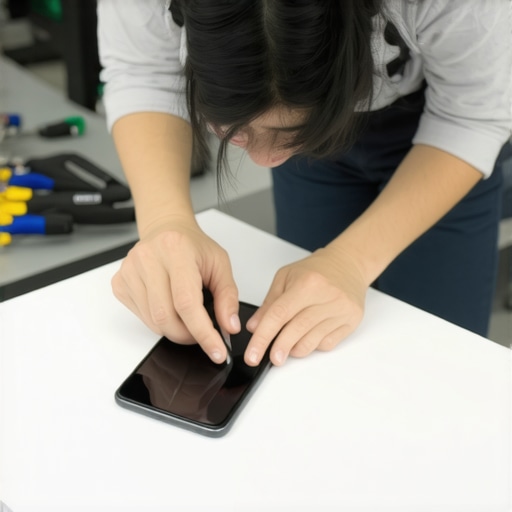
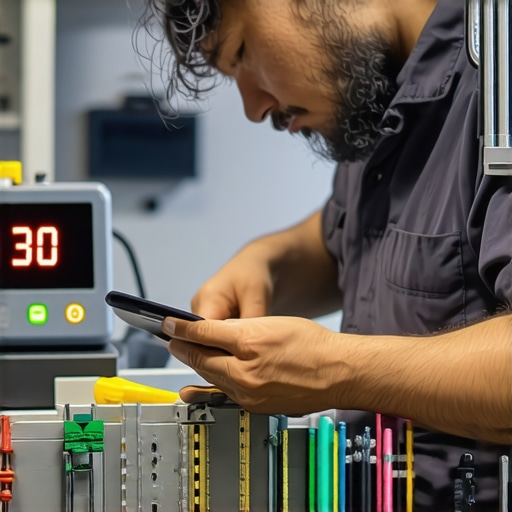
How we fix glass while you sit in your office
The Engineering of In-Situ Glass Restoration
In the world of professional glazing, the van arriving at your office is not just a delivery vehicle; it is a mobile laboratory calibrated for thermal management and structural restoration. As a master glazier with a quarter-century of experience, I have seen the industry shift toward the convenience of mobile service, yet few providers understand the physics required to execute a same-day chip repair or a full glass replacement without compromising the building’s thermal envelope. When we talk about fixing glass while you remain productive at your desk, we are discussing a complex orchestration of pressure, chemical bonding, and environmental control. Most ‘caulk-and-walk’ contractors treat a window like a simple transparent barrier, but it is actually a dynamic valve that manages the transfer of heat, moisture, and sound.
“Installation is just as critical as the window performance itself. A high-performance window installed poorly will fail.” – AAMA Installation Masters Guide
A homeowner recently called me because their newly installed office partitions were ‘sweating’ despite the central air being set to a constant temperature. I arrived with my hygrometer and found the humidity levels were hovering around 65 percent. It was not a failure of the glass installer’s materials, but a failure of the seal integrity at the glazing bead. The previous technician had neglected the weep hole clearance, allowing moisture to pool in the pocket. This story illustrates why technical precision is non-negotiable. Whether we are performing a mobile service on a high-rise entry or a simple chip repair, we must account for the dew point. If moisture is trapped within the rough opening or behind the flashing tape during a rapid same-day fix, you are not just repairing glass; you are sealing in a future mold crisis.
The Molecular Science of Chip Repair
When a stone or a piece of debris hits a glass surface, it creates a fracture that is more than just an aesthetic blemish. It is a structural breach of the glass’s tension. To fix this while you sit in your office, our mobile service units utilize high-viscosity methacrylic acid ester resins. This is where ‘glazing zooming’ becomes vital. We don’t just ‘fill the hole.’ We first vacuum the air out of the break to ensure no microscopic air pockets remain. Then, through controlled pressure, we inject the resin, which must match the refractive index of the soda-lime glass perfectly. The resin then undergoes a UV curing cycle that cross-links the polymer chains, restoring the structural integrity of the pane. This same-day process is governed by ASTM E2112 standards, ensuring that the repair is as strong as the original material.
Thermal Stress and Solar Heat Gain in Office Environments
In southern climates where the solar load is relentless, the glass in your office acts as a thermal filter. When we perform a mobile service for an office glass installer, we prioritize the Solar Heat Gain Coefficient (SHGC). In a hot environment, we utilize Low-E coatings on Surface #2. This positioning is critical because it reflects the sun’s long-wave infrared radiation back toward the exterior before it can even pass through the spacer system. If a technician incorrectly installs a sash with the coating on Surface #3, your cooling costs will skyrocket, and the radiant heat will make sitting near the window unbearable. We ensure that every operable unit and fixed lite is shimmed correctly within the rough opening to prevent frame twisting, which is the primary cause of seal failure in commercial windows. When the frame twists even by a millimeter, the desiccant in the spacer bar becomes overwhelmed, leading to the dreaded fogging between the lites.
“The integrity of the building envelope depends on the precise interface between the glazing unit and the rough opening.” – ASTM E2112 Standard Practice
The Anatomy of a Professional Mobile Service
Efficiency in a same-day repair does not mean cutting corners on the shingle principle. Every window installation must account for how water moves. We utilize high-grade sill pans and specialized flashing tape to create a redundant drainage system. If we are replacing a glass panel in your office, we inspect the muntin bars and the glazing bead to ensure they are not just decorative, but providing the necessary pressure to the gasket. A proper glass installer knows that the seal is only as good as the pressure applied to it. We use non-compressible shims to level the unit, ensuring that the sash operates smoothly without binding. This level of detail is what separates a professional mobile service from a temporary fix. We manage the gap between the window frame and the rough opening with low-expansion closed-cell foam to provide an airtight barrier without bowing the frame, a common mistake made by inexperienced installers who use high-pressure insulation.
Beyond the Pane: Long-Term Performance
Choosing a mobile service for your glass needs is an investment in your property’s longevity. By addressing a chip repair immediately, you prevent the fracture from expanding due to thermal stress. Glass expands and contracts with every degree of temperature change; a tiny chip today becomes a full-length crack tomorrow when the sun hits the glass. Our same-day intervention uses the physics of capillary action to draw the resin into the furthest reaches of the crack. This is the difference between a patch and a restoration. As you sit in your office, we are ensuring that your view remains clear, your energy bills remain low, and your structural envelope remains uncompromised. We don’t just install glass; we engineer a climate-controlled environment that stands the test of time, moisture, and pressure.