The benefits of mobile service for busy professionals
The Technical Reality of Glass Compromise
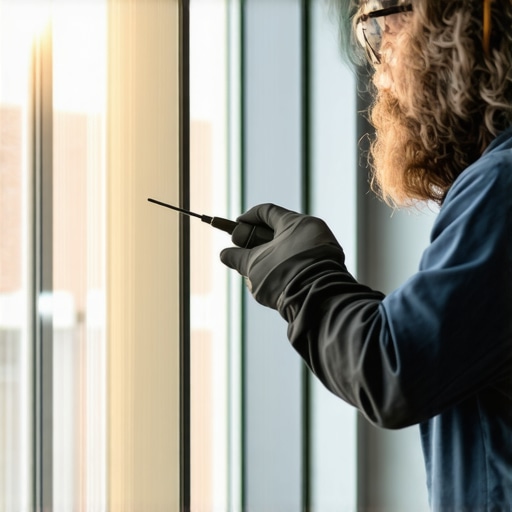
As a master glazier with a quarter-century in the field, I have seen every imaginable failure of transparency. Most people view glass as a static, solid object, but to an expert, it is an amorphous solid that is constantly under the influence of thermal and mechanical stressors. When you are a busy professional, a small chip in your glass is not merely a cosmetic blemish: it is a structural failure waiting for a catalyst. I remember a specific instance that highlights this perfectly. A homeowner called me in a panic because their new windows were ‘sweating.’ I walked in with my hygrometer and showed them the humidity was 60 percent. It wasn’t the windows; it was their lifestyle. They were boiling water for hours without ventilation. The same logic applies to glass repair. I have seen professionals ignore a minor bullseye chip while their car sat in a sub-zero parking garage. When they turned the defroster on high, the thermal shock caused an immediate, catastrophic expansion of the crack. This is why a mobile service and same-day intervention from a professional glass installer are not luxuries: they are fundamental maintenance for the structural integrity of your vehicle or building.
“Installation is just as critical as the window performance itself. A high-performance window installed poorly will fail.” – AAMA Installation Masters Guide
Blueprint B: The Repair Autopsy
When we examine why a glass chip fails, we have to look at the physics of the fracture. A chip repair is essentially a micro-engineering project. When an object strikes the glass, it creates a void in the outer layer of the laminated assembly. This void is a collection of micro-fissures that extend into the glass matrix. If moisture enters these fissures, it can reach the polyvinyl butyral (PVB) interlayer. In cold climates like ours, that moisture freezes and expands with a force that the glass cannot resist. This is where mobile service becomes a lifesaver for the busy professional. We don’t just ‘fill a hole.’ We use a vacuum-pressure process to extract air and moisture from the fracture before injecting a high-viscosity anaerobic resin. This resin must have a refractive index nearly identical to the glass itself (typically around 1.517) to restore visible transmittance (VT) and structural strength. Without this precise intervention, the rough opening of the crack will inevitably grow as the glass undergoes thermal expansion and contraction cycles.
The Physics of Thermal Stress
In northern climates, the U-Factor is king. We are constantly fighting the loss of heat. When you have a chip, you have a localized point of high thermal stress. The glass around the chip has a different thermal profile than the rest of the pane. A professional glass installer knows that during a same-day repair, the temperature of the glass must be stabilized. If it is too cold, the resin will not flow into the micro-fissures. If it is too hot, the resin may cure prematurely before full penetration. This is why mobile service units are equipped with specialized heating and cooling tools to manage the environment of the repair site. We look at the weep hole and glazing bead as part of the larger water management system, and we ensure that no part of the repair process compromises the surrounding seals or the sash of the window unit. If you are a professional with a schedule packed with meetings, you cannot afford to leave your car or office to sit in a shop. The service must come to you, but it must bring the laboratory-grade precision of the shop with it.
“The integrity of a fenestration system relies heavily on the immediate mitigation of structural breaches to prevent moisture ingress into the interlayer.” – ASTM E2112 Standard Practice
Material Science: Resins and UV Curing
The average consumer thinks all glue is the same. In the trade, we know better. The resin used in a chip repair must be capable of cross-linking under specific UV wavelengths to create a bond that is actually stronger than the original glass. This isn’t a ‘caulk-and-walk’ situation. We analyze the type of fracture: is it a star break, a bullseye, or a combination? Each requires a different pressure-to-vacuum ratio. A busy professional doesn’t have time to understand the molecular density of the resin, but they do have time for a 30-minute mobile service call that saves them the cost of a full glass replacement. Replacing a full pane involves removing the glazing bead, potentially disturbing the sill pan, and resetting the shims to ensure the unit is plumb, level, and square. A repair, when done immediately, keeps all those factory seals intact. It is the more scientific and more efficient path. We ensure the operable parts of the window or vehicle are not impacted and that the final cure leaves no trace of the initial trauma.
Conclusion: Efficiency through Technical Excellence
The reality is that glass is always in a state of stress. Whether it is resisting wind load or managing the temperature delta between a heated interior and a frigid exterior, the glass is working. A chip is a point of failure that the glass installer must address with surgical precision. For the busy professional, same-day mobile service is the only way to manage this risk without losing productivity. It is the intersection of high-level material science and modern logistics. Don’t wait for the moisture to turn into ice and the chip to turn into a crack that spans the entire surface. Get it handled by someone who knows the difference between a simple fix and a structural restoration. “