Why your screen repair tech needs a flat surface to work
The Illusion of the Simple Screen Repair
Most homeowners view a window screen as a minor accessory, a bit of mesh to keep out the local insect population. However, as a master glazier with a quarter-century in the field, I look at a screen as a tensioned architectural component. When you hire a glass installer for a mobile service, the first thing you should observe is where they set up their workspace. If they are attempting to roll mesh into a frame while it is propped against a truck tire or laying on a patch of uneven grass, you are witnessing the birth of a structural failure. Precision in fenestration starts with a level plane. Without a flat, rigid surface, the geometry of the frame is compromised the moment the spline tool makes its first pass. This is not about convenience; it is about the physics of tension and the integrity of your Rough Opening.
“Installation is just as critical as the window performance itself. A high-performance window installed poorly will fail.” AAMA Installation Masters Guide
The Narrative of the Wavy Mesh
I recall a specific mobile service call in the height of July. A homeowner in the suburbs called me in a panic because their new windows were ‘sweating’ and the screens looked like a funhouse mirror. I walked in with my hygrometer and showed them the humidity was 60 percent. It was not the windows; it was their lifestyle, exacerbated by a terrible screen installation. The previous tech had re-screened the units on a gravel driveway. Because the surface was uneven, the frame twisted during the tensioning process. This created a ‘puckering’ effect in the mesh, which blocked the Weep Hole drainage at the bottom of the Sash. Trapped moisture was sitting against the Glazing Bead, creating a micro-climate of condensation that the homeowner mistook for seal failure. It all started because a tech refused to use a flat table.
The Physics of Screen Tensioning
When we talk about same-day screen or chip repair, we are talking about managing forces. A screen frame is essentially a four-sided spring. When you pull the mesh across the frame and drive the spline (that rubber cord that holds the mesh in place) into the groove, you are introducing lateral tension. If the frame is not supported on a perfectly flat surface, the force of the spline tool will cause the side rails to ‘hourglass’ or bow inward. A bow of even an eighth of an inch means the screen will no longer sit flush against the window frame. This creates gaps that allow insects in, but more importantly, it causes the screen to rattle and vibrate, which can eventually lead to Sash wear. A professional glass installer uses a dedicated table to ensure that the tension is distributed equally across the X and Y axes of the mesh, maintaining the squareness of the unit to within 1/32 of an inch.
The Mobile Service Glass Chip Repair Reality
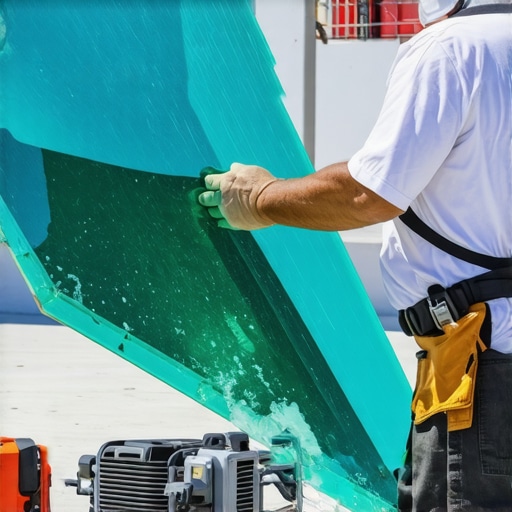
The need for a flat surface extends to chip repair as well. While the glass remains in the vehicle or the frame, the mobile service tech must ensure the vehicle is parked on level ground. Why? Because chip repair involves injecting a low-viscosity resin into a fracture. This resin relies on capillary action to fill the microscopic voids in the glass. If the window is at an angle, gravity pulls the resin to one side of the break, leaving an ‘optical bridge’ or an air pocket. This results in a repair that is visible to the naked eye and structurally unsound. In our trade, we call this a ‘dry spot.’ A same-day repair is only effective if the resin cures in a uniform layer, matching the refractive index of the surrounding glass. This level of precision is impossible if the tech is fighting gravity on an incline.
“A glass repair must restore the structural integrity of the lite and maintain a refractive index matching the original material.” ASTM Standards for Field Glazing
Thermal Dynamics and the SHGC Factor
In hotter climates, the screen is the primary defense against Solar Heat Gain Coefficient (SHGC). A flat, properly tensioned screen with a high-density mesh can reflect a significant portion of long-wave infrared radiation before it even touches the glass. This is the ‘Surface #1’ principle. If the screen is wavy or improperly seated due to a poor installation surface, you lose that uniform thermal barrier. The uneven gaps allow ‘hot spots’ to form on the glass surface, which can lead to thermal stress cracks in the Sash, especially if you have high-performance Low-E coatings on Surface #2. The screen acts as a sacrificial heat shield; if it is not flat, the shield is broken.
Why Material Science Matters
We must also consider the Glazing Bead and the Muntin bars. In many modern window designs, the screen sits in a specific track that is millimetre-precise. If a glass installer uses the wrong spline diameter because they are trying to force a fit on an uneven surface, they can actually crack the vinyl track. This is common with ‘caulk-and-walk’ installers who prioritize speed over the Rough Opening tolerances. A professional understands that the spline must be sized exactly for the groove width plus the thickness of the mesh. Forcing a .160 spline into a .140 groove on a wobbly surface is a recipe for a cracked frame. We use Shim techniques even on our worktables to ensure that when we apply the 15-20 pounds of pressure required for the spline roller, the frame does not deflect. This is the difference between a repair that lasts twenty years and one that fails when the first wind gust hits.
Conclusion: Precision Over Convenience
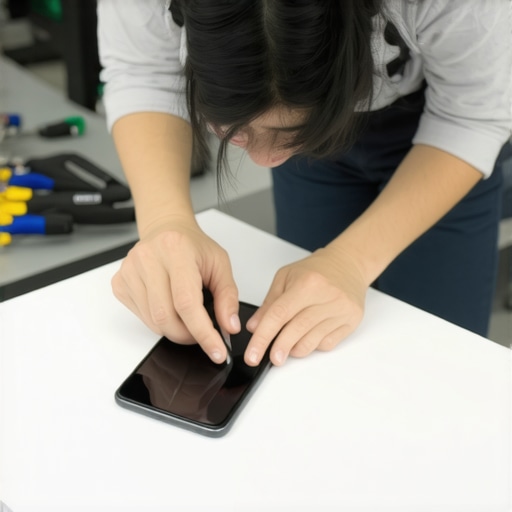
The next time you see a mobile service van pull up, look at their equipment. Are they setting up a folding table with a specialized rubberized top? Or are they leaning your Sash against a tree? The flat surface is the foundation of all glazing work. Whether it is a same-day chip repair or a full screen overhaul, the geometry of the glass and its housing demands a level plane. Don’t settle for a tech who treats your home components like a DIY project. Demand the precision that only a stable, flat workspace can provide.