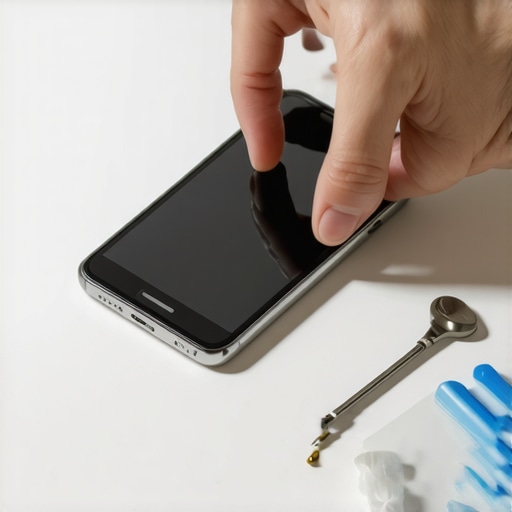
Why your mobile tech needs a flat surface for a glass swap
The Criticality of Foundation in Mobile Glass Repair
When you see a mobile glass installer pull into your driveway, you might think the only requirement for a successful repair is a toolbox and a steady hand. However, the physics of glass replacement is far more demanding. If you are looking for chip repair or same-day glass replacement, the environment in which the work occurs is just as vital as the quality of the glass itself. A master glass installer understands that a mobile service is not a license to ignore the fundamental laws of structural engineering. The glass pane, whether it is for a residential operable window or a vehicle, is a rigid component that must be integrated into a frame that is perfectly neutral. If the surface where the technician is working is not flat, the entire operation is compromised from the start.
The Condensation Crisis and the Leveling Truth
A homeowner called me in a panic because their new windows were ‘sweating’ and one had actually developed a stress crack within forty-eight hours of a mobile installation. I walked in with my hygrometer and showed them the humidity was 60 percent, but more importantly, I put a digital level on the sash. The installer had performed the glass swap while the window unit was leaning against a sloped garden wall. Because the frame was under torsional stress during the curing process, the glass was forced into a slight twist. As the temperature dropped that night, the glass tried to contract, but the physical tension of the twisted frame wouldn’t allow it. Snap. It wasn’t a defect in the glass; it was a failure to respect the Rough Opening dynamics and the necessity of a flat working plane. This is why a mobile service professional will insist on a flat garage floor or a level driveway before they even crack open their adhesive kit.
“Installation is just as critical as the window performance itself. A high-performance window installed poorly will fail.” AAMA Installation Masters Guide
The Science of Torsional Stress in Glass Swaps
Why does a flat surface matter for a glass installer? It comes down to torsional rigidity. Glass has incredible compressive strength but very low tolerance for shear or twisting forces. When a technician performs a same-day swap on an uneven surface, the frame of the window or the vehicle body undergoes ‘racking.’ This racking shifts the glazing bead alignment and the sill pan orientation. If the new glass is bonded to the frame while it is in this racked state, the adhesive or the glazing bead will lock that stress into the glass permanently. Once the vehicle or the window frame returns to a flat state, the glass is subjected to constant pulling forces. Over time, or with the first heat cycle, this leads to premature seal failure or spontaneous breakage. For a chip repair, the logic is similar. The resin must flow evenly into the break. If the glass is angled or under stress, the resin may not penetrate the microscopic fissures of the impact point, leading to a failed repair that reappears as soon as you hit a pothole.
Thermal Dynamics and Solar Heat Gain in the South
In hotter climates, the Solar Heat Gain Coefficient (SHGC) becomes the primary enemy. When we talk about mobile service in regions like Texas or Florida, we aren’t just fighting gravity; we are fighting radiant heat. High-performance glass in these regions often utilizes a Low-E coating on Surface #2. This coating is designed to reflect long-wave infrared radiation back toward the sun, preventing the interior of the structure from becoming a greenhouse. However, these coatings are sensitive to the touch and to the chemicals used during the cleaning process of a glass swap. If the technician is working on an incline, the risk of cleaning agents running and pooling at the bottom of the glazing bead increases, which can chemically attack the seal or the coating itself. We prioritize a lower SHGC to keep cooling costs down, but that efficiency is lost if the glass installer doesn’t ensure a perfect, level seal that prevents air bypass around the weep holes.
“The NFRC rating system provides a reliable way to determine if a window will keep your home cool, but only if the air infiltration ratings are maintained through proper installation geometry.” NFRC Technical Bulletin
The Physics of Adhesive Curing
The adhesives used in modern glass installation are sophisticated polymers that require specific conditions to reach their full structural strength. Whether it is a polyurethane for an automotive application or a silicone-based sealant for a residential sash, the cure cycle is affected by both temperature and orientation. On a flat surface, the weight of the glass is distributed evenly across the shim points and the sill pan. This allows the adhesive to ‘wet out’ the entire contact surface. On an angle, the adhesive can sag, creating thin spots in the seal. This leads to the ‘whistling’ windows often reported after a mobile service job. That whistle is actually high-velocity air being forced through a microscopic gap in the sealant where the material slumped during the curing process. When you demand same-day service, you are shortening the window for the adhesive to set; therefore, the initial placement must be perfect.
Water Management and the Shingle Principle
Every glass installer must be an expert in water management. The ‘Shingle Principle’ dictates that every layer of the window assembly must overlap the one below it to ensure water flows down and out, never inward. This involves the flashing tape, the drip cap, and the sill pan. When a mobile service technician works on a flat surface, they can accurately verify that the weep holes are at the lowest point of the assembly. If the installation happens on a tilt, water can actually be trapped inside the frame, leading to the rot repair scenarios we all dread. I have seen muntins and glazing beads completely degraded because water was diverted into the internal channels of the frame rather than out the weep holes, simply because the unit wasn’t level when the final seals were applied. For chip repair, the flat surface ensures that the UV curing light can be placed at a perfectly perpendicular angle to the glass, ensuring the same-day fix is as clear and strong as the original factory finish.