Why your windshield wipers skip over a new chip repair
The Dynamics of Surface Friction and Glass Integrity
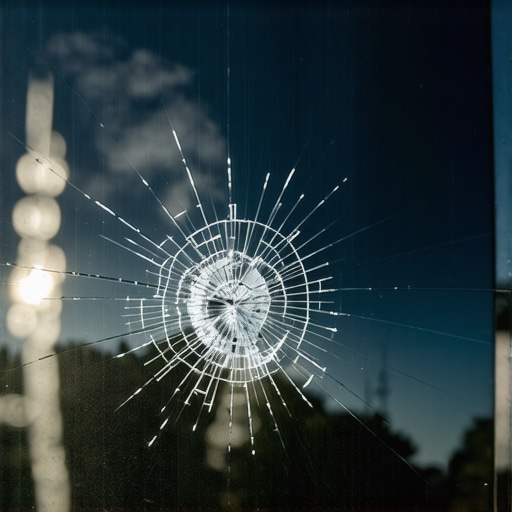
As a master glazier with over 25 years in the industry, I have seen every possible failure in glass maintenance, from massive curtain wall seal failures to the smallest windshield dings. Most people treat a windshield chip as a minor cosmetic nuisance, but to a professional glass installer, it represents a structural breach in a sophisticated laminated system. When a customer tells me their windshield wipers are skipping or chattering over a freshly completed chip repair, I do not just look at the wiper blade; I look at the microscopic landscape of the repair site. The skipping is not a mystery; it is a direct consequence of surface energy, resin hardness, and the physical chemistry of glass restoration.
A homeowner called me in a panic recently because their new glass repair was ‘sweating’ and causing the wipers to jump like a nervous horse. I walked out with my hygrometer and a high-intensity UV lamp to show them the reality of the situation. It was not the glass failing; it was a combination of ambient humidity levels and a poorly leveled pit filler that had created a microscopic speed bump on the surface. We are dealing with tolerances measured in microns, and if your mobile service technician does not understand the Shore D hardness of the resin they are injecting, your wipers will pay the price in chatter and premature wear.
“Installation is just as critical as the window performance itself. A high-performance window installed poorly will fail.” – AAMA Installation Masters Guide
In cold climates like Chicago or Minneapolis, the physics of a chip repair become even more volatile. When we talk about the U-Factor in residential windows, we are measuring heat transfer, but in automotive glass, we are managing the rapid expansion and contraction of the glass lite. A chip creates a point of thermal stress. If you have moisture trapped in that chip before the glass installer arrives for a same-day service, that moisture will turn to steam or expand during the curing process, creating a ‘hump’ in the resin. This hump disrupts the laminar flow of water over the glass, causing the wiper blade to lose its seal and skip. In these northern zones, the enemy is heat loss and the condensation that forms at the dew point on the interior surface. Warm-edge spacers in home windows prevent this, but on a windshield, we rely on the PVB interlayer to provide thermal stability. If the repair resin does not match the refractive index and the thermal expansion coefficient of the surrounding soda-lime glass, the wiper blade will detect that difference every time it passes over.
The Anatomy of the Rough Opening and the Glass Seal
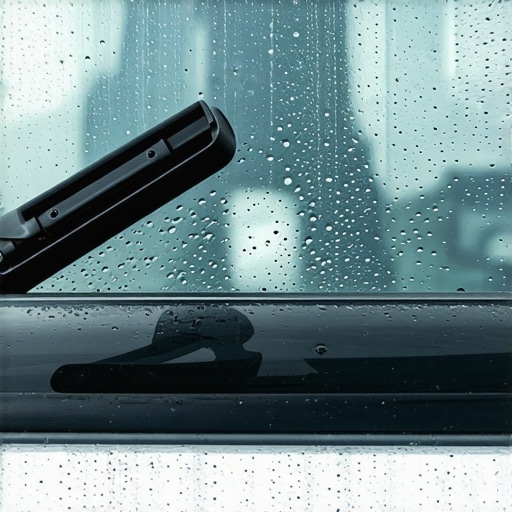
Whether I am shimming a 400-pound insulated glass unit into a rough opening or injecting acrylic resin into a bullseye chip, the principle of water management remains the same. In the world of residential glazing, we use a sill pan and flashing tape to ensure that any water entering the system is directed back to the exterior via a weep hole. A windshield chip repair is, in essence, a microscopic version of a window installation. The ‘pit’ of the chip is the rough opening, and the resin is our flashing system. If the resin is not properly leveled with a razor and polished to a 6-7 Mohs hardness equivalent, it creates a high-friction zone. Most mobile service ‘caulk-and-walk’ installers forget that the wiper blade is a squeegee that requires a perfectly flat, hydrophobic surface to function. Any deviation in the glazing bead of the repair causes the blade’s rubber to catch and release, which is the technical definition of chatter.
“The primary goal of any glass restoration is to restore the structural integrity of the lite while maintaining the optical and functional path of the surface.” – NFRC Performance Standards
When you opt for a same-day chip repair, you are often getting a technician who is rushing the curing process. In southern climates like Phoenix or Miami, where the Solar Heat Gain Coefficient (SHGC) is the primary concern, the intense UV radiation can cause the resin to cure too quickly. This results in ‘shrinkage,’ where the resin pulls away from the edges of the chip, leaving a microscopic trench. Your wiper blade falls into this trench and then hits the far wall of the chip, causing a skip. This is why a professional glass installer must control the environment, often using a UV shield to slow the cure and ensure the resin stays flush with the glass surface. [IMAGE_PLACEHOLDER]
Technical Breakdown: Resin Viscosity and Wiper Chatter
The science of why your windshield wipers skip over a new chip repair involves the stick-slip phenomenon. The coefficient of friction of glass is relatively low when lubricated with water. However, the resins used in many mobile service repairs are often softer than glass. When the wiper blade passes over the repair, the friction increases because the rubber ‘bites’ into the softer resin. If the technician did not use a high-quality pit filler or a cerium oxide polishing compound to finish the job, you are essentially asking your wiper to glide over a piece of plastic embedded in a sheet of crystal. The difference in surface tension is palpable. This is why I always check the sash and muntin equivalent on car glass, the edges and the frame, to ensure the glass is not under undue stress that could be bowing the repair site upward. Weep hole logic applies here too; if the repair is not sealed, moisture can get under the resin, freeze, and lift the repair, making it a permanent obstacle for your wipers.
Ultimately, the quality of a same-day mobile service repair depends on the technician’s willingness to go beyond the basic injection. It requires a deep understanding of the chemical bond between the anaerobic resin and the glass molecules. If your wipers are still skipping, it is likely that the installer failed to perform a final flush-cut with a fresh razor or neglected the polishing phase. In my 25 years, I have learned that you cannot cheat physics. Whether it is a multi-million dollar glass facade or a small star-break on a commuter car, the surface must be monolithic. Anything less is just a temporary plug that will eventually lead to a full replacement when the cracks begin to run towards the edge of the glass opening. Do not settle for a repair that you can feel with your fingernail; if you can feel it, your wipers can too, and they will tell you about it with every stroke across the glass.
{“@context”: “https://schema.org”, “@type”: “HowTo”, “name”: “How to Identify a Quality Windshield Chip Repair”, “step”: [{“@type”: “HowToStep”, “text”: “Inspect the repair site for surface flushness using a magnifying glass to ensure no resin ‘humps’ exist.”}, {“@type”: “HowToStep”, “text”: “Run a new wiper blade over the repair area to check for stick-slip vibration or chatter.”}, {“@type”: “HowToStep”, “text”: “Check the optical clarity of the resin to ensure the refractive index matches the original glass lite.”}], “totalTime”: “PT30M”}