The danger of driving with a cracked windshield in direct sun
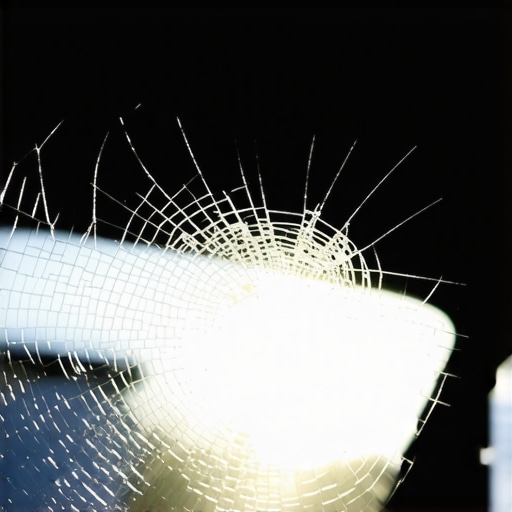
I have spent over two decades in the glazing industry, handling everything from curtain wall assemblies in skyscrapers to the precision installation of laminated safety glass. I have seen glass behave in ways that would defy the expectations of a layperson. One afternoon in the peak of a Texas summer, I watched a technician pull a vehicle into a shop that had been sitting in the 105-degree sun for four hours. There was a tiny star-break, no larger than a dime, near the center of the glass. As soon as the shop’s air conditioning hit that exterior surface, the glass emitted a sharp report like a small caliber pistol. That tiny chip instantly bifurcated the entire width of the windshield. The previous installer had ignored the mounting tension, and the thermal shock did the rest. This is not just about a cosmetic blemish; it is about the physics of thermal expansion and the structural integrity of your vehicle’s safety envelope.
The Anatomy of Laminated Glass and Thermal Stress
To understand why a cracked windshield is a ticking time bomb in the sun, you must understand the architecture of the glass itself. Automotive windshields are not monolithic; they are a sandwich of two layers of annealed glass bonded by a Polyvinyl Butyral (PVB) interlayer. This construction is designed to ensure that upon impact, the glass adheres to the plastic core rather than shattering into shards. However, this three-layer system is highly sensitive to the Coefficient of Thermal Expansion. When the sun beats down on the glass, the outer lite expands. If the vehicle is stationary, the dark ceramic frit (the black band around the edge) absorbs heat at a significantly higher rate than the clear sections. This creates a massive thermal gradient. A chip in the glass acts as a stress riser. In engineering terms, a stress riser is a location where the internal stress of a material is concentrated. Without a chip, the glass distributes the load of thermal expansion across its surface. With a chip, that energy is funneled into the microscopic apex of the crack. The heat effectively provides the energy required to overcome the fracture toughness of the glass, causing the crack to propagate or ‘run.’
“Installation is just as critical as the window performance itself. A high-performance window installed poorly will fail.” – AAMA Installation Masters Guide
The Danger of the AC Blast: Thermal Shock
The real danger often occurs when the driver enters a sun-baked car and immediately activates the air conditioning on its highest setting. This creates a state of thermal shock. You have the exterior lite of the glass reaching temperatures upwards of 160 degrees Fahrenheit while the interior surface is being blasted with 50-degree air. The rapid contraction of the inner lite against the expanding outer lite creates a shearing force. If there is a chip repair needed that has been neglected, the glass has no structural reserve left to handle this movement. This is why same-day service is not a luxury; it is a safety necessity. As a glass installer, I often have to explain that the windshield provides up to 60 percent of the structural integrity in a rollover accident and prevents the roof from crushing. A crack that has run across the glass compromises this entire load-bearing capacity.
The Role of the Solar Heat Gain Coefficient (SHGC)
In hot climates, the Solar Heat Gain Coefficient is the metric that dictates how much solar radiation enters the cabin. Most modern windshields are treated with metallic oxides to lower this number, but these coatings also change how the glass absorbs energy. Because the glass is designed to reflect or absorb infrared light, it stays hotter than the ambient air. When you are driving, the airflow provides some convective cooling, but when you stop, the glass enters a ‘soak’ period. During this time, the edges of the glass, which are tucked into the Rough Opening of the vehicle frame and secured with high-modulus urethane, cannot expand freely. This confinement adds mechanical stress to the thermal stress already present. If your mobile service technician identifies that the crack has reached the glazing bead or the edge of the glass, the unit is no longer a candidate for repair and must be replaced to restore the safety seal.
“The window’s ability to resist environmental loads is dependent on the integrity of the entire assembly, including the glazing material and the frame interface.” – ASTM E2112 Standard Practice
Mobile Service and the Precision of the Repair
Many homeowners ask if mobile service is as effective as a shop repair. When done by a master glass installer, the answer is yes, provided the environment is controlled. We use vacuum-pressure injectors to clear the air out of the break and replace it with a specialized UV-curable resin that has the same refractive index as the glass. This resin must be bonded at the molecular level to the PVB interlayer and the glass walls. If the glass is too hot from the sun, the resin can thin out and fail to cure properly, leading to a cloudy repair. This is why we often use sunshades or work in the shade to bring the glass temperature down to an operable range before beginning the chip repair. We aren’t just filling a hole; we are restoring a structural component. We look at the weep holes in the cowl and the sill pan area to ensure that moisture is not trapped against the urethane, which could cause delamination over time. A professional knows that a ‘caulk-and-walk’ approach is a recipe for disaster. The glass must be properly shimmed and aligned within the rough opening to ensure there is no point-loading on the edges. If the glass touches the metal frame directly, the different expansion rates will cause it to crack the first time it sits in the sun.