The simple trick to stop a rock chip from spreading today
The Mechanics of Fracture: Why Your Glass is a Ticking Time Bomb
As a master glazier with over a quarter-century of hands-on experience, I have seen every type of glass failure imaginable. From structural glass fins in high-rise lobbies to the delicate sash of a restored Victorian, the physics of glass remain constant. Glass is not a liquid, despite what your high school science teacher might have whispered; it is an amorphous solid with an incredible compressive strength but a pathetic tensile strength. When a rock hits your glass, it creates a localized area of extreme tension that exceeds the molecular bonds of the silica. This is where the story begins, and for most people, it ends with a spider-webbed mess and a costly replacement. But if you understand the thermal dynamics at play, you can intervene before the physics of expansion take over.
The Moisture Crisis: A Narrative of Premature Failure
I recall a specific instance that perfectly illustrates the volatility of a neglected chip. A homeowner called me in a panic because their new high-performance windows were ‘sweating’ and a small chip they had ignored for a week had suddenly bifurcated across the entire pane. I walked in with my hygrometer and showed them the humidity was 60 percent. It was not the windows; it was their lifestyle, specifically how they were managing the interior environment. In the case of the chip, moisture had entered the microscopic fissures of the break. When the temperature dropped that night, that moisture reached its dew point, condensed, and then expanded as it approached freezing. That expansion acted like a hydraulic wedge, driving the crack further into the glass. This is the primary reason why immediate action is not just suggested; it is structurally mandatory. If you leave a chip exposed to the elements, you are essentially inviting a crowbar into the molecular structure of your glazing.
“Installation is just as critical as the window performance itself. A high-performance window installed poorly will fail.” AAMA Installation Masters Guide
The Simple Trick: The Hydrophobic Barrier
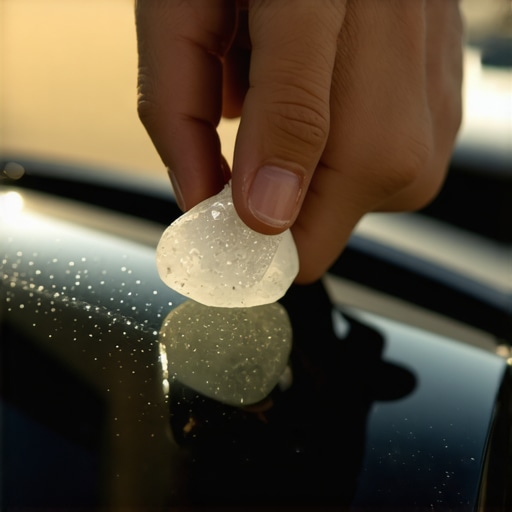
The trick to stopping a rock chip from spreading today is surprisingly low-tech but scientifically sound: clear adhesive tape. No, this is not a permanent repair, and any ‘glass installer’ who tells you otherwise is a hack. However, applying a piece of clear packing tape over the impact point immediately serves one critical purpose: it excludes atmospheric contaminants. When a professional chip repair is performed, we use an optical-grade UV-curable resin with a refractive index that matches the glass. For that resin to create a covalent bond with the silica, the ‘Rough Opening’ of the crack must be pristine. If you drive around for three days, you are forcing road salt, waxes, and washer fluid into that void. Once those contaminants are in there, no amount of vacuum pressure from a repair kit will get them out, and your repair will look like a dead bug on your window. The tape acts as a temporary ‘Glazing Bead,’ shielding the interior of the fracture from the hydrostatic pressure of rain and the chemical interference of the outside world.
Thermal Gradient Stress in Hot Climates
Since we are looking at this through the lens of a mobile service often operating in high-heat environments, we must discuss Solar Heat Gain (SHGC). In a South/Hot climate, your glass is a thermal sponge. The Low-E coating on Surface #2 is designed to reflect radiant heat, but the glass itself still absorbs energy. When you have a chip, the glass around that chip is under immense stress. If you get into a hot car and blast the air conditioning, you create a massive thermal gradient. The interior surface of the glass contracts rapidly while the exterior surface, baked by the sun, remains expanded. This differential stress is the leading cause of a ‘run.’ The chip provides a path of least resistance for that stress to vent. By using the tape trick and parking in the shade, you minimize the delta between the interior and exterior temperatures, giving the ‘same-day’ mobile service technician a chance to arrive before the structural integrity is compromised.
“Glass is a brittle material that does not exhibit plastic deformation; therefore, any localized stress concentration at a flaw will lead to catastrophic propagation if not mitigated.” ASTM C1036 Standard Specification for Flat Glass
The Technical Anatomy of the Break
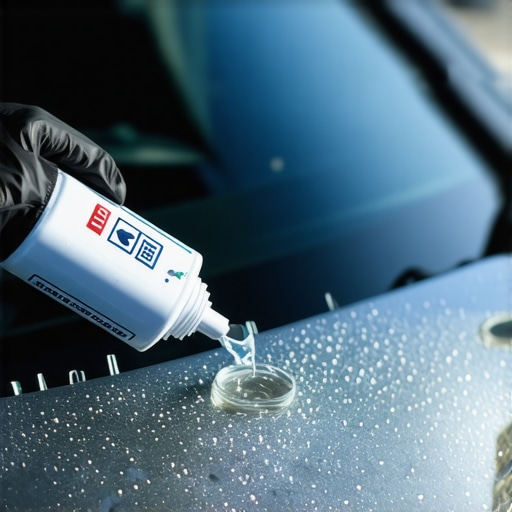
Not all chips are created equal. You have the ‘Bullseye,’ which is a conical fracture where a chunk of the outer lite has separated but remained in place. Then you have the ‘Star Break,’ which features radial cracks emanating from the impact point. The Star Break is the most dangerous because each those legs is a ‘Sash’ into the deeper layers of the glass. In laminated glass, the Polyvinyl Butyral (PVB) interlayer holds the shards together, but it does nothing to stop the crack from moving horizontally through the annealed layer. A professional glass installer uses a bridge and injector tool to create a vacuum over the break, drawing out the air (and hopefully not moisture, if you used the tape trick) and replacing it with resin. This process requires a precise ‘Weep Hole’ effect where air can escape but the resin is forced into the deepest recesses of the fracture.
Why DIY Kits are a False Economy
I have a particular disdain for the ‘caulk-and-walk’ mentality, and nowhere is this more prevalent than in the $10 DIY repair kits found at hardware stores. These kits often use a one-size-fits-all resin with a high shrinkage rate. As the resin cures under the sun, it pulls away from the edges of the crack, leaving a visible silver line. More importantly, these kits lack the mechanical advantage to properly ‘flex’ the break. A master glazier knows that you sometimes have to apply slight pressure from the inside to open up the ‘Muntin’ of the crack to allow the resin to flow. Without this technique, you are just painting over a wound. If you want a same-day fix that actually lasts, you need a mobile service that understands the viscosity requirements of different temperatures. A resin that works in a Minneapolis winter will be too thin for a Phoenix summer, leading to ‘flow-out’ and failure.
The Professional Standards of Repair
When you call a mobile service for a same-day repair, you should be looking for more than just a guy with a toolbox. You want someone who understands the ROLAGS (Repair of Laminated Automotive Glass Standard). They should inspect the ‘Rough Opening’ of the chip for any signs of ‘flow’ or dirt. If the chip is larger than a quarter or located in the driver’s direct line of sight, a responsible technician will tell you that the structural integrity of the ‘Operable’ glass is compromised and recommend a full replacement. We are talking about your safety. In a modern vehicle, the windshield is a structural component that supports the roof in a rollover and provides the backstop for the passenger-side airbag. A compromised ‘Glazing Bead’ or a poorly repaired chip can lead to a catastrophic failure of these safety systems.
Final Verdict on the Tape Trick
To summarize the master glazier’s approach: 1. Identify the chip immediately. 2. Clean the surface GENTLY with a dry cloth (no chemicals!). 3. Apply a square of clear packing tape to seal the void. 4. Avoid the car wash and extreme temperature shifts. 5. Call a professional glass installer for a same-day mobile service. This protocol ensures that when the technician arrives, the glass is in the best possible condition for a successful, near-invisible repair. Don’t buy the hype of ‘magic’ liquids; buy into the science of proper glass maintenance and water management. Your windows are the only thing between you and the elements; treat them with the technical respect they deserve.