How to verify your technician used a high-quality primer
The Silent Failure of the Invisible Bond
You see the crack in your windshield or the foggy pane in your window frame, but what you do not see is the microscopic battle happening between the glass and the adhesive. Most homeowners and car owners focus on the glass quality, yet as a master glazier with 25 years in the field, I can tell you that the glass is rarely the point of failure. The failure is almost always in the prep work. Specifically, it is the primer. A mobile service technician arrives, performs a chip repair or a full replacement, and leaves within the hour. But if they cut corners on the chemical bond, you are looking at a safety hazard that will manifest months down the line. I once pulled a glass pane out of a residential sliding door in a coastal home where the salt air had completely bypassed the seal. Why? The previous glass installer had relied on a ‘all-in-one’ adhesive that skipped the dedicated primer step. The metal frame was pitted with oxidation, and the glass was essentially held in by friction and luck. The previous guy was a ‘caulk-and-walk’ specialist, the kind who thinks a tube of silicone fixes every sin in a rough opening.
“Installation is just as critical as the window performance itself. A high-performance window installed poorly will fail.” – AAMA Installation Masters Guide
The Chemistry of Adhesion: Why Primer is Non-Negotiable
To understand why you must verify your technician’s primer, you have to understand the molecular nature of glass. Glass is non-porous and often carries a molecular film that repels most adhesives. A high-quality primer is not just a ‘glue’; it is a chemically engineered bridge. It contains silane coupling agents that react with the silica in the glass on one side and the polyurethane or urethane of the sealant on the other. When a technician performs a same-day chip repair or replacement, they are fighting against time and environment. In cold climates, the dew point becomes your worst enemy. If the temperature of the glass is near the dew point, a microscopic layer of moisture forms. Without a high-quality primer designed to displace that moisture and ‘bite’ into the surface, your bond is compromised before the technician even packs their tools. We call this the ‘flash-off’ period. A quality primer requires a specific amount of time for the solvents to evaporate. If the technician is rushing to the next job, they might apply the urethane while the primer is still wet, which leads to ‘solvent entrapment’ and a bond that will peel like a bad sunburn in the July heat.
Verification: What to Watch for During the Mobile Service
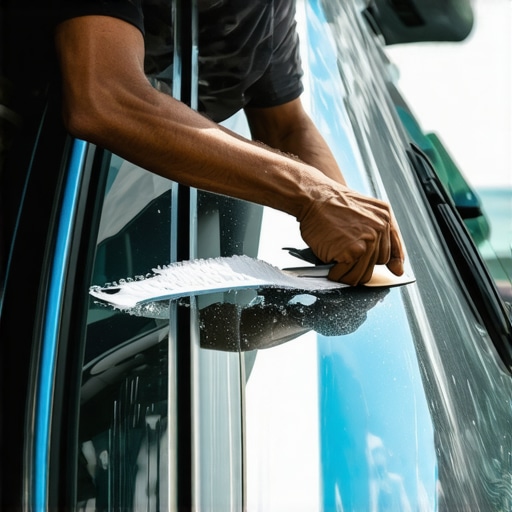
When the mobile service van pulls up, you need to be an active observer. You do not need to be a chemist, but you should know the trade cant of a professional. First, look at the bottles. A professional technician will usually have a multi-step kit. This often includes a glass cleaner, a glass activator, and a dedicated black-out primer. If you see them pull out a single, unmarked spray bottle and a rag, you are likely witnessing a shortcut. Ask them about the ‘flash time.’ A real pro will tell you, ‘I need to let this sit for three to five minutes depending on the humidity.’ If they say it’s ‘instant,’ they are selling you a fairy tale. Second, observe the application method. The primer should be applied with a clean, single-use felt dauber. If they are using a dirty rag or a brush they keep in their pocket, they are introducing contaminants like skin oils or dust into the bond. These contaminants act as a release agent. You might have a beautiful new sash or a clear chip repair, but the structural integrity is hollow. Even in a simple repair, the primer must cover every millimeter of the bonding surface to prevent oxygen and moisture from reaching the metal or wood behind the glass.
“The application of primers shall be in accordance with the manufacturer’s written instructions to ensure proper adhesion and weatherability.” – ASTM E2112 Standard Practice
Climate Logic: The Cold Weather Challenge
In regions like Chicago or Minneapolis, the stakes for primer quality are even higher. In these cold zones, the primary enemy is heat loss and the resulting condensation. We focus heavily on the U-Factor of the glass, but the perimeter seal is what prevents that cold air from bypassing the glazing bead and entering your home. If the primer fails due to improper application in low temperatures, the seal will shrink and pull away. This creates a bridge for cold air to hit the warm indoor air, leading to condensation on the interior muntin or the sill pan. You start seeing mold growth, and you blame the window, but the culprit was the $5 bottle of cheap primer used during the install. A high-quality cold-weather primer is formulated to remain flexible and maintain its ‘grab’ even when the thermometer dips below freezing. For same-day service in these areas, technicians should be using heat guns to pre-warm the glass surface, ensuring the primer can react properly without being inhibited by ice crystals at the molecular level. If your tech isn’t checking the glass temperature, they aren’t doing the job right.
The Anatomy of a Professional Seal
Whether it is an operable window or a fixed lite, the water management system relies on that primer bond. Think of the sill pan as the last line of defense. If water gets past the external flashing tape and reaches the glass edge, it is the primer-backed sealant that keeps the water from rotting out your rough opening. A quality install is like a shingle system: everything must overlap in a way that sheds water downward toward the weep hole. If the primer fails, the ‘shingle’ is broken. You might think a chip repair is just about optics, but it is also about preventing that chip from becoming a structural crack that compromises the entire pane. A high-quality primer in a chip repair ensures the resin stays put during the extreme expansion and contraction cycles of the glass. Without it, the repair will yellow and pop out within a single season. Do not let a ‘Tin Man’ salesman convince you that the glass brand is all that matters. The most expensive glass in the world is worthless if the guy in the van doesn’t understand the chemistry of the primer he is using. Demand to see the NFRC or AAMA certifications of the products they use, and don’t be afraid to ask about their specific cleaning and priming protocol before they start cutting into your home.