Why your lane departure warning needs a glass calibration
The Invisible Precision Behind Your Windshield
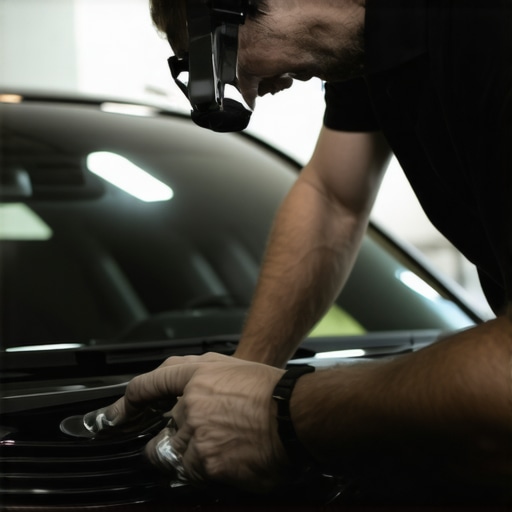
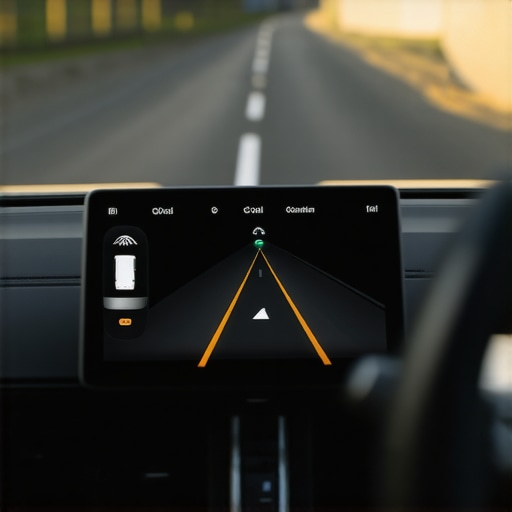
In my twenty-five years as a glass installer, I have seen the industry shift from simple plate glass to high-tech, multi-layered safety systems. Most people look at their windshield and see a clear barrier. I see a complex optical lens. When you hire a mobile service for a chip repair or a full replacement, you are not just buying glass; you are altering the primary sensor housing for your vehicle’s Advanced Driver Assistance Systems (ADAS). A lane departure warning system relies on a camera mounted behind the rearview mirror, peering through the glass to identify road markings. If that glass is replaced without a precise calibration, your safety system is essentially flying blind.
A homeowner called me in a panic because their new windows were ‘sweating.’ I walked in with my hygrometer and showed them the humidity was 60 percent. It wasn’t the windows; it was their lifestyle. I see the same thing in the automotive world. A driver comes to me after a bargain-basement same-day glass swap, complaining that their car is ‘shuddering’ or ‘phantom braking’ on the highway. I put my digital leveling tools on the camera bracket and show them that the pitch is off by less than two degrees. In the world of high-precision glazing, two degrees of error at the source translates to fifty feet of error on the road. It is the same principle we apply when setting a rough opening for a commercial sash; if the foundation is off, the operable parts will fail.
“Installation is just as critical as the window performance itself. A high-performance window installed poorly will fail.” – AAMA Installation Masters Guide
The Physics of Refraction and the U-Factor of Safety
Why does the glass matter so much? It comes down to the refractive index of the Polyvinyl Butyral (PVB) interlayer. In cold northern climates like Chicago or Minneapolis, the glass undergoes significant thermal contraction. We talk about the U-Factor in residential windows to measure heat loss, but in automotive glass, we must consider how temperature affects the density of the glass and, consequently, how light bends as it passes through. If the replacement glass does not match the OEM (Original Equipment Manufacturer) specifications for thickness and curvature, the camera ‘sees’ the lane lines in the wrong physical location.
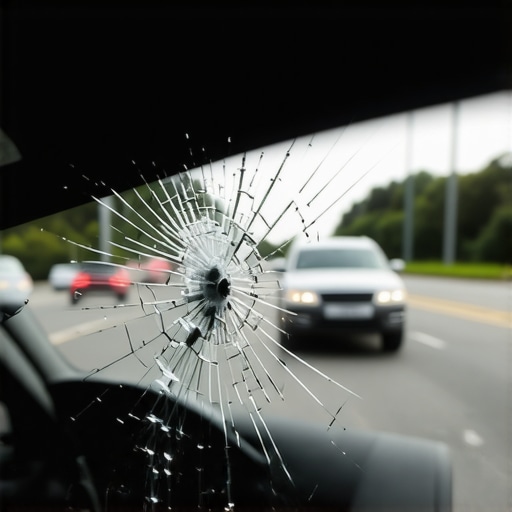
When I am performing a chip repair, I have to be incredibly careful if the damage is in what we call the ‘camera window.’ This is the specific area of the glass the ADAS camera looks through. Even a microscopic distortion from a resin injection can cause the light to scatter. This is why a professional glass installer will often recommend a full replacement over a repair if the chip is directly in the camera’s line of sight. It is not a sales tactic; it is physics. We are managing the ‘Visible Transmittance’ (VT) to ensure the computer processor receives a clean signal.
The ‘Caulk-and-Walk’ Danger in Mobile Service
I have a deep-seated intolerance for ‘caulk-and-walk’ installers. In residential work, these are the guys who skip the flashing tape or the sill pan and just pump the gap full of cheap silicone. In the auto glass world, these are the technicians who perform a mobile service on a slanted driveway. You cannot calibrate a lane departure system if the vehicle is not on a perfectly level surface. The camera needs a ‘zero-point’ reference. If the car is tilted, the calibration will be skewed, and your lane-keep assist might pull you into oncoming traffic because it thinks the road is at an angle.
“Standard Practice for Installation of Exterior Windows, Doors and Skylights requires meticulous attention to the interface between the unit and the rough opening to ensure long-term structural integrity.” – ASTM E2112
Precision is not optional. When we set a large muntin-divided window, we use a shim to ensure everything is square. In a car, the ‘shim’ is the calibration software. We use targets placed at specific distances and heights. The computer then ‘learns’ the new optical path through the glass. This is the only way to account for the minute variations in glass manufacturing. Even the glazing bead equivalent in a car, the polyurethane urethane bead, must be a specific height to ensure the glass sits at the correct distance from the camera sensor.
Thermal Stress and the Same-Day Myth
The rush for same-day service is one of the biggest risks to glass integrity. High-modulus, non-conductive urethanes require a specific ‘Drive-Away Time’ to cure. In cold climates, this cure time slows down significantly. If you drive the car too soon, the glass can shift by a millimeter. That is all it takes to ruin a calibration. We see this in home construction when a weep hole gets plugged by an over-eager caulker; the system fails because the installation didn’t respect the material’s properties. In your car, that millimeter of shift means your lane departure warning will trigger when you are already halfway over the line.
When you look at the NFRC label on a house window, you see numbers for solar heat gain and air leakage. On your windshield, you should be looking for the ‘DOT’ code and the ‘E’ mark, which tell you about the glass’s origin and safety ratings. Cheap aftermarket glass often lacks the structural rigidity of the original. It might look the same, but under the stress of a highway-speed wind load, it can flex. This flexing causes the camera’s ‘Rough Opening’ view to vibrate, leading to intermittent safety system failures. A master glazier knows that the glass is a structural component of the vehicle, providing up to 60 percent of the roof’s strength in a rollover accident.
Conclusion: Don’t Compromise on Calibration
In the end, a window is an engineered system designed to manage heat, light, and safety. Whether it is a triple-pane unit in a high-rise or the laminated glass in your SUV, the installation governs the performance. Do not let a high-pressure salesman or a cut-rate mobile installer convince you that calibration is an ‘optional’ upsell. It is the final, critical step in the glazing process. Without it, you are driving with a high-tech safety system that is effectively blindfolded. Insist on a shop that uses factory-grade glass and performs a full static and dynamic calibration. Your safety, and the safety of everyone on the road, depends on that optical precision.