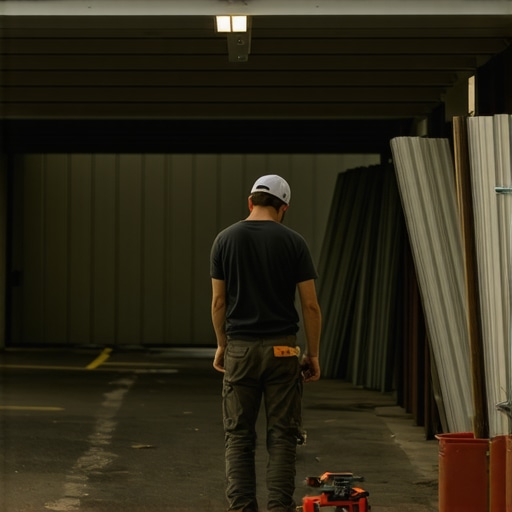
Why glass installers hate working in low-clearance parking garages
The Logistical Nightmare of Subterranean Glazing
In the world of professional glass installation, a quarter-century of experience teaches you that the most challenging jobsites are not the ones hanging off a skyscraper at forty stories. The real headaches happen six feet under, specifically in the low-clearance confines of an urban parking garage. When a property manager calls for a same-day replacement or a chip repair in a subterranean deck, they often do not understand the technical hurdles that come with a 6-foot-6-inch ceiling. For a glass installer who treats their craft as a science, these environments represent a perfect storm of poor lighting, restricted movement, and physical constraints that threaten the integrity of the glass itself.
The Installation Autopsy: Why Tight Spaces Lead to Structural Failure
I once walked onto a job in a downtown parking complex where a previous contractor had attempted to replace a storefront-sized lite in a security kiosk. I pulled a piece of the perimeter molding away and found that the glazing bead was warped and the structural sealant was only partially applied. Why? Because the previous installer could not fit a standard-sized caulking gun into the tight angle created by a low-hanging concrete fire pipe. They relied on a finger-smear of silicone rather than a proper bead. This is the ‘caulk-and-walk’ mentality that leads to water infiltration and eventual rot. When you are working in a space where you cannot even stand up straight, your ability to maintain the proper Rough Opening tolerances disappears. I had to explain to the facility manager that the reason his glass was vibrating in the frame was that the previous guy skipped the shim process entirely because he was too rushed by the cramped conditions.
“Installation is just as critical as the window performance itself. A high-performance window installed poorly will fail.” – AAMA Installation Masters Guide
The Physics of the Mobile Service in Low-Light Tunnels
A mobile service depends on the technician having access to their specialized vehicle. Most professional glazing vans, equipped with heavy-duty glass racks and specialized suction manipulators, stand over seven feet tall. When a parking garage has a low-clearance bar at 6-foot-8, the glass installer is forced into ‘The Long Carry.’ Carrying a 150-pound sheet of laminated glass across two hundred yards of greasy, uneven concrete is not just a safety hazard; it is a risk to the glass. Every time the edge of that glass ‘kisses’ the concrete, you create a microscopic fracture. You might not see it today, but as the building settles and the temperature fluctuates, that micro-crack becomes a full-blown stress fracture. In a northern climate like Chicago or Minneapolis, where the temperature delta between the heated interior of a garage security office and the freezing air of the ramp can be fifty degrees, thermal stress is the primary enemy of glass longevity.
Thermal Dynamics and the U-Factor in Enclosed Spaces
In cold-weather environments, we focus heavily on the U-Factor. The U-Factor measures the rate of heat loss through a window assembly: the lower the number, the better the insulation. In a parking garage, you have stagnant, humid air trapped by heavy concrete walls. If you install a window without a proper Sill Pan or fail to account for the dew point, you will see immediate condensation on Surface #3. I have seen operable windows in garage offices that are literally frozen shut in January because the installer did not understand the isothermal lines of the frame. We use warm-edge spacers specifically to mitigate this, ensuring that the edge of the glass remains closer to the ambient room temperature, preventing the ‘sweat’ that leads to mold growth on the drywall.
The Science of Chip Repair and Resin Viscosity
When performing a chip repair in a dark garage, the physics of the repair change completely. Most high-quality resins used by a professional glass installer are UV-cured. In a low-clearance deck, there is zero natural sunlight. This means we must rely entirely on portable UV lamps. If the technician is inexperienced, they might not realize that the chip repair resin has a specific viscosity measured in centipoise that changes with the ambient temperature of the garage. If the garage is a damp 50 degrees, that resin will not flow into the microscopic ‘star break’ legs of the crack correctly. You end up with an air pocket trapped inside the repair, which will eventually expand and cause the glass to crack out entirely. A true master knows that you have to pre-heat the glass to a specific range before the injector even touches the surface.
“The air leakage and water penetration resistance of a window are as much a function of the installation as they are of the product design.” – ASTM E2112 Standard Practice
Managing Water: The Shingle Principle and Weep Holes
Water management in a garage environment is deceptively complex. Because these structures are often power-washed, the glass assemblies are subjected to high-pressure water from angles that a standard rainstorm would never hit. This is why the Weep Hole system is so critical. If a glass installer blocks the weep holes with excess sealant while trying to finish a job in a dark corner, the water has nowhere to go but inside the Rough Opening. We follow the ‘Shingle Principle’ where every layer of Flashing Tape and every Sill Pan is lapped so that gravity naturally pulls water away from the building’s interior. In the tight confines of a garage entrance, where a Sash might be exposed to constant exhaust and road salt, using the correct non-corrosive hardware is the difference between a five-year fix and a thirty-year solution. We refuse to use standard steel fasteners, opting instead for 300-series stainless steel to prevent the galvanic corrosion that occurs when salt-laden slush hits the window frame.
Conclusion: Why You Should Not Rush a Garage Install
The next time you see a glass installer struggling to maneuver a large pane through a low-clearance entrance, understand that they are fighting the laws of physics. A same-day repair is a great convenience, but it should never come at the cost of technical precision. From ensuring the Muntin bars are perfectly aligned to checking that the Glazing Bead is snapped in with uniform pressure, every detail matters. Don’t buy the high-pressure sales pitch of a ‘fast and cheap’ fix. Buy the numbers, respect the U-Factor, and ensure your installer knows the difference between a temporary patch and a professional glazing solution. { “@context”: “https://schema.org”, “@type”: “HowTo”, “name”: “How to Assess a Glass Chip in a Low-Clearance Environment”, “step”: [ { “@type”: “HowToStep”, “text”: “Inspect the chip for a star-break or bullseye pattern using a high-intensity LED light to compensate for low garage lighting.” }, { “@type”: “HowToStep”, “text”: “Verify the ambient temperature of the glass surface to ensure it falls within the 50 to 85 degree Fahrenheit range for optimal resin flow.” }, { “@type”: “HowToStep”, “text”: “Clear the impact point of any loose glass shards using a carbide scribe to create a clean path for the injector.” }, { “@type”: “HowToStep”, “text”: “Apply the UV-curing resin using a bridge and injector tool, ensuring all air is vacuumed out of the fracture before pressure is applied.” } ] }”,