The quarter test for checking your windshield chips
The Physics of the Quarter Test and Laminated Glass Integrity
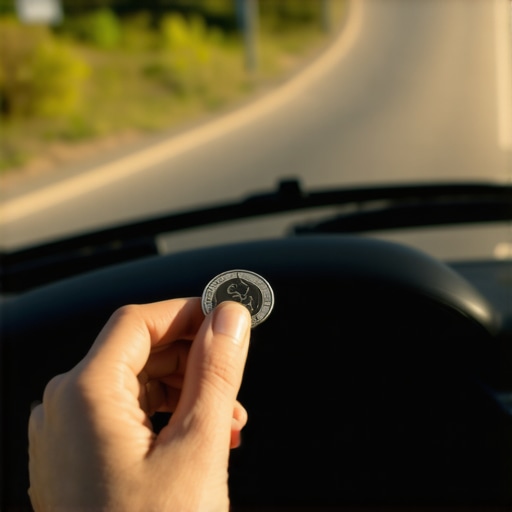
When you hear the sharp crack of a stone hitting your windshield at highway speeds, you are witnessing a high-velocity impact against a sophisticated piece of transparent armor. As a master glazier with over two decades in the trade, I look at that mark and see more than just a blemish; I see a disruption in the molecular tension of a laminated glass assembly. The quarter test is not merely a convenient rule of thumb popularized by marketing departments. It is a fundamental measurement of whether the structural bond between the glass plies and the polyvinyl butyral (PVB) interlayer has been compromised beyond the point of chemical restoration. If a chip or its radiating legs can be covered by a standard U.S. quarter, which has a diameter of approximately 0.955 inches, we are dealing with a fracture zone that generally remains within the elastic memory of the laminate. Beyond that dimension, the shear forces exerted on the glass during vehicle operation make a successful repair nearly impossible.
A homeowner, or in this case, a vehicle owner, called me in a panic because their new windshield was ‘sweating’ and a small nick had suddenly expanded across the entire passenger side. I walked out to the vehicle with my hygrometer and a thermal camera and showed them that the interior humidity was over 60 percent. It was a cold February morning in Chicago. They had turned their defroster on high, creating a massive Delta T (temperature difference) between the freezing exterior glass surface and the rapidly heating interior. It wasn’t just the window failing; it was a lack of understanding regarding how thermal shock interacts with a pre-existing fracture. This is why the quarter test is a time-sensitive diagnostic. A chip is a ticking time bomb of thermal stress.
“Installation and repair protocols are just as critical as the glass performance itself. A high-performance glazing unit, whether in a building or a vehicle, will fail if the structural integrity of the seal is not maintained.” – ASTM E2112 Standard Practice
The Anatomy of Laminated Glass: Surface #1 to Surface #4
To understand why a glass installer insists on the quarter test, one must understand the Glass Class of laminated safety glass. Your windshield consists of two layers of annealed float glass. These layers are created by pouring molten glass over a bath of liquid tin to ensure near-perfect flatness. Between these two layers is a 0.030-inch thick sheet of PVB. In the glazing industry, we identify four surfaces: Surface #1 is the exterior, Surface #2 is the inner face of the outer pane, Surface #3 is the outer face of the inner pane, and Surface #4 is the interior of the vehicle. A rock chip is almost always a failure on Surface #1. When the impact occurs, a shockwave travels through the glass. If the energy is high enough, it creates a Hertzian cone fracture, often seen as a ‘bullseye.’ If the impact is sharp, it creates ‘legs’ or radial cracks. The quarter test assesses whether these fractures have reached the glass bite or the frit (the black ceramic paint around the edges), which are areas under extreme perimeter tension.
The Science of Resin Infiltration and Refractive Index
When you opt for a mobile service or same-day repair, you are paying for chemistry, not just a cosmetic fix. A professional glass installer uses a bridge and injector tool to create a vacuum over the chip. This vacuum is vital because it removes air and moisture from the fracture. If moisture remains, it will interfere with the curing agent. We then inject a specialized anaerobic acrylic resin. This resin is engineered to have a refractive index nearly identical to that of the glass. Refractive index is the measurement of how much light bends when passing through a medium. If the resin and the glass don’t match, the chip remains visible because the light reflects off the interface. By using a resin that mimics the glass, we achieve optical clarity and structural cohesion. The resin is then cured using a specific wavelength of ultraviolet (UV) light, which triggers a cross-linking reaction, turning the liquid resin into a hard, stable polymer that bonds to the PVB interlayer.
“The performance of transparent materials in any fenestration system is dependent on the management of solar heat gain and the maintenance of the thermal barrier.” – NFRC Performance Guidelines
Why Mobile Service and Same-Day Repair Are Critical
Waiting to fix a chip is a gamble against the laws of physics. Every time your vehicle hits a pothole or experiences a rough opening torque as you turn a corner, the glass flexes. This flexing forces the air inside the chip to act like a wedge, driving the crack deeper into the laminate. Furthermore, contaminants such as road salt, windshield washer fluid, and car wax can enter the fracture. Once these oils penetrate the glazing bead or the micro-fractures, they are nearly impossible to remove, which prevents the resin from bonding. This is why same-day service is the gold standard. A mobile service technician can perform this repair in a controlled environment, often using a UV shield to prevent the sun from curing the resin before it has fully permeated the legs of the crack. This level of precision is what separates a master glazier from a ‘caulk-and-walk’ amateur.
The Thermal Logic: Why Chips Fail in Winter and Summer
In northern climates, the enemy is heat loss and the expansion of freezing water. If water enters a chip and freezes, it expands by approximately 9 percent, instantly turning a repairable bullseye into a non-repairable crack. In southern climates, the enemy is Solar Heat Gain. A windshield can reach temperatures exceeding 150 degrees Fahrenheit when parked in the sun. If you then blast the air conditioning, the rapid contraction of the glass can cause the fracture to ‘run.’ The quarter test helps determine if the fracture is small enough to be stabilized before these thermal cycles destroy the windshield. We look at the U-Factor of the glass assembly; while windshields don’t have the same ratings as residential windows, the principle of thermal conductance remains. A chip acts as a thermal bridge, concentrating stress at its tips.
Technical Specifications for Repairability
As a glass installer, I evaluate several technical factors beyond just the size. I check for the Rough Opening clearance. If a chip is within 2 inches of the edge, it is often non-repairable because the perimeter of the windshield is under the highest amount of stress from the urethane adhesive that holds it to the vehicle frame. This area is known as the ‘stress-prone’ zone. We also look at the depth of the pit. If the impact has damaged the PVB interlayer itself, the structural integrity is gone. A proper repair requires a clear glazing bead of resin that reaches the bottom of the fracture. If the chip is larger than a quarter, the volume of resin required is too great to remain stable under the constant vibration of driving. The mechanical properties of the resin, while impressive, cannot match the tensile stress resistance of a continuous sheet of glass.