The danger of air bubbles in your windshield resin
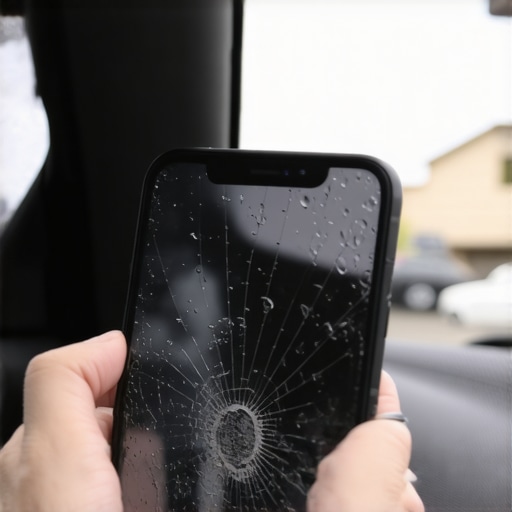
In my twenty-five years as a glass specialist, I have seen every manner of catastrophic failure imaginable, from shattered storefronts to delaminating high-rise panels. But few things irritate a seasoned glass installer more than the sight of a botched chip repair. I recall a specific incident where a driver called me in a panic because their new windshield repair was ‘ghosting’ and then suddenly spidered across the driver’s line of sight. I arrived with my inspection lamp and showed them exactly what happened: the previous mobile service technician had left a microscopic air bubble trapped at the base of the impact point. It was not a flaw in the glass itself; it was a failure of the installer to understand the physics of a vacuum bridge. They had performed a ‘caulk-and-walk’ equivalent on a vehicle, and the resulting thermal expansion finished what the stone started.
The Molecular Failure of the Air Pocket
When we talk about chip repair, we are not just filling a hole. We are performing a surgical restoration of the structural integrity of laminated safety glass. A windshield is a composite of two layers of soda-lime glass sandwiching a layer of polyvinyl butyral (PVB). When a rock hits, it creates a void where the glass has separated from the PVB or where the glass has shattered into a conical break. The danger of air bubbles in your windshield resin is rooted in the Refractive Index and the Coefficient of Thermal Expansion. Air has a refractive index of approximately 1.0, while automotive glass sits near 1.51. When an air bubble is left behind, it creates a visual distortion that reflects light differently than the surrounding glass, but more importantly, air is a gas that expands and contracts rapidly with temperature changes.
In a high-heat environment, such as a parking lot in July, the air trapped within that resin pocket expands. Because the resin is cured and the glass is rigid, that pressure has nowhere to go but out, forcing the crack to extend. This is why a same-day service that rushes the vacuum stage is a liability.
“Installation is just as critical as the window performance itself. A high-performance window installed poorly will fail.” – AAMA Installation Masters Guide
This industry standard applies to all fenestration and glazing. If the air is not evacuated using a high-grade vacuum pump before the resin is injected, the bond is compromised from the start.
The Vacuum Phase and the Rough Opening of the Break
In the world of architectural glazing, we worry about the Rough Opening of a frame. In windshield repair, the ‘rough opening’ is the impact pit. A professional glass installer must treat this pit with the same respect as a masonry opening. We use a bridge and injector tool to create a sealed environment over the break. The first step is not injection; it is evacuation. We must pull a vacuum to remove the air and moisture from the ‘legs’ of the crack. If the technician skips this, or uses a low-quality DIY kit, the resin will only coat the surface, leaving the core of the break vulnerable. Think of it like a Sill Pan in a window installation; if you don’t manage the environment at the base, the entire structure eventually rots. In this case, the ‘rot’ is the mechanical separation of the resin from the glass walls.
Thermal Shock and the Southern Climate Logic
For those living in hotter climates, the Solar Heat Gain on a windshield is immense. The glass can easily reach temperatures exceeding 150 degrees Fahrenheit. If your mobile service tech applied a resin with a low viscosity or failed to remove air, the SHGC (Solar Heat Gain Coefficient) of the vehicle cabin works against you. As the glass heats up, it expands. If there is an air bubble, that pocket of gas becomes a pressurized wedge. The resin must have a thermal expansion coefficient that closely matches the glass, but air is the wild card. This is why we insist on using high-grade methacrylate resins that are engineered for high-temperature stability. A professional will also consider the Glazing Bead effect of the pit filler, ensuring that the final cap is hard enough to resist wiper abrasion while remaining flexible enough to handle the glass’s natural flex during driving.
The Same-Day Trap: Why Speed Can Kill the Glass
Everyone wants same-day service, but ‘fast’ should not mean ‘incomplete.’ A proper repair requires the resin to reach the very tip of every micro-crack radiating from the impact point. This often requires ‘cycling’ the pressure and vacuum. We pull the air out, hold it, then switch to a pressure cycle to force the resin in. We might repeat this four or five times. A mobile service that spends only ten minutes on a repair is likely leaving air behind. They are relying on the surface tension of the resin to hide the break rather than truly structurally bonding it. As a master glazier, I look for ‘shimming’ the pressure. Just as we use a Shim to level a heavy Sash in a window frame, we must use the bridge tool to apply precise pressure to the glass to open the cracks just enough to accept the resin without causing them to spread.
“The integrity of the laminate bond is the primary determinant of safety in a frontal impact or rollover event.” – ANSI Z26.1 Standard for Safety Glazing Materials
The Science of Resin Curing and UV Exposure
Once the air is removed and the resin is successfully injected, the curing process begins. This is where many technicians fail. If the resin is exposed to UV light before the air is fully evacuated, it will ‘flash cure,’ trapping those bubbles forever. This is common with cut-rate mobile service operators who work in direct sunlight without a UV shield. The resin must remain in an anaerobic state until the technician is certain the break is clear. Only then is the UV lamp applied. The Weep Hole of the repair is the final pit filler. This resin is thicker and designed to seal the surface. If there is air underneath this cap, moisture can seep in over time, freezing in the winter and expanding, which will pop the repair right out of the glass.
Technical Summary for the Informed Homeowner
When you hire a glass installer, you are not paying for the resin; you are paying for the vacuum. Ask them about their multi-cycle process. Ask them how they handle thermal stress in the glass before they start. If the glass is too hot, they must cool it down slowly, or the mechanical pressure of the repair tool itself will crack the windshield. This is the ‘Glazing Zooming’ perspective: every repair is a balance of pressure, temperature, and chemistry. Don’t accept a repair that has ‘silver’ spots in it; those silver spots are air, and air is the enemy of glass longevity. Whether it is a Muntin in a historic window or a chip in a soda-lime windshield, the principles of professional glazing remain the same: evacuate, stabilize, and seal.