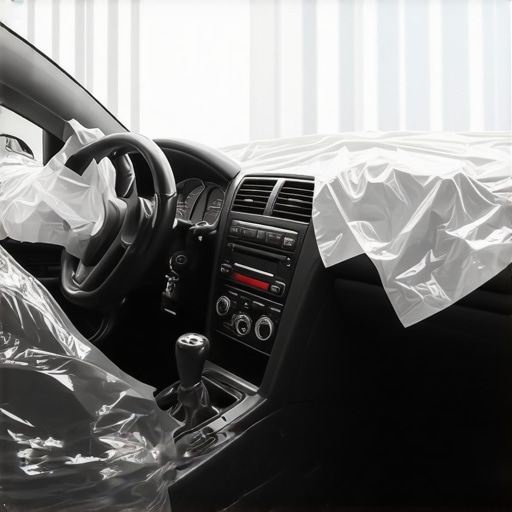
How to protect your car interior during a glass swap
The Master Glazier Guide to Interior Protection During Automotive Glass Replacement
When you have spent twenty-five years in the glazing industry, you stop seeing a windshield as a simple piece of glass. You see it as a structural component, a safety barrier, and a complex thermal filter. Most people think a mobile service glass swap is a straightforward ‘out with the old, in with the new’ procedure. However, as an expert who has seen thousands of botched installs, I can tell you that the interior of your vehicle is at extreme risk during this process if the glass installer is not disciplined. Protecting your cabin is not just about keeping dust off the seats; it is about preventing structural rust, chemical staining, and the dangerous migration of microscopic glass shards.
I once pulled a windshield out of a late-model sedan in a humid coastal region, and the pinch weld was a graveyard of oxidation. The previous technician had been one of those ‘slash-and-dash’ types who used a cold knife with the grace of a hatchet. He had scarred the paint down to the bare metal and then buried his mistakes under a thick, sloppy bead of urethane. Because he failed to use a proper primer and neglected to protect the dash, the owner was left with a rotting frame and permanent black adhesive stains on the tan leather. This is the reality of poor installation: the damage you cannot see is often more expensive than the glass itself.
“The installation of automotive glass must be performed in a manner that maintains the structural integrity of the vehicle as designed by the manufacturer. Failure to follow specific adhesive bonding protocols can lead to catastrophic failure during airbag deployment.” — ASTM E2112 (Adapted for Automotive Safety Standards)
The Physics of the Pinch Weld and Interior Safety
To understand why protection is critical, we must look at the rough opening of the vehicle, known as the pinch weld. This is the metal flange where the glass bonds to the frame. When a mobile service technician arrives, they are performing a high-stakes chemical bonding procedure in an uncontrolled environment. The first step in any professional glass swap should be the mitigation of debris. When the old glass is cut out, the friction of the wire or power tool creates a spray of old, dried urethane dust and potentially glass frit particles. If the glass installer does not properly mask the dash and the A-pillars, this debris enters your HVAC vents, leading to a permanent ‘old car’ smell or, worse, respiratory irritants blowing in your face the next time you turn on the AC.
The solar heat gain coefficient (SHGC) of your car glass is another factor to consider. In hotter climates, your car interior is essentially a greenhouse. During a glass swap, the cabin is exposed to the elements. A master technician knows that while the glass is out, the dashboard is vulnerable to rapid thermal expansion. We use specialized heat-reflective covers to ensure that the sensitive electronics housed within the dash do not reach critical temperatures while the aperture is open. This is ‘Glazing Zooming’ at its most practical: we aren’t just swapping glass; we are managing the thermal and structural environment of your vehicle.
Mechanical Protection Protocols for Mobile Service
A legitimate mobile service must prioritize the ‘Shingle Principle’ of protection: everything must overlap to ensure that nothing reaches the carpet or the upholstery. This starts with heavy-duty nitrile protection for the technician and moves to high-tack blue painter’s tape for the exterior paint and interior trim. The use of a sill pan style approach for the dashboard ensures that any primer or urethane drips are caught before they reach the sensitive plastics. If a drop of moisture-cured urethane hits your seat, it is nearly impossible to remove without damaging the material. The bond strength of modern automotive adhesives is designed to hold a 100-pound glass panel in place during a rollover; imagine what it does to your leather seats.
During a chip repair, the stakes are slightly lower but the precision is higher. We use vacuum-sealed injectors to push resin into the break. If the technician is careless, that resin can spray. A master glazier always surrounds the repair area with a sacrificial barrier. We don’t rely on ‘caulk-and-walk’ shortcuts. We respect the chemistry of the resin and the fragility of the laminate. Every chip repair is a lesson in surface tension and refractive index matching.
“Proper surface preparation is the cornerstone of any glazing system. Without the removal of contaminants and the application of correct primers, the bond between the glass and the substrate is compromised.” — AAMA Installation Masters Safety Protocol
The Science of Cleanliness: Why Same-Day Service Requires Discipline
Everyone wants same-day service, but ‘same-day’ should not mean ‘rushed.’ The curing process of the urethane is a chemical reaction that requires specific atmospheric conditions. If a mobile service technician works in the rain without a canopy, the moisture will accelerate the cure too fast, potentially leading to bubbles in the bead. These bubbles are weak points that allow air and water to whistle through the sash of the vehicle. Protecting the interior means ensuring the environment is dry. If I see an installer working without a vacuum to clean the pinch weld before the new glass goes in, I know they are a ‘Tin Man’ masquerading as a pro. You cannot bond to dust.
Once the new glass is set, the job is not over. The interior must be decontaminated. A professional will use a high-filtration vacuum to ensure that any microscopic shards from the old glass removal are gone. They will also check the weep holes (or drainage channels) at the base of the windshield to ensure no debris was dropped into the cowl panel. If these channels are blocked, the next rainstorm will send water directly into your passenger floorboard, leading to mold and electronic failure.
Final Checklist for the Homeowner
Before the technician leaves, you should verify the following: First, ensure the glass is centered in the rough opening with equal margins on all sides. Second, check that the A-pillar trim is seated correctly and not pinched by the glass. Third, verify that the cowl panel is snapped back into place. A window is a hole in your car that must be managed for heat, light, and water. If the installer followed the rules, your interior will be as clean as it was when they arrived, and the structural integrity of your vehicle will be intact. Don’t settle for a hack job; demand the technical precision that your safety deserves. [image-placeholder]