How to get your glass fixed while you work in the office
The Science of Mobile Glass Restoration While You Work
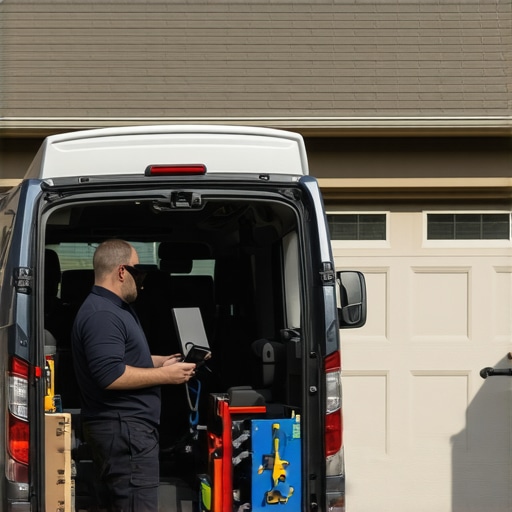
The sound of a rock hitting glass is a sharp, distinct crack that signals the beginning of a structural failure. Most office professionals ignore that tiny pit in their window or windshield because they cannot afford the downtime of a traditional glass shop visit. However, a master glass installer understands that glass is a dynamic material, constantly under stress from thermal expansion and contraction. When you utilize a mobile service to fix your glass while you are in a meeting, you are not just buying convenience; you are commissioning a technical intervention that must meet rigorous industry standards to be effective.
The Condensation Crisis: A Lesson in Glass Physics
A homeowner recently called me in a panic because their new windows were ‘sweating’ and the mobile repair I had performed on a separate chip seemed to be ‘hazy.’ I walked in with my hygrometer and showed them the humidity was 60 percent. It wasn’t the glass repair; it was their interior environment. But it highlights a critical point: glass is the ultimate thermal bridge. When we perform a chip repair in an office parking lot or a residential driveway, we are fighting the dew point. If moisture is trapped inside a crack before the resin is injected, the repair will fail. The moisture prevents the resin from bonding to the silica at a molecular level, leading to a visible scar and eventual structural failure. A professional glass installer uses a vacuum-pressure cycle to evacuate every microscopic droplet of water and air before the first drop of polymer enters the break.
“Installation is just as critical as the window performance itself. A high-performance window installed poorly will fail.” – AAMA Installation Masters Guide
The Anatomy of a Technical Chip Repair
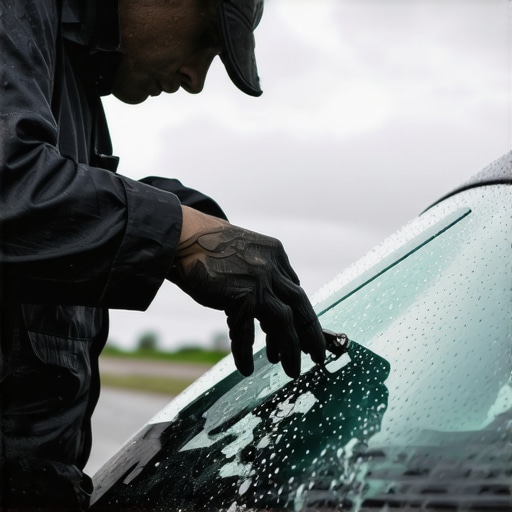
A chip is not just a hole; it is a complex fracture with several distinct types, such as the bullseye, the star break, or the partial moon. Each requires a different approach to resin viscosity. When a mobile service technician arrives at your office, they must first assess the temperature of the glass. In Northern climates, if the glass is too cold, the resin will not flow into the microscopic legs of a star break. Conversely, in extreme heat, the glass expands, pinching the break shut and preventing the resin from penetrating. We use thermal blankets or specialized cooling techniques to stabilize the glass before we even attach the bridge. The resin we use is a specialized anaerobic methacrylate that has a refractive index nearly identical to the glass itself. This ensures that once cured by a specific wavelength of ultraviolet light, the repair is virtually invisible and restores the structural integrity of the sash or the windshield.
Why Same-Day Service is a Structural Necessity
Delaying a repair is a gamble against physics. Every time your vehicle or building frame flexes, that chip is under mechanical stress. Contaminants like road salt, windshield washer fluid, or even simple dust can lodge in the break. Once the ‘PVB’ layer (polyvinyl butyral) in laminated glass is contaminated, the repair quality drops significantly. A professional glass installer knows that the ‘Rough Opening’ of a window or the frame of a vehicle acts as a pressure vessel. When a technician performs a mobile service, they are checking for more than just the crack. They are looking at the glazing bead and ensuring the seal hasn’t been compromised. If the break has reached the edge of the glass, the tension is too high for a simple chip repair, and a full replacement is required to maintain safety standards.
“The integrity of the building envelope depends on the precise management of the fenestration interfaces, ensuring that water and air infiltration are controlled through proper flashing and sealant application.” – ASTM E2112 Standard Practice
The Glazing Zoom: Understanding Resin and Glass Interaction
Let’s look at the chemistry. Glass is essentially a supercooled liquid made of silica, soda ash, and lime. When it breaks, the edges are chemically active. A master glazier uses a mobile service kit that includes various resins with different centipoise ratings (viscosity). For a tight crack, we use a low-viscosity resin that can ‘wick’ into the tiniest fissures. For a large pit, we use a high-viscosity pit filler that can withstand the friction of wiper blades or cleaning tools. The curing process is equally technical. We don’t just ‘let it sit.’ We use high-intensity UV lamps to trigger a cross-linking polymerization. This turns the liquid resin into a solid that is as hard as the surrounding glass. This is the difference between a ‘caulk-and-walk’ amateur and a professional glass installer.
Mobile Limitations and Technical Realities
While same-day mobile service is highly efficient, a true specialist will tell you when it is not appropriate. For instance, if the break is in the ‘critical vision area’ of a driver or if a residential window sash has structural rot in the wood, a simple patch won’t suffice. We look at the muntin and the operable parts of the window to ensure that the stress that caused the break isn’t a symptom of a larger problem, like a settling foundation or a warped sill pan. If we are replacing a full pane on-site, we don’t just slap in the glass. We use a shim to ensure the glass is centered in the opening, allowing for the natural expansion that occurs during a summer afternoon. We also ensure that the weep hole is clear so that any moisture that bypasses the glazing bead can escape rather than rotting the interior frame.
Final Inspection: What to Look For
When you walk out of your office to inspect the work, don’t just look for the crack to be gone. Look at the finish. Is the pit filler flush with the glass surface? Was the excess resin scraped away with a fresh razor to avoid micro-scratching? A professional mobile service leaves no trace. The glass should be structurally sound and optically clear. You should be able to operate the window or drive the vehicle immediately, knowing that the chemical bond is complete. This technical approach to glass repair is what separates an industry expert from a salesman. We deal in microns and molecular bonds, ensuring that your view of the world remains unobstructed and safe.