Why we never use suction cups on cracked rear glass
The Critical Physics of Tempered Glass Failure
In my twenty-five years as a master glazier, I have seen every shortcut in the book. From the mobile service technician who thinks a bit of silicone fixes a structural leak to the high-pressure salesman promising that a chip repair on a rear window is a permanent solution. But there is one practice that truly separates a professional glass installer from a dangerous amateur: the use of vacuum suction cups on compromised tempered glass. When we talk about a rear window, or a ‘backlite’ in trade terms, we are not dealing with the laminated safety glass found in your windshield. We are dealing with a material under immense internal tension. If you apply a localized vacuum force to a surface that has already suffered a breach in its compression layer, you are not just performing a repair; you are priming a hand grenade.
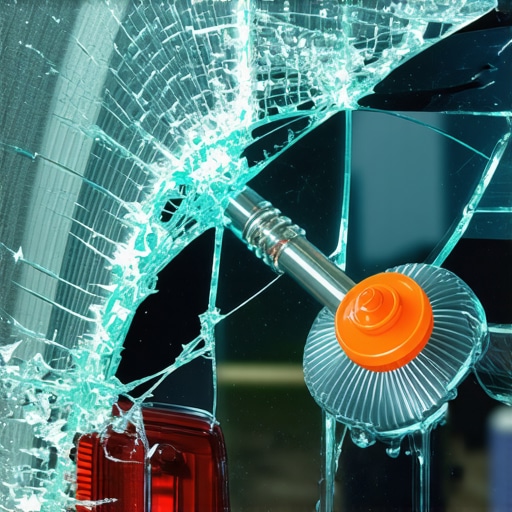
I once walked onto a job site where a junior technician was attempting to adjust a rear glass panel that had a minor fracture near the edge. He pulled a vinyl window out of a house in a similar state earlier that week where the header was completely black with rot, and he clearly hadn’t learned his lesson about structural integrity. He slapped a triple-cup vacuum lifter onto that cracked rear glass, intending to shift it just a fraction of an inch to align with the rough opening of the vehicle frame. Before he could even engage the locking lever fully, the entire panel disintegrated into a thousand tiny cubes. The reason was simple: the previous installer or the damage itself had compromised the balance between the surface compression and the inner tension of the glass. He relied on the tool’s suction instead of proper manual support, and the glass punished him for it.
“Installation is just as critical as the window performance itself. A high-performance window installed poorly will fail.” – AAMA Installation Masters Guide
Understanding the Tension-Compression Equilibrium
To understand why suction cups are a death sentence for cracked rear glass, we have to perform a ‘glazing zoom’ into the molecular structure of the material. Unlike annealed glass used in some residential muntin configurations, tempered glass is created by heating the pane to over 1,100 degrees Fahrenheit and then rapidly cooling the exterior surfaces with high-pressure air blasts. This process, known as quenching, causes the outer surfaces to contract and solidify while the inner core remains fluid for a few seconds longer. As the core finally cools and contracts, it pulls on the outer layers, creating a permanent state of high-stress equilibrium: the outside is in extreme compression, while the inside is in extreme tension. This is what gives the glass its strength, but it is also its Achilles’ heel. When a crack occurs, the compression layer is breached. When you apply a suction cup, you are creating a localized area of intense negative pressure that pulls the ‘skin’ of the glass away from the tension-filled core. In a compromised state, this mechanical stress is more than the remaining glass structure can bear.
The Climate Factor: Thermal Stress and Solar Heat Gain
In hotter climates where Solar Heat Gain Coefficient (SHGC) is a constant battle, the risks are even higher. If a vehicle has been sitting in the sun, the rear glass acts as a massive heat sink. The Low-E coatings often found on modern automotive glass are designed to reflect long-wave infrared radiation, but the glass itself still absorbs significant thermal energy. This heat causes the glass to expand. If you have a chip or a crack, that expansion is already putting pressure on the fracture points. A mobile service technician arriving on a same-day call might be tempted to jump right in, but a professional knows that the glass temperature must be stabilized. Applying a cold suction cup to a hot, cracked rear window creates a thermal shock event. The temperature differential between the area under the cup and the surrounding glass creates a shear force that can trigger a total collapse of the pane before the technician even begins the work.
Why Chip Repair is for Windshields, Not Backlites
There is a common misconception among homeowners and drivers that a chip repair is a universal fix. It is not. Windshields are made of laminated glass: two layers of glass held together by a Polyvinyl Butyral (PVB) interlayer. This interlayer holds the glass in place even when it is shattered, which is why we can use bridge tools and vacuum injectors to clear the air out of a chip and fill it with resin. Rear windows, however, are almost exclusively monolithic tempered glass. There is no PVB layer. If the glass is cracked, it is structurally dead. A ‘same-day’ mobile service that claims they can ‘repair’ a crack in a tempered rear window is selling snake oil. The only professional and safe solution is a full replacement. We must examine the glazing bead and the sill pan area of the vehicle to ensure that when the new glass is dropped in, the water management system is perfect. If the water cannot exit through the designated weep holes in the frame, you will end up with the same rot and corrosion issues that plague poorly installed residential windows.
“The flashing system must be integrated with the water-resistive barrier to ensure long-term durability of the fenestration assembly.” – ASTM E2112 Standard Practice
The Anatomy of a Professional Installation
When we perform a replacement, we treat the vehicle’s aperture like a high-performance rough opening in a luxury home. We don’t just ‘caulk and walk.’ We prepare the pinchweld, ensure the old urethane is trimmed to the correct thickness to act as a base for the new bead, and we use primers that prevent corrosion. We don’t use suction cups to ‘force’ a fit. If the glass doesn’t sit naturally, something is wrong with the frame or the part. We use shims only where appropriate for temporary alignment, ensuring they don’t create pressure points on the glass edges. The focus is always on the ‘shingle principle’: ensuring that every layer of the installation overlaps in a way that sheds water and resists air infiltration. A professional glass installer knows that their reputation is built on the things the customer can’t see, like the integrity of the bond and the precision of the placement. Don’t be swayed by a low-cost mobile service that doesn’t understand the physics of the materials they handle. When it comes to your safety and the structural integrity of your vehicle, the technical details are the only things that matter.