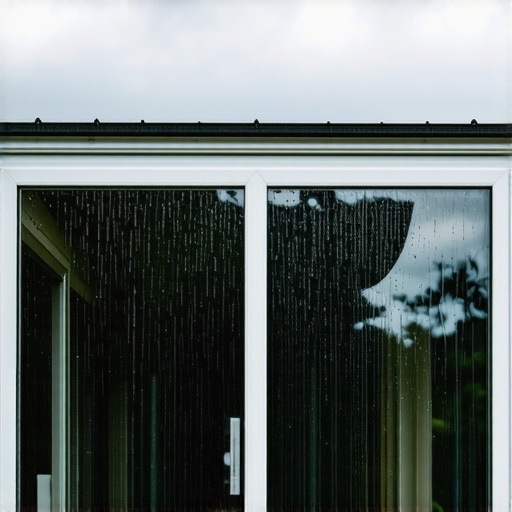
Why your new glass shouldn’t be installed in the rain
The High Cost of the Same-Day Installation Myth
In my twenty-five years as a master glazier, I have seen the industry shift toward a culture of immediacy. Homeowners want their same-day chip repair and developers want their glass installer mobile service to arrive regardless of the weather. But physics does not care about your construction schedule. When you force a window installation during a rain event, you are not just getting wet; you are compromising the thermal envelope of the building and ensuring a future of rot and litigation. I recall a specific incident where a homeowner called me in a panic because their brand new architectural units were sweating between the frames and the drywall. I walked in with my hygrometer and a thermal imaging camera. The humidity levels were off the charts, but the smoking gun was the moisture trapped behind the flashing tape. The previous crew had installed the units during a light drizzle, thinking they could outrun the weather. They trapped liters of water inside the wall cavity, creating a literal petri dish for black mold. It was not a product failure; it was a failure to respect atmospheric conditions.
“Water penetration is the leading cause of building envelope failure. Installation methods must ensure that the substrate is dry and capable of forming a permanent bond with sealants.” – ASTM E2112 Standard Practice for Installation of Exterior Windows
The Molecular Sabotage of Adhesion
When we talk about a glass installer mobile service, the focus is often on the convenience of the vehicle arriving at your driveway. However, the chemistry of the installation is what matters. Most modern window systems rely on high-performance sealants, often Silyl Terminated Polyether (STPE) or neutral-cure silicones. These materials require a dry substrate to achieve a molecular bond. When a rough opening is saturated with rainwater, the water molecules occupy the pores of the wood or the surface energy sites of the aluminum. If a glazier applies sealant over a wet surface, they are essentially floating a bead of caulk on a microscopic layer of water. As that water evaporates or gets trapped, the bond fails. This is not just a leak issue; it is a structural integrity issue. A failed sealant bead at the head of a window allows water to bypass the drip cap and enter the rough opening, where it begins to rot the jack studs and the header. In cold climates like Chicago or Minneapolis, this trapped moisture undergoes a freeze-thaw cycle. When that water turns to ice, it expands, putting immense pressure on the window frame and the glazing bead, eventually cracking the seal of the Insulated Glass Unit (IGU) itself.
The Science of Chip Repair in Wet Conditions
Many consumers believe that a same-day chip repair is a simple matter of injecting resin and moving on. From a technical standpoint, performing a mobile service for rock chips during a rainstorm is an exercise in futility. A stone chip in a windshield or a stationary pane is a complex network of micro-fractures. Through capillary action, rainwater is pulled deep into these fissures. If a glass installer attempts to inject a UV-curable resin while moisture is present, the resin will not displace the water. Instead, it will trap the moisture inside. This leads to a cloudy repair that lacks structural strength. Furthermore, the refractive index of the repair will be off, leaving a visible scar on the glass. A professional glazier will use a moisture evaporator or a heat gun to ensure the site is bone dry, but in active rain, maintaining that dryness is nearly impossible without a controlled environment.
The Shingle Principle and Water Management
Window installation is governed by the Shingle Principle: every layer of the building must shed water to the layer below it and eventually to the exterior. This starts with the sill pan. In a proper installation, the sill pan is the last line of defense, sloped toward the exterior to allow any water that bypasses the primary seals to exit through weep holes. When you install in the rain, you are often working with wet flashing tape. Most high-performance flashing tapes, like those made of butyl or acrylic, will not stick to damp OSB or plywood. If the tape does not achieve a 100 percent bond, the Shingle Principle is broken. Water will find the path of least resistance, which is usually behind the tape and into the insulation. I have performed countless autopsies on window installations where the sash was perfectly aligned and the muntin bars were beautiful, but the rough opening was a disaster because the installer did not wait for a dry window.
“Installation is just as critical as the window performance itself. A high-performance window installed poorly will fail to meet energy and structural expectations.” – AAMA Installation Masters Guide
Thermal Bridging and Vapor Pressure
In northern climates, we worry about the U-Factor, which measures the rate of heat loss. A window installed in wet conditions often has damp shims and wet fiberglass or spray foam insulation. Wet insulation is a thermal bridge. Instead of resisting heat flow, the water-logged material conducts it, significantly lowering the effective R-value of the wall. Furthermore, as the house heats up in the winter, that trapped moisture is driven toward the interior by vapor pressure. This leads to the very condensation crises that many homeowners blame on the windows themselves. They see water on the glass and assume the IGU has failed, when in reality, the moisture is coming from the wet framing members that were never allowed to dry before the trim was installed.
The Reality of Mobile Service Constraints
While a mobile service offers incredible convenience, the homeowner must be the final advocate for quality. If your glass installer arrives during a downpour and starts pulling your operable sash or cutting into your house, you have the right to stop the job. A reputable professional knows that the cost of a dry-day rescheduling is far lower than the cost of a mold remediation claim. We must move away from the ‘caulk-and-walk’ mentality. Proper glazing is a science that requires specific environmental conditions to ensure that the Low-E coatings, the gas fills, and the physical seals perform for their intended thirty-year lifespan. Without a dry substrate, you are simply paying for a temporary fix that will lead to a permanent problem. Always check the weather before scheduling your installation, and do not let the pressure of a construction timeline compromise the integrity of your home’s envelope. The physics of water management are non-negotiable.