Why we never use glass cleaner on the inside of a new windshield
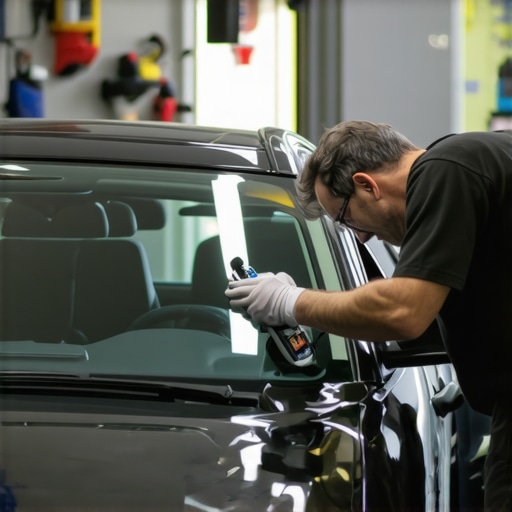
You just watched the mobile service van pull away. Your vehicle has a fresh, crystal clear windshield, and the chip repair on your secondary vehicle is curing perfectly. Your first instinct is to grab a bottle of blue liquid and a paper towel to give that interior glass a final polish. Stop. As a master glazier with a quarter century in the trade, I have seen more professional installations ruined by a well-meaning homeowner in the first twenty four hours than by actual road debris. Understanding the physics of a new install requires looking past the glass and into the chemistry of the bond.
The Fog Mystery: A Narrative Reality Check
A car owner called me in a panic because their new windshield was sweating and developed a greasy haze within three hours of a same-day replacement. I walked out to the driveway with my hygrometer and a high intensity inspection lamp. I showed them that the interior humidity was spiked at sixty five percent and the glass was covered in a molecular film. It was not a defective product. It was their lifestyle choice to run the recirculated air on high while the dashboard was still outgassing plasticizers under the Texas sun. By spraying an ammonia based cleaner on that fresh glass, they had actually bonded those oils to the surface, creating a refractive nightmare that no standard wipe-down could fix. This is why we treat the first forty eight hours as a sacred curing window.
The Chemistry of Outgassing and Plasticizers
When a professional glass installer sets a new windshield, they are not just placing a piece of glass. They are managing a structural component of the vehicle. In hot climates like Phoenix or Miami, the Solar Heat Gain Coefficient (SHGC) becomes our primary concern. High heat accelerates a process called outgassing. The dashboard, the new urethane adhesive, and even the interior plastics release chemical vapors. When you spray a traditional glass cleaner on the inside of a new windshield, the solvents in the cleaner react with these airborne plasticizers. Instead of lifting the dirt, the cleaner acts as a carrier, allowing these oils to penetrate the microscopic pores of the glass surface. This creates a permanent haze that catches the glare of oncoming headlights, effectively ruining the optical clarity you just paid for.
“Installation is just as critical as the window performance itself. A high-performance window installed poorly will fail.” AAMA Installation Masters Guide
Why Ammonia is the Enemy of the Curing Cycle
In the world of glazing, we treat the perimeter of the glass like a sash in a high performance window frame. The bond between the glass and the pinchweld (the rough opening of your car) relies on a specific chemical reaction. Most household glass cleaners contain ammonia or high concentrations of alcohol. If these liquids seep down into the cowl area, they can interfere with the cross-linking of the urethane adhesive. This adhesive is what keeps the windshield attached during an airbag deployment. Weakening this bond with premature cleaning is a safety violation of the highest order. Furthermore, the interior of modern glass often has a specialized coating to manage infrared radiation. Ammonia can strip or etch these layers if the glass has not reached thermal equilibrium.
The Shingle Principle: Managing Water and Vapors
We apply the same logic to a windshield that we do to a sill pan in a residential window installation. Everything must follow the shingle principle: water and vapors must be directed down and out. A new windshield installation is technically an open system for the first several hours. The weep hole equivalents in your car’s drainage system are designed to handle liquid water, but they cannot manage the chemical cloud created by cleaning solvents. When you use mobile service for a same-day replacement, you are getting convenience, but you must respect the science. The resin used in a chip repair also needs time to reach full refractive index matching. Introducing cleaners too early can cloud the resin, making a successful repair look like a failure.
“The integrity of the building envelope depends on the proper sequencing of flashing and sealants at the window interface.” ASTM E2112 Standard Practice
The Technical Blueprint of Proper Maintenance
If you must clean the glass in the first week, use only a dry, high-density microfiber cloth. We avoid paper towels because they are abrasive and contain wood fibers that can scratch the soft interior surface of new glass. Think of the windshield as a delicate operable unit. You would not grease the tracks of a new window with WD-40, so do not treat your glass with harsh surfactants. The thermal stress of a hot dashboard combined with the evaporative cooling of a spray cleaner can also cause localized tension. In rare cases, this thermal shock can lead to a stress crack originating from the edge where the glass is held by the new, curing adhesive. This is especially true in the South where the temperature differential between the glass and the interior cabin can exceed fifty degrees.
The Glazing Bead and Structural Integrity
A windshield is a structural member. In a rollover accident, the glass provides up to sixty percent of the roof’s crush resistance. When a glass installer uses a shim to center the glass in the rough opening, they are ensuring that the load path is correctly aligned. By messing with the glass too early, you risk shifting the glass in its bed of urethane, even by a millimeter. This can create a wind whistle or, worse, a point of concentrated stress that will eventually lead to a crack. Treat the new installation with the same respect you would give a freshly poured concrete foundation. It looks solid, but the chemistry is still working underneath the surface.
Final Verdict for the Car Owner
The next time you get a mobile service for a windshield replacement or a chip repair, leave the cleaning kit in the garage. The haze you see is not dirt; it is the sound of the materials settling into their new environment. Wait at least seventy two hours before using any liquid cleaners, and even then, opt for an alcohol-free, specialized glass foam. This ensures that the bond remains structural, the view remains clear, and the safety of your vehicle is never compromised by a simple spray bottle. Patience is the most important tool in a glazier’s kit, and it should be in yours too.