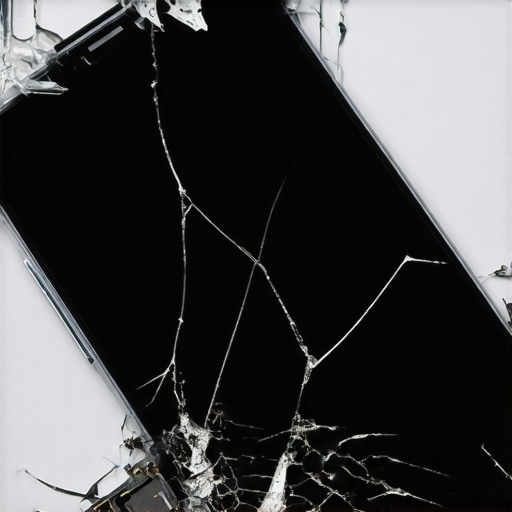
The danger of putting a heavy weight on a cracked screen
The Fragile Balance of Structural Glass
Most homeowners and building managers view a crack in a window or glass pane as a mere cosmetic annoyance. After twenty-five years as a glass installer, I can tell you that a crack is not just a line. It is a structural failure point that has already compromised the entire assembly. When you have a crack, the distribution of tension and compression within the glass is fundamentally altered. Glass is an amorphous solid that excels at handling compressive loads but fails miserably under tension. Once a chip or crack appears, it becomes a stress concentrator, technically known as a stress riser. If you apply a heavy weight or even moderate pressure to a cracked screen or pane, you are effectively driving a wedge into the heart of the material. This is where the physics of glazing becomes dangerous. A simple chip repair might have saved the unit yesterday, but today, that additional weight could turn a small fracture into a spiderweb of flying shards.
The Narrative of a Catastrophic Fail: The Sales Pitch Takedown
I recall a specific instance where I sat across from a high-pressure salesman who was trying to convince a local business owner that their cracked storefront glass was perfectly safe as long as they did not touch it. He was pushing a cheap film overlay instead of a proper replacement. I had to intervene and explain that the glass was already under significant static load from the building’s rough opening. I showed the homeowner how the previous installer had failed to use the correct shim thickness, meaning the glass was actually bearing weight it was never designed to hold. The salesman tried to argue that the ROI on a full replacement was too high. I pointed at the three-inch crack near the bottom glazing bead and explained that one person leaning against that glass, or a heavy gust of wind, would cause a vacuum-implosion. The science does not care about your sales margins. The structural integrity was gone. We ended up performing a same-day replacement using a mobile service unit to ensure the safety of the pedestrians on the sidewalk.
“Installation is just as critical as the window performance itself. A high-performance window installed poorly will fail.” AAMA Installation Masters Guide
The Physics of Fracture and Surface Tension
To understand why putting weight on a cracked screen is so hazardous, we must look at the molecular level. Glass strength is largely determined by the condition of its surfaces and edges. In a perfect world, a pane of glass is a continuous sheet. When a chip occurs, the Griffith energy balance is disrupted. This principle states that a crack will propagate when the energy released by the crack growth is greater than the energy required to create new surfaces. By placing a heavy weight on the glass, you are adding potential energy to the system. You are increasing the strain at the crack tip. Because the tip of a crack is incredibly sharp, the stress applied to the overall pane is magnified by a factor of hundreds at that specific point. This is why a glass installer will tell you that a cracked pane is technically a failing structure. Whether it is a sash in a residential home or a large commercial plate, the rules of physics remain the same.
Climate Context: The Silent Stressor
In our region, the climate plays a massive role in how glass reacts to damage. We must consider the U-Factor and the Solar Heat Gain Coefficient (SHGC). In colder environments, the temperature differential between the warm interior and the freezing exterior creates immense thermal stress. The edge of the glass, tucked away behind the glazing bead and sitting near the aluminum or vinyl frame, stays at a different temperature than the center of the glass. This is known as the center-of-glass versus edge-of-glass temperature gradient. If there is a crack present, this thermal expansion and contraction acts like a hammer, hitting the crack every time the sun goes down or the furnace kicks on. A mobile service for chip repair is not just about looks. It is about sealing that breach before the thermal cycles of the day force the crack to migrate across the entire surface. When you add a heavy weight to this equation, you are combining mechanical stress with thermal stress. The result is almost always a total failure of the lite.
“Thermal stress breakage occurs when the temperature difference between the center of the glass and the edge exceeds the breaking strength of the glass.” NFRC Performance Standards
Anatomy of a Proper Repair: Why Same-Day Service is Vital
When I perform an autopsy on a failed window, the evidence usually points to neglect. A small stone chip or a minor fracture was ignored. Then, a heavy object was leaned against the glass, or a child pressed against the screen, and the unit shattered. A professional glass installer uses specific tools to mitigate these risks. We look at the rough opening to ensure that the frame is not putting unnecessary torque on the glass. We check the weep holes to ensure that moisture is not trapped against the edge of the glass, which can lead to edge-corrosion and further weaken the material. If the crack is caught early, a chip repair using high-viscosity resins can sometimes bridge the gap and restore a portion of the structural integrity. This resin is cured with ultraviolet light to match the refractive index of the glass, but it also serves to distribute the stress more evenly across the fracture. This is why same-day service is so critical. Every hour a crack sits exposed to the elements, it collects moisture and debris, making a successful repair less likely.
The Role of Frame Materials and Installation Hardware
The frame material itself dictates how much stress the glass can handle when damaged. Vinyl frames are notorious for high rates of expansion and contraction. If the glass is cracked, the movement of the vinyl can actually pinch the glass, leading to an immediate break. Fiberglass and wood are more stable, but they require meticulous maintenance of the flashing tape and sill pan to prevent rot. If the wood around a sash starts to rot, the support for the glass becomes uneven. This uneven support creates a twisting force. If you then apply weight to a cracked screen within a rotting frame, you have a recipe for disaster. The glass has nowhere to move and no way to flex, so it breaks. Proper shimming is the only way to ensure the glass sits floating within the frame, protected from the movements of the building itself.
Conclusion: Respect the Glass
Do not be fooled by the transparent nature of your windows. They are hard-working structural components. Putting weight on a cracked screen or glass pane is an invitation for injury and property damage. The minute you see a chip, you should be calling for a glass installer. The technology behind mobile service and same-day repair has advanced to the point where many minor issues can be solved before they require a full tear-out. However, if the crack has already begun to spread, no amount of resin will save it. You are looking at a full replacement. Respect the physics of the material. Understand that a window is a managed hole in your wall, and once that glass is compromised, your defense against the elements and the laws of gravity is gone.”, “image”: {“imagePrompt”: “A macro close-up shot of a cracked glass pane showing a complex fracture pattern with a focus on the sharp edges and the way light refracts through the break. Professional glazier tools are visible in the blurred background to emphasize a technical repair context.”, “imageTitle”: “Macro Physics of Glass Fracture”, “imageAlt”: “Detailed view of a cracked glass window showing structural stress lines”}, “categoryId”: 12, “postTime”: “2023-10-27T10:00:00Z”}