The danger of trapped moisture in a rock chip
The Deceptive Micro-Climate of a Glass Impact
To the untrained eye, a rock chip is a minor cosmetic nuisance, a tiny star or bullseye on the windshield that can wait for the next oil change. As a master glazier with over two decades in the field, I see something far more dangerous. I see a compromised thermal barrier and an active site for hydraulic pressure. A rock chip is not just a crack, it is an open wound in a laminated glass system that is constantly subjected to vapor drive and temperature fluctuations. When moisture enters that microscopic void, the clock starts ticking toward a full-scale structural failure. Understanding the physics of how H2O interacts with the Polyvinyl Butyral (PVB) interlayer is the difference between a simple twenty-minute fix and a costly total replacement.
The Condensation Crisis: An Installation Autopsy
I recall a specific case where a homeowner called me in a panic because their windshield was ‘sweating’ from the inside of a small chip during a humid morning in early November. I walked out to the driveway with my hygrometer and showed them that the humidity was nearly 60 percent. It was not a defect in the glass manufacture; it was a failure of the owner to understand that once the outer lite of glass is breached, the atmospheric conditions of the outside world are now in direct contact with the interior laminate. That tiny pocket of air had become a micro-reservoir. By the time the sun hit the glass, that trapped moisture began to expand, and before I could even set up my vacuum bridge, a crack shot three inches toward the driver’s side. The moisture had acted as a wedge, driven by the same principles of hydrostatic pressure that cause a foundation to crack.
The Physics of Capillary Action in Laminated Glass
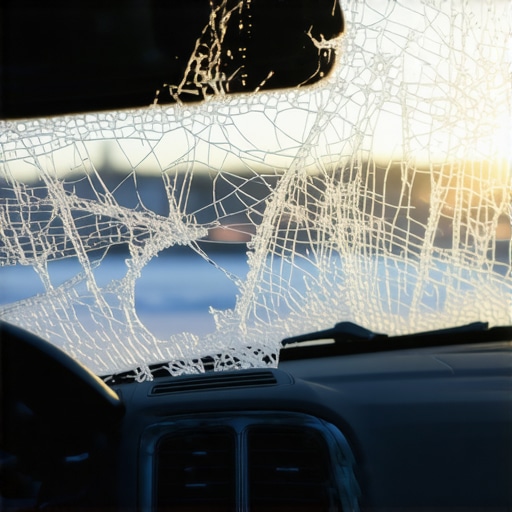
A windshield is not a solid slab of glass. It is a sophisticated sandwich consisting of two layers of annealed glass bonded by a plastic interlayer. When a rock hits the surface, it creates a ‘break’ that often reaches down to that PVB layer. This is where the real danger begins. Through a process known as capillary action, the glass chip essentially ‘sucks’ moisture from the air or from rain and car washes. Water has a unique molecular tension that allows it to pull itself into tight spaces. Once inside, it displaces the air. This is why a chip often looks dark or cloudy. It is filled with liquid. In a cold climate like Chicago or Minneapolis, this is a death sentence for the glass. When that water freezes, it expands by approximately nine percent. In the confined space of a glass fracture, that expansion generates thousands of pounds of pressure per square inch. This is the ‘freeze-thaw’ cycle that turns a pinpoint impact into a spiderweb of cracks overnight.
“Installation is just as critical as the window performance itself. A high-performance window installed poorly will fail.” AAMA Installation Masters Guide
While the AAMA guide often refers to residential glazing, the principle applies perfectly to auto glass. A repair is, in essence, a micro-installation. If you do not manage the ‘rough opening’ of that chip correctly, the entire system fails. The goal of a glass installer using a mobile service is to remove the moisture and air and replace it with a refractive-matched resin. If the moisture is trapped because the installer did not use a proper dry-out cycle, the resin will not bond. You are essentially ‘caulking’ over a problem rather than solving it.
The Role of Vapor Drive and the PVB Interlayer
In the southern regions where heat is the primary enemy, the danger shifts from freezing to chemical degradation. The PVB interlayer is hygroscopic, meaning it naturally wants to absorb moisture. When a chip allows water to sit against the interlayer, it begins to delaminate. You will see this as a milky white discoloration around the edges of the break. This is the ‘glazing bead’ of the windshield losing its structural integrity. Once delamination begins, the glass loses its ability to remain intact during an accident. The windshield is a critical component of the vehicle’s structural ‘envelope,’ much like the flashing tape and sill pan are critical to a home’s windows. It provides the support necessary for proper airbag deployment. A moisture-compromised chip is not just an eyesore; it is a weak point in your safety cage.
Why Same-Day Chip Repair is Non-Negotiable
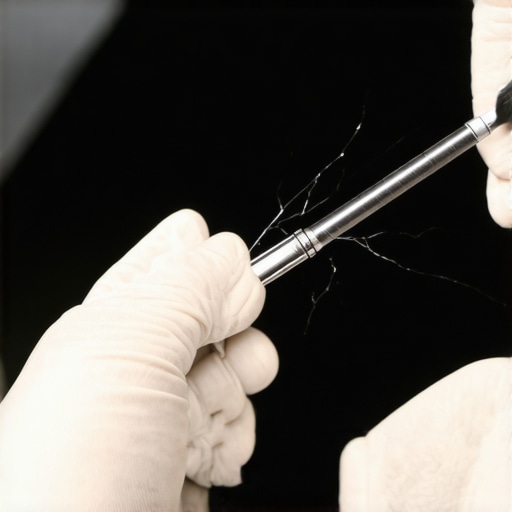
The speed of a mobile service is not just about convenience; it is about contamination control. The longer a chip is open, the more road salts, waxes, and window cleaners find their way into the break. These contaminants interfere with the resin’s ability to create a molecular bond with the glass. I tell my clients to think of a chip like a ‘weep hole’ that has been installed in the wrong place. In a window frame, a weep hole is designed to let moisture out. In a rock chip, the ‘weep hole’ is letting the environment in. Using a glass installer who offers same-day service ensures that the vacuum process can effectively clear the break before the moisture has a chance to trigger a ‘long-wave’ crack. We use specialized injectors that pull a vacuum on the break, literally boiling the moisture out at room temperature before injecting the high-viscosity resin.
“Water penetration is the single most common cause of premature failure in glazing systems, necessitating rigorous adherence to flashing and drainage protocols.” ASTM E2112 Standard Practice
In the context of a rock chip, the ‘drainage protocol’ is the evacuation of the break. If your installer just drops resin on top and cures it with a UV light, they have trapped the problem inside. This is why a professional glass installer is necessary. We understand the tolerances of the glass. We know that if the ‘sash’ of the break is not completely clear, the repair will be visible and structurally unsound. We look for the ‘muntin’ lines of the crack to ensure the resin has flowed into every microscopic corner.
The Economic Reality of Proactive Maintenance
Many homeowners ignore chips because they fear the cost, but the ROI of a chip repair is immediate. A professional mobile service can stabilize a break for a fraction of the cost of a full replacement. If you wait until the moisture has done its work, you are looking at a full tear-out. This involves removing the old glass, cleaning the pinch weld, and ensuring the new adhesive has the correct ‘rough opening’ clearance. It is a much more invasive process that, if done incorrectly, can lead to rust and leaks. By opting for a same-day repair, you are maintaining the factory seal of your windshield, which is always superior to a field-installed replacement. Don’t let a simple drop of rain turn a minor shim-level adjustment into a total system failure. Keep the moisture out, keep the resin in, and keep the glass structural.