Why your windshield seal whistles at sixty miles per hour
The sound usually begins as a faint, high-pitched reediness that cuts through the hum of the engine and the white noise of the road. It starts around fifty-five miles per hour and becomes a piercing, crystalline scream by the time the needle hits sixty-five. As a master glazier with a quarter-century in the trade, I have heard every variation of this acoustic failure. It is never just a noise; it is the sound of a structural seal failing to manage the intense air pressure differentials acting upon your vehicle. When a customer calls for a mobile service or a same-day chip repair, they often think they are dealing with a minor cosmetic nuisance. In reality, that whistle is a diagnostic signal that the interface between your glass and the rough opening of the vehicle frame has been compromised. In my twenty-five years of handling everything from high-rise curtain walls to precision automotive glazing, I have learned that physics does not distinguish between a skyscraper and a sedan. If there is a path for air, there is a path for water, and eventually, a path for total seal failure.
“Installation is just as critical as the window performance itself. A high-performance window installed poorly will fail.” – AAMA Installation Masters Guide
I remember a specific case that illustrates the danger of the ‘caulk-and-walk’ mentality. I pulled a windshield out of a late-model SUV in a windy coastal city where the owner complained of a ‘tea kettle whistle’ every time they crossed a bridge. As soon as I removed the outer molding, the source of the failure was obvious. The previous glass installer had relied on a flat, inconsistent bead of urethane rather than a proper V-bead. I found that the header area was starting to show signs of oxidation because the previous technician had used a screwdriver to pry out the old glass, scratching the paint down to the bare metal and failing to apply a corrosion-inhibiting primer. The whistle wasn’t just air; it was the sound of air rushing through a 3mm gap where the urethane had failed to bridge the distance between the glass and the pinchweld. This is why I am so adamant about technical precision. You cannot simply ‘glue’ a window in and expect it to perform under the dynamic loads of highway speeds.
The Physics of the High-Speed Whistle
To understand why that seal is screaming, we have to look at fluid dynamics. As your vehicle moves at sixty miles per hour, the air hitting the front of the glass creates a high-pressure zone. Simultaneously, the air moving over the roof and around the A-pillars moves faster, creating a low-pressure zone. This is basic Bernoulli’s principle. The pressure differential between the interior of your cabin and the exterior atmosphere creates a vacuum effect. If there is even a microscopic void in the urethane bead or a misalignment in the glazing bead, the air will be forced through that orifice at incredible velocity. This creates the ‘reed effect,’ where the edges of the seal or the glass itself vibrate like the mouthpiece of a saxophone. It is a mechanical resonance that indicates your glass is not fully integrated into the structural envelope of the car.
When we talk about same-day chip repair or mobile service, the focus is often on the glass itself, but the surrounding seal is the unsung hero of safety. In the architectural world, we use a sill pan to manage water that bypasses the primary seal. In a vehicle, the cowl and the pinchweld serve a similar function, but they are under much higher stress. The glass in a modern vehicle is a structural component, contributing up to 60 percent of the roof strength in a rollover accident. A whistle is the first sign that this structural bond is incomplete. If air can bypass the seal, the structural integrity of the roof and the proper deployment of the passenger-side airbag are both in jeopardy, as the airbag relies on the windshield to act as a backstop during inflation.
Material Science: Urethane, Primers, and Molecular Bonds
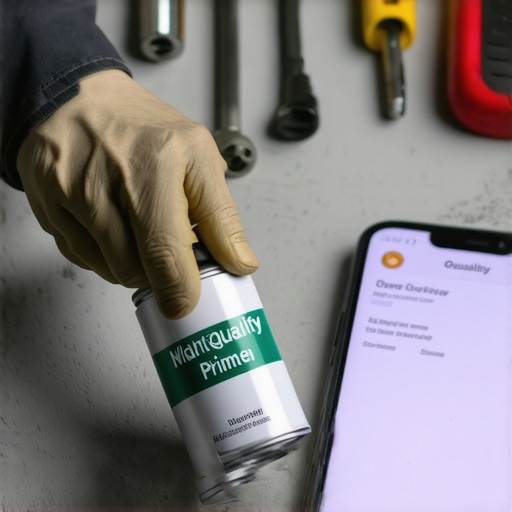
The difference between a permanent fix and a temporary patch lies in the chemistry. High-quality glass installer professionals use moisture-cured polyurethanes that provide a tensile strength of nearly 1,000 psi. But that strength is only achieved if the surface energy of the glass is properly prepared. Glass is naturally ‘hydrophilic,’ meaning it loves water. To get urethane to stick to it, we have to apply a silane-based primer that changes the molecular landscape of the glass surface, creating a ‘bridge’ between the inorganic glass and the organic adhesive. When a mobile service technician rushes this process, skip-priming or failing to wait for the proper flash-off time, the bond will eventually delaminate. That delamination often starts at the top corners, which is exactly where the wind pressure is highest and where the whistling most frequently originates.
“The integrity of the fenestration system is dependent upon the continuity of the air and water barrier across the rough opening.” – ASTM E2112 Standard Practice
I often see issues where the glazing bead or the weatherstripping has become brittle or distorted. These components are designed to manage ‘laminar flow’—keeping the air moving smoothly over the transition from glass to metal. If the molding is lifted, it creates turbulence. This turbulence not only causes noise but also creates a ‘pumping’ action that can pull moisture into the urethane channel. If you live in a climate where temperatures fluctuate, this moisture will undergo freeze-thaw cycles, slowly prying the glass away from the frame. This is why a simple chip repair is often a better option than a full replacement if the factory seal is still intact. A chip repair uses a specialized resin with a refractive index matching the glass, injected under vacuum to restore the structural continuity of the laminate without disturbing the critical factory-bonded seal.
Why Same-Day Service Must Still Respect Cure Times
The term ‘same-day’ is often misunderstood in the glazing industry. While we can certainly perform a mobile service and replace a windshield in under an hour, the vehicle is not truly ‘safe’ until the adhesive has reached its Safe Drive Away Time (SDAT). This is the point where the urethane has cured sufficiently to hold the glass in place during a collision. Factors like humidity and temperature play a massive role here. In cold, dry climates, the cure time for standard urethane can be significantly longer because there isn’t enough moisture in the air to trigger the chemical reaction. Professional installers will use a ‘high-viscosity’ or ‘accelerated’ adhesive in these conditions to ensure that the seal remains airtight and silent. If an installer tells you that you can drive away immediately without checking the weather conditions, they are sacrificing your safety for their schedule.
The Diagnostic Process for Persistent Leaks
If you have a whistle that won’t go away, we use several diagnostic methods. The most effective is the ‘ultrasonic leak detector,’ which uses a transmitter inside the car and a receiver outside to find the exact point where sound waves (and therefore air) are escaping. Another old-school but effective method is the ‘soap bubble test.’ We coat the exterior seals with a concentrated soap solution and then turn the car’s climate control to the highest fan setting on ‘fresh air’ mode. This pressurizes the cabin. If there is a leak, bubbles will form on the exterior at the site of the failure. This pinpoint accuracy is necessary because a whistle can be deceptive; a gap in the bottom corner of the glass can sometimes manifest as a sound that seems to come from the top of the A-pillar due to the way sound reflects off the interior plastic trim.
Ultimately, a windshield is more than a piece of transparent material. It is a highly engineered safety device that requires a perfect, airtight seal to function. Whether you are dealing with a small chip that needs a resin injection or a full seal failure that requires a total re-installation, you must demand a technician who understands the ‘shingle principle’ of water management and the rigorous standards of adhesive science. Don’t settle for a technician who just squirts some sealant in the gap and calls it a day. Physics always wins, and eventually, a poor installation will make itself heard. Listen to what your car is telling you at sixty miles per hour. That whistle is a call to action for professional intervention.