Why mobile glass installers use that specific blue tape
The Blue Badge of Professional Glazing: More Than Just Sticky Paper
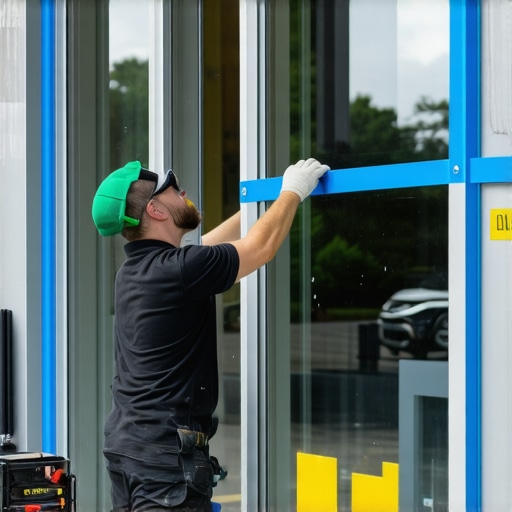
If you have ever had a same-day mobile service for a windshield or a stationary window, you have seen it: the bright blue strips of tape crisscrossing the glass and the frame. To the untrained eye, it looks like a temporary fix or a sign of a job left unfinished. To a master glass installer with decades in the field, that tape represents a critical phase of the curing process. It is a mechanical safeguard against the laws of physics, specifically gravity and air pressure, during the initial set of the structural adhesive. This is not your standard painter’s tape from a hardware store. This is high-tensile retention tape designed specifically to withstand the rigors of a mobile service environment while the glass stabilizes in its rough opening.
The Condensation Crisis: A Master Glazier Narrative
A homeowner once called me in a panic because their newly installed windows were ‘sweating’ and ‘leaking’ just three hours after my team left. I walked into the house with my hygrometer and a thermal imaging camera, ready to perform an autopsy on our own work. I showed them that the interior humidity was spiking at 60 percent because they were boiling a massive pot of pasta right under the new glass. It wasn’t a failure of the seal; it was a physics lesson in dew points. This experience highlights a fundamental truth in the glazing world: moisture is the primary variable we must manage. Whether it is the humidity in the air affecting the cure rate of a chip repair resin or the external moisture that can ruin a fresh urethane bead, the glass installer is constantly at war with the atmosphere. That blue tape you see is often the first line of defense in maintaining the integrity of that seal until the environment allows for a full cure.
“Installation is just as critical as the window performance itself. A high-performance window installed poorly will fail.” – AAMA Installation Masters Guide
The Science of Retention: Why Gravity Never Sleeps
When we perform a mobile service, the glass is often held in place by a high-viscosity polyurethane. In the glazing trade, we refer to the ‘green strength’ of an adhesive. This is the initial holding power of the glue before it has fully cross-linked into a solid polymer. Because glass is incredibly dense and heavy, gravity is constantly trying to pull it down within the frame. Even a shift of a few millimeters can cause the glass to move away from the weep hole or misalign with the glazing bead. This shift creates a gap where air and water can penetrate, leading to the exact rot and mold issues we strive to prevent. The blue tape acts as a temporary shim, providing the necessary tension to keep the glass perfectly centered. It counters the weight of the pane, ensuring that the bond line remains consistent across the entire perimeter of the rough opening. Without this retention, the glass could ‘slump,’ causing a thinning of the adhesive at the top and a bulging at the bottom, which is a recipe for future seal failure.
Molecular Curing and the Mobile Environment
Modern mobile glass installers use advanced urethanes that are moisture-cured. This means the adhesive actually pulls water molecules from the air to trigger the chemical reaction that hardens the bead. In colder climates, such as Minneapolis or Chicago, this process slows down significantly. The U-Factor of the glass might keep the heat in, but the external temperature dictates the cure. This is where the blue tape becomes even more vital. In cold weather, the ‘tack-free’ time—the time it takes for the outer skin of the adhesive to harden—is extended. If a vehicle or a window frame is moved or subjected to wind pressure before this skin forms, the seal can be compromised. The tape provides a physical bridge, holding the assembly together while the molecular bonds are forming. For a chip repair, we use a different chemistry, typically an anaerobic or UV-cured resin. While these do not require blue tape, they require the same level of environmental control. If a glass installer does not account for the ambient temperature and humidity, the repair will lack the structural integrity required to prevent the crack from spreading across the sash.
The Autopsy of a Seal: Why Blue Tape Matters for Water Management
When we examine a failed installation, we often find that the ‘shingle principle’ was ignored. This principle dictates that every layer of a building or vehicle envelope should shed water to the layer below it, eventually exiting through a weep hole or a sill pan. When glass shifts because it wasn’t properly retained during the cure, it can block these drainage paths. Imagine a scenario where a technician performs a same-day mobile service but neglects to use retention tape. The glass slides down just an eighth of an inch. That slide might seem minor, but it can compress the sealant at the bottom, forcing it into the weep holes. Now, when rain hits the glass, it has nowhere to go. The water backs up, sits against the frame, and eventually finds a way into the interior wall or the vehicle’s dashboard. This is why we are so pedantic about the tape. It is not about the tape itself; it is about maintaining the geometry of the installation to allow the water management system to function as designed.
“Glass must be supported until the structural sealant has reached sufficient strength to support the design load.” – ASTM E2112
Thermal Logic: SHGC and Adhesive Stability
In hotter climates like Texas or Arizona, the enemy isn’t slow curing; it is excessive heat and Solar Heat Gain (SHGC). High temperatures can cause the frame material—especially vinyl or aluminum—to expand at a different rate than the glass. This differential expansion puts immense stress on the fresh adhesive. A master glass installer knows that in these conditions, the blue tape must be applied with even more precision. It needs to be high-temperature resistant so that the adhesive on the tape itself doesn’t melt and leave a residue on the glazing bead. By using a specialized blue tape, we ensure that the glass stays anchored despite the thermal expansion of the surrounding materials. This prevents ‘pumping’ of the sealant, where the movement of the frame literally sucks air or moisture into the wet bead, creating bubbles that will eventually become leak points. The tape acts as a stabilizer, keeping the glass stationary relative to the frame until the urethane is strong enough to handle the movement on its own.
The Math of Mobile Service: Curing vs. Drive-Away Time
Many customers ask why they cannot wash their car or open their windows immediately after a same-day service. The answer lies in the Shore A hardness of the adhesive. Most structural glass adhesives need to reach a specific hardness before they can withstand the pressure of a car wash or the vibrations of a highway drive. The blue tape is a visual reminder and a physical guard. If you were to drive a vehicle at 60 miles per hour immediately after a glass replacement, the wind pressure against the glass could be hundreds of pounds. That pressure is enough to push a fresh bead of urethane right out of the channel. The tape provides just enough extra shear strength to help the glass resist that initial pressure. However, it is not a substitute for the proper cure time. A professional glass installer will always provide a Safe Drive-Away Time (SDAT) based on the specific adhesive used and the current weather conditions. Ignoring these instructions is the fastest way to turn a successful chip repair or replacement into a total system failure.
Conclusion: The Professional Standard
Next time you see those blue strips, understand that you are looking at a commitment to quality. That tape is the sign of a glazier who understands that a window is a hole in the wall or a vehicle that must be managed with scientific precision. From ensuring the rough opening is properly flashed to managing the SHGC through proper coating placement, every step of the glazing process is interconnected. The blue tape is simply the final, visible step in a complex dance of chemistry and physics. It ensures that the high-performance glass you just purchased actually performs to its specifications, keeping you dry, warm, and safe for years to come. Do not be in a hurry to peel it off. Respect the cure, respect the chemistry, and respect the trade of the master glass installer.