Why your windshield is a critical safety part
The Invisible Backbone of Your Vehicle
Most drivers view their windshield as nothing more than a transparent barrier against wind, insects, and road debris. As a specialist with over two decades in the glazing industry, I can tell you that this perspective is not just incorrect; it is dangerous. Your windshield is a highly engineered structural component that provides up to 60 percent of the roof’s strength in a rollover accident and serves as the essential backstop for passenger-side airbag deployment. When you look through that glass, you are looking through a sophisticated laminate designed to manage energy, resist penetration, and maintain the integrity of the vehicle’s cabin. This is not a simple ‘pane of glass’ that can be handled by a ‘caulk-and-walk’ amateur. It requires precision installation and an understanding of the physics of adhesion.
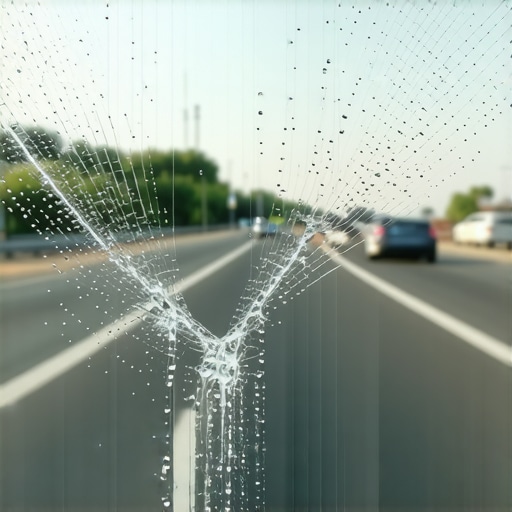
A homeowner, who also happened to be a regular client for my architectural glazing projects, once called me in a panic because their windshield had ‘spontaneously’ cracked across the entire field of vision. I arrived with my equipment and performed a quick inspection. I found a tiny, neglected stone chip near the edge of the glass, right over the black frit. I had to explain that the temperature differential—the 10-degree exterior air versus the 75-degree blast from his defroster—created a localized thermal stress that the compromised glass could no longer handle. It was not a fluke; it was physics. A simple chip repair performed weeks earlier would have saved the entire unit, but because the structural integrity was breached, he now required a full replacement from a qualified glass installer.
The Anatomy of Laminated Safety Glass
To understand why a windshield is critical, we must ‘zoom’ into the glazing technology itself. Unlike the tempered glass used in side windows, which is designed to shatter into small ‘pears’ to prevent deep lacerations, the windshield is a laminate. It consists of two layers of annealed glass bonded together by a central interlayer of Polyvinyl Butyral (PVB). This PVB layer is the hero of the story. When an object strikes the glass, the outer layer may crack, but the PVB interlayer absorbs the kinetic energy and holds the shards together, preventing the projectile from entering the cabin. This is a principle we use in high-security architectural glazing, and it is equally vital on the highway.
“Installation is just as critical as the window performance itself. A high-performance window installed poorly will fail.” – AAMA Installation Masters Guide
Furthermore, we must discuss the Glazing Bead and the adhesive bond. The windshield is bonded to the vehicle’s pinchweld using high-modulus urethane. This is not ‘glue’ in the traditional sense; it is a structural adhesive that, once cured, makes the glass an integral part of the frame. If an installer uses a low-quality adhesive or fails to properly prime the Rough Opening of the vehicle’s frame, the glass can pop out during an accident. This leads to roof collapse or, worse, the failure of the airbag system. The airbag is designed to bounce off the interior of the windshield before protecting the passenger. If the bond fails, the airbag deploys out the window, leaving the occupant unprotected.
Thermal Stress and Climate Logic
In northern climates where the temperature swings are 40 degrees or more in a single day, the ‘Dew Point’ and thermal expansion coefficients become your worst enemies. Glass expands and contracts at a different rate than the metal frame of your car. This is why the Shim and spacing during installation are so critical. If the glass is ‘tight’ against the frame without a proper urethane cushion, the mechanical stress alone can cause a crack. We see this often in same-day mobile service calls where the technician rushed the preparation phase.
For those in hotter, southern climates, the enemy is Solar Heat Gain and UV degradation. The black ceramic ‘frit’ you see around the edge of your windshield is not decorative. Its primary job is to protect the urethane adhesive from ultraviolet radiation. UV rays will break down the molecular bonds of the urethane over time, leading to leaks and structural failure. A master glazier knows that ensuring the frit is clean and the primer is applied with surgical precision is the only way to guarantee a long-term bond that can withstand the radiant heat of a Texas July.
The Math of Repair vs. Replacement
I often hear people complain about the cost of a high-quality windshield, but the ROI on safety is immediate. When you utilize a mobile service for a chip repair, you are not just fixing an aesthetic flaw. You are performing a localized structural restoration. We inject a specialized resin into the ‘bullseye’ or ‘star’ break that has a refractive index nearly identical to the glass itself. This resin bonds the layers of glass back together, preventing the Sash of the windshield from further degradation. It is a scientific process that, when done correctly, restores the tension across the surface of the glass.
“The windshield must be considered a structural member of the vehicle body. Any compromise in the glass or its attachment can lead to catastrophic failure during a rollover or collision.” – NFRC Safety Bulletin
We must also address the Weep Hole logic found in architectural glazing. While car windshields do not have weep holes like a house window Sill Pan, they do rely on a perfect seal to prevent water from reaching the interior electronics. Modern vehicles are packed with sensors behind the glass—cameras for lane departure, rain sensors, and light sensors. A minor leak caused by a poor installation can fry thousands of dollars in electronics. This is why hiring a professional glass installer who understands the Muntin-like precision required for sensor recalibration is essential. You aren’t just paying for glass; you are paying for the calibration of a safety system.
Choosing Your Professional
When you are looking for same-day service, do not settle for a technician who ignores the technical nuances. Ask them about their curing times. Ask them about the ‘drive-away time’ of their urethane. A true professional will tell you exactly how long the vehicle must sit before the structural bond is strong enough to be safe. They won’t just ‘caulk-and-walk.’ They will ensure the pinchweld is free of corrosion, the primers are fresh, and the glass is seated with the correct tolerances. Your safety depends on the invisible science of glazing. Do not compromise on the one thing that stands between you and the open road.