Why you should never use a pressure washer near a fresh seal
I have spent over twenty-five years in the glazing industry, and if there is one sound that makes my neck hair stand up, it is the distinctive whine of a pressure washer engine echoing through a residential neighborhood. Most homeowners, and even some so-called professionals, view a pressure washer as a magic wand that erases grime. In reality, in the hands of someone who doesn’t understand the physics of a fenestration system, it is a hydraulic chisel. When you have just invested in a mobile service for a chip repair or had a glass installer complete a same-day replacement, that pressure washer is the single greatest threat to your investment. I have seen thousands of dollars in high-performance glass destroyed in seconds because someone wanted to ‘blast’ the spider webs off their window frames.
“Installation and maintenance practices must respect the integrity of the sealant system. Subjecting newly applied sealants to high-pressure water can lead to cohesive failure before the curing cycle is complete.” – ASTM E2112 Standard Practice
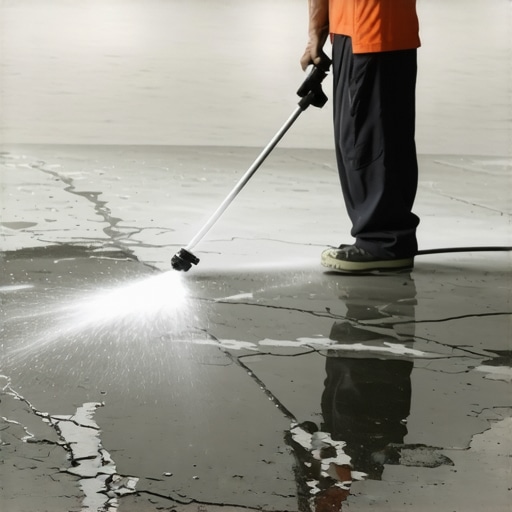
A few years ago, I received a frantic call from a homeowner who had just utilized a mobile service for a series of chip repairs across their front facade. It was a classic ‘same-day’ job, clean and professional. However, forty-eight hours later, they decided to prep their house for a summer party by power washing the siding. By the time I arrived, three of the insulated glass units were showing immediate internal fogging. I walked up to the first window with my hygrometer and a specialized flashlight. It wasn’t a failure of the chip repair resin; it was a total breach of the glazing bead. The owner had directed a 3000 PSI stream of water directly at the perimeter seal. I had to explain that they hadn’t just cleaned their windows; they had hydraulically injected a pint of water into the desiccated spacer system of the glass. The ‘sweating’ they saw wasn’t a defect; it was the death knell of the window’s thermal performance.
The Physics of Water Injection vs. The Shingle Principle
In glazing, we live by the ‘Shingle Principle.’ This means everything—from the flashing tape at the rough opening to the drip cap above the window—is designed to shed water downward and outward using nothing but gravity. Your window is an operable system designed to manage ‘wind-driven rain,’ which typically exerts a pressure equivalent to maybe 5 to 10 pounds per square foot. A pressure washer, even a consumer-grade model, can exert 2000 to 4000 pounds per square inch. When you point that nozzle at a sash, you are not asking the window to shed water; you are forcing water into areas where it was never meant to go. The glazing bead, that small strip of vinyl or aluminum that holds the glass in place, is designed to be a barrier against rain, not a submarine hull. High-pressure water travels behind that bead, bypasses the primary seal, and sits in the sill pan. If the weep hole is even slightly obstructed by debris, that water has nowhere to go but inside your wall cavity or into the secondary seal of the insulated glass unit.
The Vulnerability of a Fresh Seal
Whether you have just had a glass installer apply a fresh bead of neutral-cure silicone or a mobile service technician inject resin for a chip repair, you are dealing with a chemical process. Sealants do not ‘dry’ like a puddle of water; they cure. This involves molecular cross-linking that can take anywhere from 24 hours to 28 days to reach full shore hardness and adhesive strength. When a seal is ‘fresh,’ it is in a state of flux. The bond between the glass and the frame is still developing. If you hit that fresh seal with high-pressure water, you risk ‘cohesive failure,’ where the sealant itself tears, or ‘adhesive failure,’ where the sealant peels away from the substrate. Even if the seal looks intact to the naked eye, the pressure can create microscopic ‘tunnels’ through the material. Once these tunnels exist, capillary action will draw moisture into the window system every time it rains, eventually leading to rot in the wood sash or corrosion in the hardware.
“A high-performance window installed poorly or maintained with aggressive mechanical force will fail to meet its NFRC rated performance levels.” – AAMA Installation Masters Guide
Thermal Expansion and the Trap of Solar Heat Gain
In our climate, we often see massive temperature swings. If you are in a region where the sun beats down on the glass, the Solar Heat Gain Coefficient (SHGC) is your best friend or your worst enemy. If you have successfully blocked out that radiant heat with a Low-E coating on Surface #2, your window is doing its job. However, if you have forced water behind the glazing bead with a pressure washer, that water is now trapped in a dark, hot environment. As the sun hits the window, that trapped water evaporates, creating a high-pressure steam environment inside the window frame. This accelerates the breakdown of the polyisobutylene (PIB) primary seal of the glass unit. You will eventually see ‘seal failure,’ characterized by a hazy, oily film between the panes that no amount of cleaning can fix. This isn’t a warranty issue; it’s a maintenance error.
Why Same-Day Chip Repair Requires Patience
The rise of mobile service for chip repair is a boon for homeowners, but it requires an understanding of the materials used. These resins are often UV-cured and require a specific period to stabilize. Blasting a fresh repair with cold, high-pressure water creates two problems. First, the thermal shock of the cold water on a sun-warmed window can cause the very chip you just repaired to ‘bloom’ or spider-web across the entire pane. Second, the pressure can force water into the repair site before the resin has reached its maximum bond. If you want that repair to last, stay away from the power washer for at least a week. Instead, use a low-pressure garden hose and a soft microfiber cloth. Respect the shim, the sash, and the muntins; they are architectural components, not industrial equipment designed for hydraulic stress. Water management is a science, and the most important tool in your arsenal isn’t a 5-horsepower pump—it’s common sense. Keep the pressure on your siding, but keep it far away from your glass seals.