Why your windshield glass is thinner than it used to be
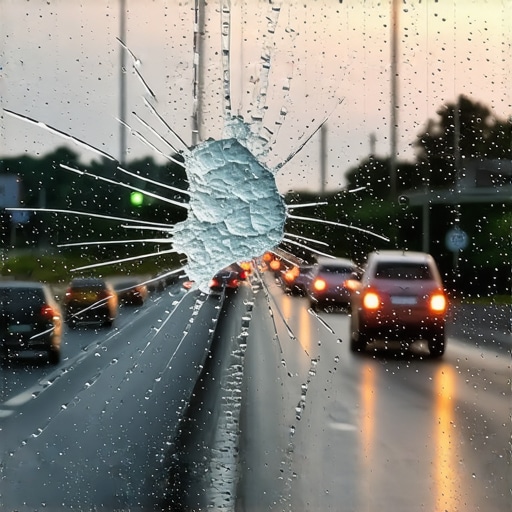
Every time you hear that sharp ‘tink’ of a pebble hitting your windshield, you are participating in a high-stakes physics experiment. If it feels like your glass is more fragile than the windshield on your grandfather’s 1974 sedan, you are not imagining things. As a master glazier with 25 years in the trade, I have seen the evolution of glass from heavy, thick plates to the chemically-strengthened, lightweight membranes we see today. The shift toward thinner glass is driven by a relentless push for fuel efficiency and reduced carbon footprints, but it comes at a cost to the structural margin of error. In the architectural world, we talk about the rough opening and how the frame supports the load, but in a modern vehicle, the glass itself is a structural member that provides up to 60 percent of the roof strength in a rollover. When that glass is thinned out to save weight, every chip repair becomes a critical maintenance task rather than a cosmetic suggestion.
“Installation is just as critical as the window performance itself. A high-performance window installed poorly will fail.” – AAMA Installation Masters Guide
A homeowner called me in a panic because their new windows were ‘sweating.’ I walked in with my hygrometer and showed them the humidity was 60%. It wasn’t the windows; it was their lifestyle. I told them the same thing I tell my automotive clients: you cannot ignore the atmospheric conditions surrounding your glass. In a cold climate like Chicago or Minneapolis, the delta between the freezing exterior air and the 72-degree interior cabin creates massive thermal stress. Modern windshields are often composed of two layers of glass, each perhaps only 2.1mm thick, bonded by a Polyvinyl Butyral (PVB) interlayer. To meet CAFE (Corporate Average Fuel Economy) standards, manufacturers have pushed these lites down to 1.8mm or even 1.6mm. This reduction in mass means the glass has less thermal capacity. When you blast the defroster on a frozen morning, the rapid expansion of the inner lite against the still-frozen outer lite creates a tension that can turn a tiny stone chip into a foot-long crack in seconds.
Understanding the NFRC (National Fenestration Rating Council) metrics for residential units helps us understand automotive glass performance. We look for a low U-Factor in the north to keep heat in. In your car, that thin glass is struggling to maintain that same thermal barrier. The industry has compensated by using sophisticated Low-E coatings on Surface #2 (the inner face of the outer lite). These coatings reflect long-wave infrared radiation, but they cannot add physical thickness. If the glass installer uses a sub-par urethane during a replacement, or if a mobile service technician fails to properly prime the pinch weld, the structural integrity is compromised. The pinch weld is the rough opening of the car, and just like a window sash in a home, it must be perfectly prepared. We use a shim occasionally in residential framing to ensure a level head, but in a car, the urethane bead acts as both the sealant and the shim, managing the tolerances between the glass and the steel.
When we discuss chip repair, we are talking about resin injection that must match the refractive index of the glass perfectly. Because the glass is thinner, the ‘crater’ of a stone impact often reaches closer to the PVB interlayer. A mobile service professional must act quickly to seal this void before moisture enters. If water reaches that interlayer, it can cause delamination, appearing as a milky white fog around the edges of the glass. This is similar to what happens when a residential IGU (Insulated Glass Unit) fails and the desiccant becomes saturated. Whether it is an operable casement window or a fixed windshield, water management is the primary goal. We use a sill pan in houses and a weep hole in window tracks to move water out; in a car, the molding and the cowl grill must be clear of debris to prevent water from pooling against the glass seal.
“The integrity of the building envelope depends on the seamless integration of the fenestration products with the water-resistive barrier.” – ASTM E2112 Standard Practice
The math of modern glazing is clear: thin glass saves weight but requires higher precision. Traditional glass was thick enough to mask minor installation errors. Modern glass, with its reduced thickness and integrated sensors for ADAS (Advanced Driver Assistance Systems), is intolerant of ‘caulk-and-walk’ mentalities. If a muntin is misaligned on a colonial window, it is an eyesore; if a camera is misaligned behind a thin, modern windshield, the automatic braking system might fail. This is why a same-day mobile service must be more than just fast; it must be technically perfect. The glazing bead that holds a residential pane in place is a simple mechanical stop, but the bond on a modern windshield is a chemical weld. Don’t buy the marketing hype that all glass is the same. Look at the numbers, understand the physics of thermal shock, and never leave a chip to the mercy of a cold winter night.