Why your safety sensors need a recalibration after a basic wheel alignment
Why Your Safety Sensors Need Recalibration After a Wheel Alignment
I. Introduction: The “Hidden” Step in Modern Car Care
For decades, a wheel alignment was a straightforward mechanical procedure. You noticed your car pulling to the left, or perhaps your steering wheel wasn’t centered, so you took it to a shop. The technician adjusted a few bolts, straightened the wheels, and you were back on the road. However, in the era of Advanced Driver Assistance Systems (ADAS), that “simple” alignment is no longer just a mechanical fix. It is now a digital one.
Modern vehicles are essentially computers on wheels. They are equipped with a sophisticated network of cameras, radar, and ultrasonic sensors that act as the vehicle’s “eyes.” These eyes are responsible for keeping you in your lane, maintaining a safe distance from the car in front of you, and even slamming on the brakes if a pedestrian steps into your path. But here is the critical catch: your car’s “eyes” (the sensors) are inextricably tied to its “feet” (the wheels).
When you change the orientation of the wheels, you change the direction the vehicle travels relative to its chassis. If the sensors are not updated to reflect this change, the “brain” of your car becomes confused. This is why a professional recalibration is the hidden, yet mandatory, step in modern car care. Understanding this connection is vital for your safety, especially if you’ve noticed why your windshield sensors are acting crazy after a storm or a recent service.
II. Understanding Wheel Alignment: More Than Just Straight Steering
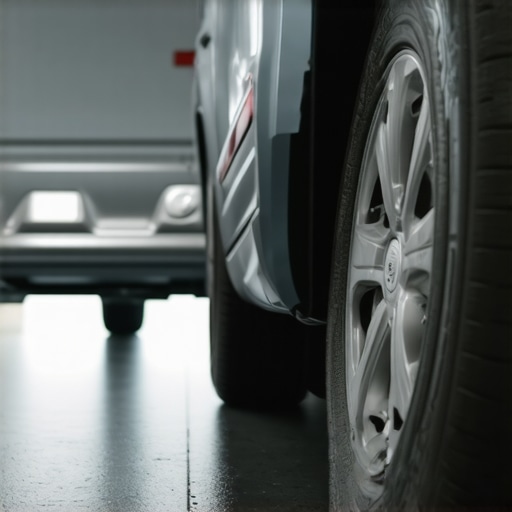
To understand why sensors need recalibration, we first have to look at what happens during a wheel alignment. A standard alignment involves adjusting three primary angles: Camber, Caster, and Toe. These adjustments ensure that your tires make optimal contact with the road and that your steering is responsive.
When you search for an alignment near me, most drivers are looking for a way to prevent uneven tire wear or to fix a crooked steering wheel. However, the most important factor regarding ADAS is the Thrust Angle. The thrust angle is an imaginary line drawn perpendicular to the rear axle. It determines the direction the rear wheels are pushing the vehicle. If the thrust angle is off, the car will “crab-walk,” meaning the body of the car is slightly sideways while driving straight down the road.
While a technician can mechanically straighten the wheels, the digital systems inside the car still believe the vehicle is oriented the way it was before the adjustment. This discrepancy creates a dangerous gap between mechanical reality and digital perception.
III. What is ADAS? The “Brain” Behind the Safety
ADAS stands for Advanced Driver Assistance Systems. These systems are designed to reduce human error, which is the leading cause of traffic accidents. Common ADAS features include:
- Lane Keep Assist (LKA): Uses cameras to identify lane markings and steer the vehicle back if it drifts.
- Adaptive Cruise Control (ACC): Uses radar to maintain a set distance from the vehicle ahead.
- Automatic Emergency Braking (AEB): Detects imminent collisions and applies the brakes.
- Forward Collision Warning (FCW): Alerts the driver to potential hazards.
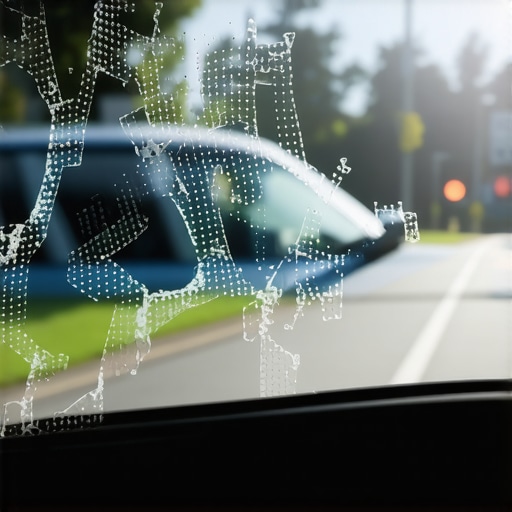
These systems rely heavily on sensors, most notably the windshield-mounted camera and front-facing radar. The camera is usually located in a bracket attached to the glass, looking through a specific “window” in the ceramic frit. Because this camera is the primary source of data for lane-tracking, it is highly sensitive to the vehicle’s pitch and yaw. If you have recently had service, you might need to know how to check your windshield camera after a glass swap or a suspension adjustment to ensure it is still seeing the road accurately.
IV. The Critical Connection: Why Alignment Changes Sensor Perception
This is the technical heart of the matter. Imagine you are holding a laser pointer and aiming it at a target 100 yards away. If you move your hand just one millimeter at the source, the laser dot on the target will jump by several feet. This is exactly how ADAS sensors work.
The Thrust Angle mentioned earlier dictates the true centerline of the vehicle. When a technician performs an alignment, they are changing that centerline. The camera behind your windshield is calibrated to look straight down that specific centerline. If the wheels are adjusted but the camera isn’t told about it, the camera is now “looking” in the wrong direction.
Research indicates that the slightest wheel alignment change impacts how ADAS systems work. Even a fraction of a degree of deviation can result in the camera miscalculating the distance to a lane marker by several feet. This can lead to the car steering itself out of a lane or failing to recognize a vehicle in its path. To correct this, a professional ADAS calibration is required to “re-zero” the camera and radar to the new mechanical alignment.
Without this step, the vehicle’s safety systems are operating on outdated maps, which is a recipe for disaster on the highway. This is also one of the primary reasons why your car sensors fail after a glass installation if the shop doesn’t follow up with a proper alignment check.
V. Why a Steering Angle Sensor (SAS) Reset Isn’t Enough
A common misconception in the automotive world – and even among some budget-tier shops – is that a Steering Angle Sensor (SAS) reset is the same as a full ADAS calibration. It is not.
The SAS is a digital sensor that tells the car’s computer the position of the steering wheel. During an alignment, the technician will often reset this to “zero” so the car knows the wheels are straight. While this is a necessary step, it only addresses the steering. It does nothing to address the vision.
Physical sensor recalibration involves using specialized targets and software to ensure the camera’s field of vision aligns perfectly with the road ahead. As noted in research from the Tire Supply Network, “Steering Angle Reset Alone Is Not Enough.” If the camera is physically tilted or if the thrust line of the car has changed, the software must be recalibrated to account for the new physical geometry of the vehicle. Relying solely on a SAS reset is like putting on glasses with the wrong prescription; you might be looking straight ahead, but everything you see is still blurry or displaced.
VI. The Safety Risks of Skipping Recalibration
Skipping recalibration after an alignment isn’t just a technical oversight; it’s a significant safety risk. When the mechanical alignment and the digital sensors are out of sync, the car can behave in unpredictable ways:
- False Braking Events: The radar or camera might perceive an overhead sign or a car in an adjacent lane as an obstacle in your direct path, causing the car to slam on the brakes at highway speeds.
- “Ping-Ponging”: The Lane Keep Assist may struggle to find the center of the lane, causing the vehicle to bounce back and forth between lane markers.
- System Shutdown: Many modern vehicles will detect an “implausible” data set (where the wheels say one thing and the camera says another) and disable safety features entirely, leaving you without protection.
Many drivers don’t realize the cost of skipping a professional windshield recalibration until they experience a near-miss on the road. The financial savings of skipping the service are negligible compared to the risk of a high-speed ADAS malfunction.
VII. When is Recalibration Mandatory?
As an expert in the field, I often get asked for a definitive list of when a driver needs to seek out a specialized auto repair shop for calibration. You should insist on ADAS recalibration in the following scenarios:
- After a Wheel Alignment: Any time the thrust angle or toe is adjusted.
- After Windshield Replacement: The camera is moved and must be recalibrated to the new glass. (Always ensure you know how to spot a bad windshield seal before it leaks, as moisture can also ruin these sensors).
- After Suspension Repairs: Replacing shocks, struts, or control arms changes the ride height and alignment.
- After a Collision: Even a minor “fender bender” can jar a sensor out of place.
- If Error Codes Appear: If your dashboard displays an ADAS-related warning light.
It is also worth noting that why your windshield tech uses a specific primer for urethane matters for sensor stability; a loose windshield can cause vibration that throws off camera calibration over time.
VIII. Choosing the Right Professional: ADAS-Capable Shops
Not every auto repair near me or mechanic near me has the equipment necessary to perform a proper ADAS calibration. This process requires a controlled environment – level floors, specific lighting, and expensive target systems that are unique to each vehicle manufacturer.
When searching for a mechanic near me, ask specifically if they perform “Static” or “Dynamic” calibrations. A shop that understands the difference and has the specialized equipment is the only shop that should be touching your safety systems. Standard alignment racks are great for tires, but they don’t talk to your car’s cameras. You need a facility that bridges the gap between mechanical expertise and digital precision.
IX. Conclusion & Final Thoughts
In the modern automotive landscape, safety is a holistic system. You cannot adjust the mechanical components of your car without also updating the software that governs its safety features. My mission has always been to drive calibration accuracy and technician growth, ensuring that every car that leaves a shop is as safe as the day it was manufactured.
The next time you book an alignment, don’t just ask about your tires. Ask your technician for a full ADAS scan report and ensure that your sensors are seeing the road as clearly as you are. Your safety – and the safety of everyone on the road – depends on it.