Why your car’s antenna might be built directly into the glass
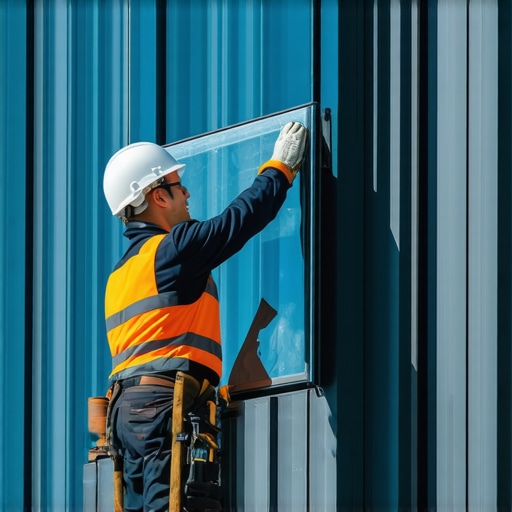
The days of the retractable silver whip antenna are largely over. If you look closely at your rear window or the top edge of your windshield, you will see a fine grid of lines that look remarkably like the defroster. This is not a mistake. As a master glazier with over 25 years in the field, I have seen the evolution of glass from a simple transparent barrier into a multifunctional component that serves as a structural element, a thermal regulator, and a communication hub. When a client calls for a mobile service or a same-day windshield replacement, they are often surprised to learn that their glass is doing much more than just keeping the wind out of their face.
The Narrative Matrix: A Lesson in Humidity and Performance
A homeowner called me in a panic because their new windows were ‘sweating.’ I walked in with my hygrometer and showed them the humidity was 60 percent. It was not the windows; it was their lifestyle. I mention this because people often blame the glass for performance failures when the issue is actually environmental or installation-related. The same logic applies to automotive glass. When your radio reception fails after a chip repair or a full replacement, the culprit is rarely the glass itself, but rather the technician who failed to properly reconnect the silver-ceramic frit that makes up the antenna array. Integration is the name of the game in modern fenestration and automotive glazing. We are no longer just dealing with silica; we are dealing with complex electronic systems embedded within a laminated sandwich.
“Installation is just as critical as the window performance itself. A high-performance window installed poorly will fail.” – AAMA Installation Masters Guide
The Science of Integrated Antennas
Why put the antenna in the glass? The first reason is drag. An external mast creates wind noise and decreases fuel efficiency. But from a glazier’s perspective, the real reason is protection. By embedding the antenna within the glass, either as a printed silver ceramic trace on the inner surface or between the layers of Polyvinyl Butyral (PVB) in laminated glass, we protect the fragile conductive material from oxidation and physical damage. This is the same principle we use when placing Low-E coatings on Surface 2 or Surface 3 of a thermal pane. Surface 2, the inner face of the outer pane, is the gold standard for solar heat gain rejection. When we talk about glass installer precision, we are talking about managing these surfaces without contamination.
The antenna works through a process called inductive coupling or direct connection. The silver lines are silk-screened onto the glass and then fired in an oven to fuse them with the surface. These lines are tuned to specific frequencies, such as FM, AM, or even cellular signals. The rough opening of your car’s frame acts as a ground plane, and the glass serves as the dielectric medium. If the sash or the frame of the vehicle is not properly bonded to the glass using high-quality urethane, the signal can suffer from interference. This is why a mobile service must be meticulous about the adhesive bead; it is not just about the water seal, it is about the electronic integrity of the vehicle.
Thermal Logic and Signal Transparency
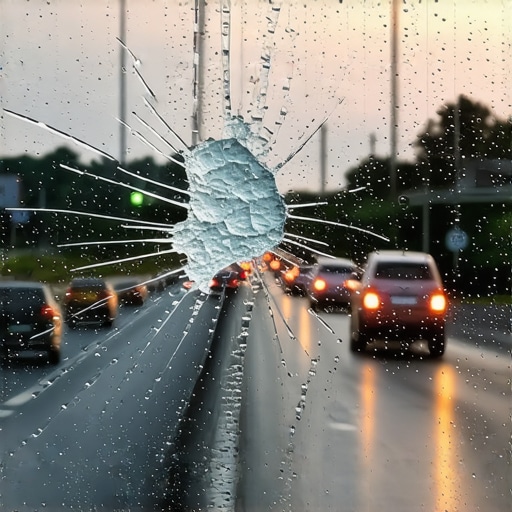
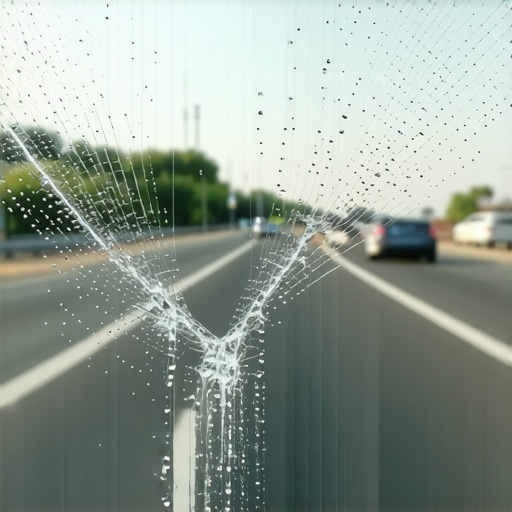
In colder climates, like Chicago or Minneapolis, we prioritize the U-Factor. We want to keep heat inside. In these regions, the integrated antenna must coexist with the defroster grid. A master glass installer knows that these two systems are separate but adjacent. If you have a chip in this area, a same-day chip repair is essential. If a crack crosses those silver traces, you lose more than just visibility; you lose your GPS, your satellite radio, and your rear-window heating. The physics of heat loss and signal attenuation are surprisingly similar. Just as a metallic Low-E coating can reflect heat, it can also reflect radio waves. This is why high-end vehicles often use specialized ‘signal friendly’ zones in the glass where the metallic coatings are omitted to allow the antenna to function.
“Glazing systems must be designed to withstand both environmental loads and the functional requirements of the building or vehicle envelope.” – ASTM E2112 Standard Practice
The Blueprint of Glass Class: Decoding the Tech
When you are looking at a same-day replacement, you need to understand the NFRC-style logic applied to your car. The Solar Heat Gain Coefficient (SHGC) is critical in southern climates like Phoenix or Miami. We want to block the sun’s radiant energy before it hits the cabin. This is achieved through tinted glass or reflective interlayers. However, if you add an aftermarket tint to a window that has an integrated antenna, you might be creating a Faraday cage. Metallic tints are the enemy of glass-integrated electronics. I always tell my clients: if you want performance, look at the glazing bead and the factory specs, not the cheapest film you can find at a big-box store.
The complexity of these systems is why mobile service technicians must be more than just strong arms; they must be technicians. Replacing a windshield today involves recalibrating cameras (ADAS) and ensuring the antenna leads are soldered or clipped with zero resistance. If the sill pan of a window is the foundation of a house’s water management, the urethane bond is the foundation of the car’s structural and electronic health. A chip repair might seem simple, but if that chip is over an antenna trace, the resin used must have similar refractive and conductive properties to ensure the system remains ‘whole.’
Conclusion: The Installer is the Variable
Whether we are talking about a rough opening in a new construction home or the frame of a luxury sedan, the glass is only as good as the person who puts it in. The integration of antennas into glass is a triumph of engineering that simplifies the exterior of the vehicle while complicating the interior of the glass. Don’t let a ‘caulk and walk’ installer touch your vehicle. Demand a glass installer who understands the difference between Surface 2 and Surface 3, who knows why same-day service requires high-modulus adhesives, and who respects the science of the chip repair. Your car is not just a mode of transport; it is a sophisticated piece of glazing technology that requires an expert hand.