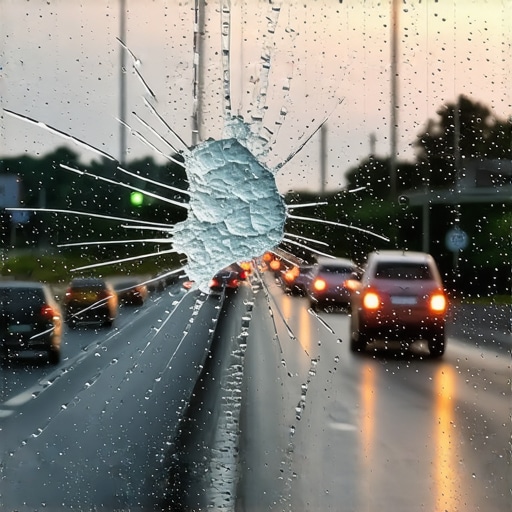
The danger of driving with a crack on the driver’s side
The Critical Physics of the Glass Sandwich
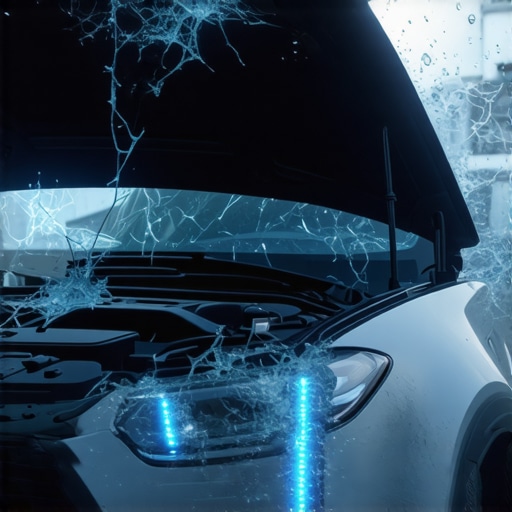
As a Master Glazier with over a quarter-century of experience, I have seen every type of fenestration failure imaginable. From high-rise curtain walls to the complex laminated glass in your vehicle, the principles of structural integrity remain constant. When you look through your windshield, you are not just looking through a piece of glass; you are looking through a sophisticated laminate composed of two layers of soda-lime glass bonded by a polyvinyl butyral (PVB) interlayer. This is not a mere cosmetic shield. It is a structural member of the vehicle cabin. I pulled a windshield out of a vehicle in Chicago and the pinchweld was completely black with rot. Why? The previous glass installer relied on a quick-set adhesive without using a proper metal primer or treating the scratches they made during the removal process. This allowed moisture to sit trapped against the bare steel, hidden under the molding, until the structural integrity of the rough opening was completely compromised. This is the danger of the caulk-and-walk mentality in the world of mobile service. When you have a crack on the driver’s side, you are looking at a failure of that structural sandwich. The PVB layer is designed to hold the glass together upon impact, but when a crack originates on Surface #1 (the exterior) and penetrates through to the interlayer, the tension-compression balance of the unit is destroyed.
“The windshield is a safety device that must be installed with the same precision as a structural beam in a skyscraper. Any compromise in the bond or the glass itself renders the safety systems of the vehicle less effective.” – AGRSS Standard Council
The Acute Area: Why Your Vision is Compromised
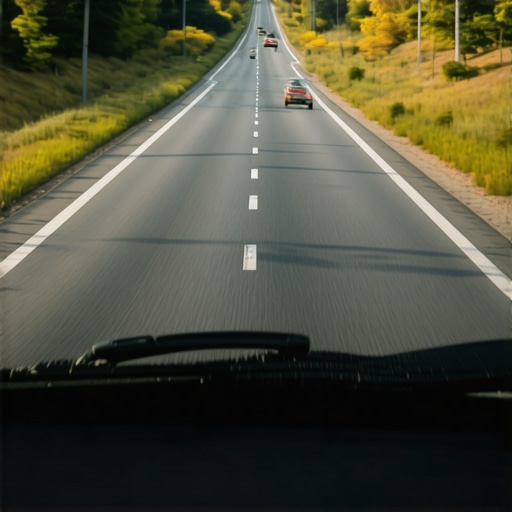
In the trade, we talk about the acute area. This is the 8.5 by 11-inch space directly in front of the driver. A crack here is not just a visual distraction; it is an optical hazard. Glass has a specific refractive index. When light hits a crack, it bends at an unpredictable angle, creating a ghosting effect or a blinding flash when the sun hits it at the right angle. This can hide a pedestrian or a brake light at a critical moment. If you are searching for a glass installer to handle a chip repair, you need to understand that the goal of the resin injection is to restore that refractive index. However, once a crack exceeds the size of a dollar bill, the structural bond of the lamination is too far gone for a simple resin fix. The stress riser at the tip of the crack is a point of infinite pressure. Every time you hit a pothole or experience a temperature change, that stress riser works like a wedge, driving the crack further across the glass. This is why same-day service is not just about convenience; it is about stopping that propagation before it reaches the edge of the glass, where the urethane bond is most critical.
[IMAGE_PLACEHOLDER]
Thermal Stress and the North/Cold Climate Reality
In colder regions like Minneapolis or Chicago, the enemy is heat loss and the resulting thermal shock. You get into your car on a ten-degree morning and blast the defroster. You are essentially hitting the inner layer of the glass with 100-degree air while the outer layer is at sub-zero temperatures. This creates a massive thermal gradient. Since glass is a poor conductor of heat, the inner layer expands while the outer layer remains contracted. If there is already a chip or a crack on the driver’s side, this expansion acts as a lever. This is where a tiny star-break becomes a full-width fracture in seconds. A professional glass installer knows that the dew point and the ambient humidity during installation are vital. If a mobile service technician attempts to replace your glass in the snow without a controlled environment, the urethane will not bond to the frit (the black ceramic edge of the glass) or the pinchweld. You will end up with a window that looks fine but will pop out the moment an airbag deploys. Airbags in modern vehicles use the windshield as a backstop. If the glass is cracked, its ability to withstand the force of an inflating airbag is reduced by up to 40 percent.
“Installation is just as critical as the window performance itself. A high-performance window installed poorly will fail to protect the occupants or manage the thermal loads of the building or vehicle.” – AAMA Installation Masters Guide
The Anatomy of Professional Replacement
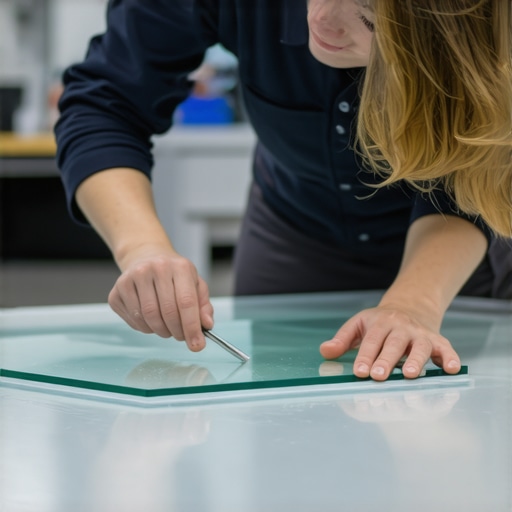
When we perform a full-frame replacement, we aren’t just swapping glass. We are restoring a safety system. The process involves removing the old glazing bead or molding, carefully extracting the damaged unit without scarring the paint, and prepping the rough opening. We use shims only when necessary to ensure the glass is perfectly centered, allowing for the thermal expansion and contraction that occurs in every climate. If the glass is too tight against the A-pillar, it will crack again at the first sign of torque. We also check the weep holes in the cowl area. If those are blocked, water will back up into the cabin, leading to the same rot I mentioned earlier. A same-day mobile service must still adhere to the Safe Drive-Away Time (SDAT). Urethane doesn’t just dry; it cures through a chemical reaction with atmospheric moisture. If you drive too soon, the glass can shift, creating a whistle or, worse, a leak. Real chip repair is a science of vacuum and pressure. We extract the air from the fracture, creating a void that we fill with a high-viscosity resin that is then cured with a specific wavelength of UV light. It is a surgical procedure for your car.
The Math of Modern Glass
Don’t buy the hype of the cheapest bid. The ROI on a proper glass installation is measured in safety and durability. A cheap installer will skip the primer, use a low-grade sealant, and leave you with a window that whistles at sixty miles per hour. A Master Glazier understands the VT (Visible Transmittance) and the SHGC (Solar Heat Gain Coefficient) even in automotive glass. Modern windshields often have an acoustic interlayer to reduce road noise and a Low-E coating to reflect infrared radiation, keeping your cabin cooler and reducing the load on your A/C. When you replace your glass, you need to ensure the new unit matches these specifications. If your car has ADAS (Advanced Driver Assistance Systems) like lane-keep assist, that camera is looking through the glass. A crack or a low-quality replacement will throw off the calibration, leading to a system failure. In the end, the installer matters more than the sticker. Whether it is a sash in a house or a windshield in a truck, the physics of water management and structural bonding do not change. Take care of that crack before the physics of the road take care of it for you. It is a matter of clear vision and structural survival.