The real reason your new glass might be whistling on the highway
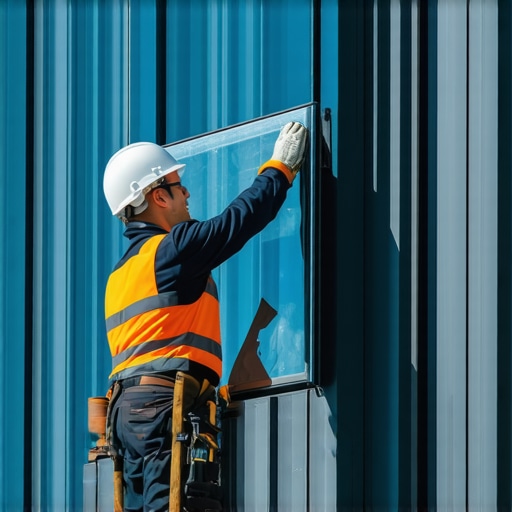
There is a specific kind of madness that sets in when you are cruising at seventy miles per hour and a high pitched harmonic scream begins to emanate from your dashboard area. It is not the engine, it is not the tires, it is the sound of air being forced through a microscopic bypass in your glass seal. As a glazier with over two decades in the field, I have seen every iteration of this failure. Whether we are talking about a high rise curtain wall or a windshield installed by a mobile service, the physics of air infiltration do not change. When you hear that whistle, you are listening to a failure of fluid dynamics and a betrayal of professional installation standards.
A homeowner called me in a panic because their new windows were ‘sweating.’ I walked in with my hygrometer and showed them the humidity was 60%. It wasn’t the windows; it was their lifestyle, specifically a lack of mechanical ventilation for a high performance envelope. I mention this because whistling glass on the highway follows a similar logic. People blame the glass itself, but the glass is just a passive substrate. The whistle is an indictment of the installer who treated a precision technical task like a simple caulk and walk job. If the seal is not perfect, the pressure differential between the interior and exterior environments creates a high velocity air stream that vibrates the edges of the glass or the trim like a reed in a woodwind instrument.
“Installation is just as critical as the window performance itself. A high-performance window installed poorly will fail.” – AAMA Installation Masters Guide
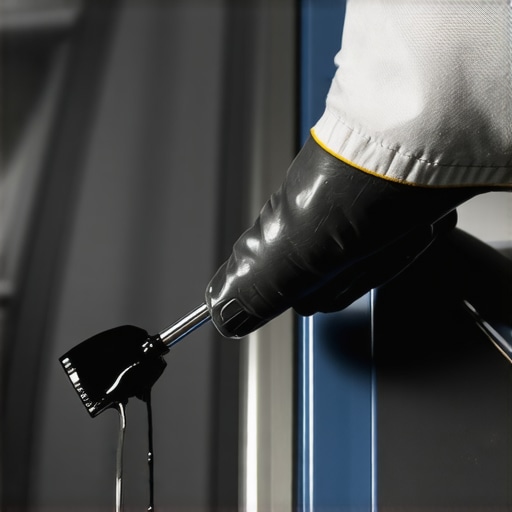
To understand the whistle, we must first look at the rough opening of the problem. In residential construction, the rough opening is the framed space where the window sits. In a vehicle or a structural glazing application, the pinchweld or the frame serves this purpose. If the glass installer fails to properly clean and prime these surfaces, the adhesive bead will never achieve a true chemical bond. We talk about ‘same-day’ service as a convenience, but in cold northern climates like Chicago or Minneapolis, the chemistry of the urethane or silicone is under constant assault. In these cold zones, the enemy is heat loss and the hardening of sealants. If the glass is not warm enough during the application, the sealant reaches its glass transition temperature too quickly, becoming brittle rather than resilient. This creates microscopic gaps that, while invisible to the naked eye, are wide enough for a gust of wind to play like a flute.
When we look at the physics of a whistle, we are looking at Bernoulli’s principle. As air moves faster over the curved surface of the glass, its pressure drops. The higher pressure air inside the cabin or the building tries to escape through any available orifice to reach the low pressure zone outside. If the glazing bead is missing a fraction of a millimeter of sealant, or if a shim was placed incorrectly, causing the glass to sit slightly proud of the frame, the air will find it. This is why I insist on a full frame inspection rather than a simple pocket replacement or a quick chip repair when structural integrity is at stake. A chip repair is great for preventing a crack from spreading, but it does nothing for the perimeter seal which is the primary barrier against the elements.
“Air leakage is often the result of improper interface between the window frame and the adjacent wall or vehicle structure. Testing must account for both positive and negative pressure scenarios.” – ASTM E2112 Standard Practice
In the North, where the U-Factor is king, we worry about the dew point. If your glass is whistling, it is also likely leaking thermal energy. A poorly seated sash in a residential window or a misaligned windshield in a truck allows cold air to penetrate the interior, which then meets the warm, humid air of the living space. This is where the condensation crisis begins. You see water pooling on the sill pan and you think you have a leak. In reality, you have a thermal bridge created by an air gap. The whistling is just the audible warning of a systemic failure. The solution is never just more caulk. You have to look at the weep hole functionality and the flashing tape application. If the water cannot exit the system, it will stay in the frame, freeze, expand, and further compromise the seal, leading to even more noise.
The technical reality of a glass installer is that they are managing a hole in a moving or standing wall. You cannot simply slap a piece of glass into a hole and call it a day. You have to consider the expansion and contraction cycles. Vinyl frames in the north expand significantly more than fiberglass or wood. If you do not leave proper tolerances in the rough opening and use high quality flashing tape that can move with the structure, the seal will eventually shear. When that shear happens, the whistle returns. For mobile service applications, the challenge is even greater. The technician is working in an uncontrolled environment where dust, humidity, and temperature fluctuate. A same-day installation in a driveway is a different beast than one done in a climate controlled shop where the urethane can cure at the molecular level without being shaken by highway speeds before it is ready.
We also have to discuss the muntin and the glazing bead. In many modern high performance windows, the aesthetic elements are snapped onto the exterior. If these are not seated correctly, they create turbulence. Turbulence is the precursor to the whistle. If the glazing bead is not tight against the glass, the wind will catch the edge and vibrate it. It is the same reason you don’t see raw edges on high performance aircraft. Everything must be flush. When I perform an installation autopsy, I look for these small details. I look for the mark of the shim that was squeezed too tight, or the sill pan that was installed backwards, trapping water against the header. These are the hallmarks of an installer who doesn’t understand the science of what they are doing.
The real fix for a whistling window is not a new piece of glass. It is a technician with a torque wrench, a clean substrate, and an understanding of atmospheric pressure. We have to treat every installation as if it were a laboratory experiment. We use primers that promote adhesion at a covalent level. We use sealants that remain operable and flexible down to forty below zero. We ensure the sash is squared within the frame to a tolerance of a sixteenth of an inch. If you skip these steps to save thirty minutes on a same-day job, you aren’t providing service; you are providing a future headache. Do not let a salesman talk you into a high SHGC coating when what you really need is a lower U-Factor and a better installation team. Comfort is not about the glass; it is about the seal.