Why your car safety sensors are suddenly blind
The Ghost in the Glass: Why Your ADAS is Failing
When your dashboard lights up like a Christmas tree with warnings about your Lane Departure Warning or Automatic Emergency Braking, you likely suspect a software glitch. As a glazier with over two decades of experience handling everything from structural curtain walls to high-performance laminated glass, I can tell you the culprit is often much more transparent. Your car safety sensors are suddenly blind because the glass they peering through has failed in its primary duty: optical clarity and thermal management.
The Condensation Crisis: A Real-World Diagnostic
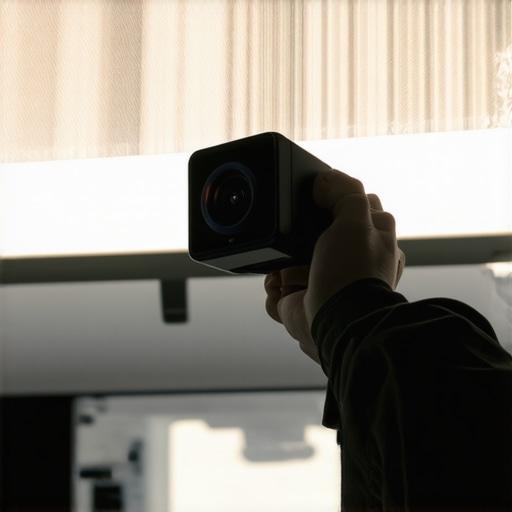
A driver called me in a panic because their new windshield, installed by a cut-rate shop, was causing the safety system to shut down every morning. I walked out with my hygrometer and a thermal imaging camera. The humidity between the glass and the sensor bracket was at 78 percent. It was not a sensor failure; it was a micro-climate failure. The previous installer had botched the seal around the bracket, essentially creating a tiny greenhouse that trapped moisture. It was a classic condensation crisis. They treated the windshield like a simple piece of glass rather than a critical optical component. This is the difference between a glass installer and a master glazier.
“Installation is just as critical as the window performance itself. A high-performance window installed poorly will fail.” – AAMA Installation Masters Guide
The Anatomy of an Installation Autopsy
To understand why your sensors are blind, we have to perform an installation autopsy. The modern windshield is no longer just a wind-blocker; it is a complex laminate. In the North, where we battle extreme heat loss and internal condensation, the U-Factor of your glass matters. When you opt for a same-day chip repair or a mobile service, you are trusting that the technician understands the shim tolerances of the ADAS bracket. If the glass is not seated perfectly within the rough opening of the frame, the camera’s pitch, yaw, and roll are off by fractions of a millimeter. At sixty miles per hour, that fraction translates to feet of error on the road.
Most failures I see involve the shingle principle. Water management is a science, even on a vehicle. If the technician ignores the sill pan equivalent on the firewall or fails to ensure the weep hole areas of the cowl are clear, moisture backs up. In cold climates like Chicago or Minneapolis, that moisture turns to frost inside the sensor housing. Your car isn’t broken; it just can’t see through the ice trapped in its own glazing bead.
The Physics of the Chip: Why Same-Day Repair is Mandatory
A rock chip is not just a cosmetic blemish. From a technical perspective, a chip is a disruption in the refractive index of the glass. When a camera or LiDAR sensor shoots a beam through that glass, the chip scatters the light. Think of it as trying to read a book through a cracked magnifying glass. This is why mobile service for chip repair is not a luxury; it is a safety requirement. The resin used in a chip repair must match the light transmission properties of the original laminate. If the glass installer uses a cheap, high-viscosity resin, the sensor will see a ‘ghost’ and shut down the system for safety.
“The integrity of the fenestration assembly is dependent upon the precise interaction of all components, from the glass to the sealant.” – ASTM E2112 Standard Practice
U-Factor, Condensation, and the North Climate Logic
In northern regions, the enemy is the dew point. We focus heavily on the U-Factor (lower is better) to keep the heat inside the vehicle and prevent the glass from reaching the temperature where moisture in the air turns to liquid. Modern ADAS-compatible glass often features specialized coatings, similar to a Low-E coating on surface #3 of a residential sash, to reflect heat back toward the sensor. This keeps the camera’s ‘eye’ above the dew point. If you replace your high-end glass with a cheap alternative that lacks these thermal properties, you are asking for sensor blindness every October through March.
We also have to talk about the muntin of the modern age: the silk-screened frit pattern. That black ceramic border isn’t just for looks; it protects the urethane bond from UV degradation. If a mobile service technician uses an inferior primer or fails to respect the rough opening tolerances, the bond fails, air enters, and the resulting draft causes localized cooling that triggers internal fogging right over the camera lens.
The ROI of Professional Glazing
Don’t be fooled by the sales pitch of the lowest bidder. The real ROI of a proper windshield installation isn’t just the glass; it’s the continued functionality of your safety suite. A master glazier knows that an operable window in a house and a fixed windshield in a car share the same DNA: they are both holes in a protective shell that must be managed for water, air, and light. When your sensors go blind, look to the glass first. Is it clean? Is it seated? Is the seal around the sensor bracket as airtight as a triple-pane window? Usually, the answer is no, and that is why you need a specialist who understands more than just how to use a caulk gun. You need someone who understands the physics of the pane.