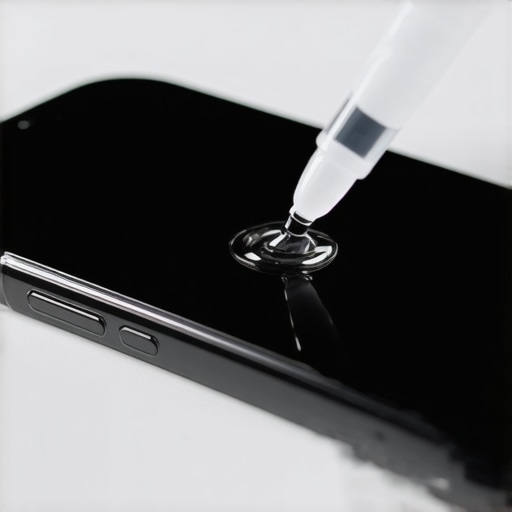
Why we use specific adhesives for curved glass displays
Beyond the Curve: The Hidden Physics of Glass Adhesion
Curved glass is not merely a design choice; it is a mechanical challenge that defies the standard installation logic applied to flat panes. As a master glazier with over two decades in the field, I have seen the disastrous results of treating a high-tension curved display like a standard window. When you bend glass, you introduce internal stresses that are constantly looking for an excuse to release. The adhesive is the only thing standing between a stunning architectural feature and a catastrophic failure. A professional glass installer knows that the bond is not just about sticking two surfaces together; it is about managing the differential thermal expansion between the glass and the mounting substrate. This is particularly critical in mobile service scenarios where environmental variables like humidity and temperature fluctuate wildly during the curing process. Whether we are performing a chip repair or a full-scale display installation, the chemical composition of the bonding agent dictates the longevity of the project.
“Structural glazing relies on the long-term integrity of the adhesive bond to transfer loads from the glass to the frame. The selection of these materials must account for environmental stressors and mechanical movement.” AAMA Installation Masters Guide
A few years ago, a homeowner called me in a panic because their custom-curved glass partition was ‘sweating’ and developed a strange fogging around the edges. I walked in with my hygrometer and found the humidity at a staggering 65 percent. It was not a failure of the glass itself; it was a failure of the installer’s logic. They had used a standard acetic-cure silicone that reacted with the laminated interlayer of the curved pane. The moisture in the air was being pulled into the microscopic gaps caused by the chemical rejection. I had to explain that their lifestyle, involving a nearby indoor fountain, required a neutral-cure structural polymer with a specific vapor transmission rate. It was a classic case of using the wrong chemistry for the specific micro-climate of the room. This is why we never provide a same-day guarantee on complex curved bonds; the physics of the ‘wet-out’ phase cannot be rushed.
The Anatomy of the Bond: Surface Energy and Wet-Out
To understand why we use specific adhesives, you must understand surface energy. Glass is a high-energy, polar surface. This means it is generally easy to bond to, but curved glass introduces a geometric complication. As the glass is heated and bent during manufacturing, the surface chemistry can slightly alter, especially if coatings are applied. We use silane primers to create a molecular bridge between the inorganic glass and the organic adhesive. This process, often referred to as ‘wet-out,’ is where the adhesive flows into the microscopic peaks and valleys of the glass surface. If the adhesive is too viscous, it traps air. If it is too thin, it runs out of the glazing bead area before it can cross-link. In a mobile service environment, we have to compensate for wind and dust that can contaminate this delicate interface. A single speck of dust can become a stress concentrator, eventually leading to a crack that no chip repair kit can fix.
Thermal Stress and the SHGC Factor
In hot climates, the Solar Heat Gain Coefficient (SHGC) becomes the primary enemy of glass adhesives. Curved glass often acts as a lens, concentrating solar energy onto specific points of the frame or the adhesive bead. If we are using a 2-part polyurethane in a high-UV environment, we are asking for a delamination event. We look for adhesives that can withstand the radiant heat without softening. The adhesive must remain elastic enough to allow the glass to expand at a different rate than the aluminum or steel frame. If the adhesive is too rigid, the glass will eventually ‘check’ or crack at the rough opening edges because it has nowhere to move. We often utilize thermally broken frames to mitigate this, ensuring that the sill pan and the internal support structures do not transfer excessive heat directly to the bond line. This is a level of detail that a ‘caulk and walk’ installer will never consider.
“The selection of sealants and adhesives must account for the anticipated movement of the joint and the compatibility of materials to ensure water-tightness and structural stability.” ASTM E2112 Standard Practice
Why ‘Same-Day’ Repair is a Technical Minefield
The industry is flooded with same-day promises, but when it comes to curved displays, speed is the enemy of quality. A chip repair on a flat windshield is one thing, but a structural bond on a curved display requires a specific curing curve. We monitor the ‘tack-free’ time and the ‘full cure’ duration with clinical precision. If the glass installer moves the glass before the polymer chains have fully cross-linked, the structural integrity is compromised. We use specialized shims to maintain a consistent adhesive thickness, ensuring that the ‘bite’ of the adhesive onto the glass is uniform. Without these spacers, the weight of the curved glass can squeeze the adhesive out, leaving a ‘starved’ joint that will fail under the first sign of wind pressure or mechanical vibration. This is why a proper mobile service setup must include climate-controlled storage for the adhesives to prevent premature aging of the chemicals.
The Role of Weep Holes and Vapor Management
In any curved installation, water management is a science. We design the weep hole system to ensure that any condensation that forms on the internal surface of the glass can escape without sitting against the adhesive bead. Many high-performance adhesives are ‘hydrophobically unstable’ if submerged for long periods. If the sill pan is not pitched correctly, or if the flashing tape at the rough opening is missing, water will pool against the structural bond. Over time, this leads to ‘hydrolytic attack,’ where the water molecules literally pull the adhesive away from the glass. This is the ‘Installation Autopsy’ I perform most often: finding black mold and rotted headers behind a beautiful curved window because the installer forgot that water always follows the path of least resistance. You can buy the most expensive curved glass in the world, but if your installer does not understand the ‘Shingle Principle’ of water shedding, your investment is literally rotting away from the inside out.