How to remove sand from your smartphone without scratches
When you have spent over two decades as a master glazier, you stop seeing glass as a simple transparent surface and start seeing it as a complex structural component that manages light, energy, and physical stress. In my 25 years of experience, I have seen it all, from high-rise curtain walls that must withstand hurricane-force winds to the delicate task of historic wood sash restoration. I have seen what happens when a ‘caulk-and-walk’ installer ignores the fundamentals of water management. A homeowner called me in a panic because their new windows were ‘sweating.’ I walked in with my hygrometer and showed them the humidity was 60 percent. It wasn’t the windows; it was their lifestyle. They were running unvented heaters and ignored the physics of the dew point. The same lack of technical understanding leads to the destruction of smartphone screens when they encounter coastal environments. Sand is not just dirt; it is a collection of abrasive minerals, primarily silica, that will compromise the structural integrity of your device if handled with the ‘glass half-empty’ mindset of a novice. In the coastal zones where I often install impact-rated glass, the enemy is always the same: impact and corrosion. Your smartphone is essentially a miniature high-performance window assembly, and it needs to be treated with the same respect we give to a Missile Level D rated glass pane.
The Physics of Abrasion: Why Your Screen is at Risk
To understand how to remove sand without causing micro-abrasions, we must look at the Glass Class of your device. Most modern smartphones use chemically strengthened aluminosilicate glass. During manufacturing, this glass undergoes an ion-exchange process where smaller sodium ions are replaced by larger potassium ions, creating a deep compression layer. However, this layer is still susceptible to the Mohs scale. Sand, often containing quartz, sits at a level 7. Your screen, despite its strength, can be scratched by anything harder than itself. As a professional glass installer, I look at the Surface Number. In a double-pane window, we count surfaces from 1 to 4. Your phone has a Surface 1 that is typically coated with an oleophobic layer to repel oils. When sand particles sit on this surface, they act like grinding paste. If you wipe the screen with your shirt, you are effectively performing a crude version of sandblasting. This is why a professional chip repair specialist never touches the glass before clearing the field. [IMAGE_PLACEHOLDER]
“The primary purpose of a window is to provide a barrier against the environment while maintaining transparency. Installation and maintenance are just as critical as the window performance itself.” – ASTM E2112 Standard Practice
In a coastal environment, you are dealing with positive and negative wind pressures that drive sand into every Rough Opening of your device. The charging port is your Sill Pan, the speakers are your Weep Holes, and the bezel is your Glazing Bead. If sand enters these areas, it can migrate behind the screen, compromising the internal Flashing Tape that seals the electronics from moisture. This is why you need a mobile service mindset: you must stabilize the environment before you begin the repair. The first step is never to use an Operable part of the phone, such as the volume buttons or power switch, until the particulate is cleared. If sand is lodged in the button housing, pressing it can drive the grain into the aluminum Sash of the phone, causing permanent mechanical failure.
The Professional Glazier’s Cleaning Protocol
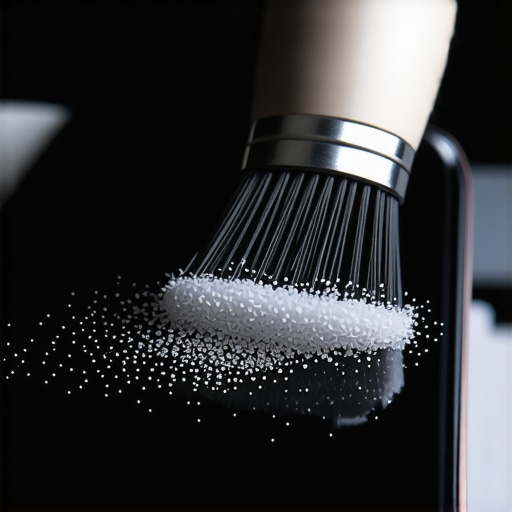
Step one is to utilize a high-pressure, low-volume air source. Do not use your breath, as it contains moisture that can cause the sand to clump, turning it into a corrosive sludge. Instead, use a canister of compressed air held at a 45-degree angle to the Rough Opening of the ports. This mimics how we clear a Sill Pan before setting a heavy glass unit. We want to lift the particles, not drive them deeper. If you have a chip in the glass, you should seek a professional chip repair service immediately, as sand grains can become lodged in the fracture, causing the crack to propagate through the compression layer of the glass. For the surface itself, you should use a specialized polymer, similar to the Shims we use to level a window. A soft, clean brush can be used to gently coax particles away from the Glazing Bead where the glass meets the frame. Never use a circular motion; always brush from the center toward the edge, following the ‘Shingle Principle’ where we direct debris and water away from the primary seal. If you are in a high-salt environment, the corrosion risk to the internal stainless steel hardware is high, so this process must be done with same-day urgency.
“Installation is just as critical as the window performance itself. A high-performance window installed poorly will fail.” – AAMA Installation Masters Guide
Understanding Your Screen’s NFRC Equivalent Ratings
In the window industry, we look at the NFRC label to understand U-Factor and Solar Heat Gain Coefficient. While your phone doesn’t have an NFRC label, it does have a Visible Transmittance rating that is affected by the haze created by micro-scratches. These scratches scatter light, reducing the clarity of your display and increasing the power consumption of your backlight as you try to compensate for the poor visibility. By removing sand correctly, you are preserving the ‘Low-E’ equivalent performance of your screen’s coating. If the coating is already damaged, a mobile service expert might be able to apply a liquid glass protector, which acts as a sacrificial layer, much like the laminated glass we use in storm-prone regions. This layer takes the abuse so the structural pane remains intact. Remember, water management is a science, and glass maintenance is an art. Don’t be the person who tries to ‘caulk’ over a problem. Use the right tools, understand the hardness of the materials you are handling, and always respect the Rough Opening of your technology. If the grit is too deep, don’t risk it. Contact a professional who understands the internal Muntin grid of the display and the delicate Flashing Tape that keeps the whole system Operable. The ROI on proper maintenance is measured in the years of clear, scratch-free service your device provides. Don’t buy into the hype of ‘magic’ cleaning gels; buy into the physics of glass science.