Why you should never charge your phone in a hot car
The Greenhouse Physics of the Modern Vehicle
As a Master Glazier with over two decades of experience handling everything from residential glazing beads to commercial curtain walls, I look at a car windshield differently than most. To a driver, it is a view of the road. To me, it is a high-performance transparent envelope that manages extreme thermal loads. When you leave a smartphone inside a vehicle on a clear afternoon, you are essentially placing it inside a solar oven designed by physics. The glass in your vehicle is optimized for visibility and safety, but its relationship with infrared radiation is what dictates the fate of your electronics. Understanding why you should never charge your phone in a hot car requires a deep dive into the Solar Heat Gain Coefficient (SHGC) and the specific behavior of laminated glass.
The glass installer community often sees the aftermath of thermal mismanagement. A homeowner called me in a panic because their new high-performance windows were ‘sweating’ and their interior electronics were failing. I walked in with my hygrometer and thermal camera and showed them that the humidity was 60 percent while the glass surface temperature was hitting 110 degrees due to improper shading. It wasn’t just the windows; it was their lifestyle and lack of understanding of how glass transfers energy. This same principle applies to your vehicle. When short-wave solar radiation passes through your windshield, it strikes the dashboard and upholstery, where it is absorbed and re-radiated as long-wave infrared radiation. While the glass is transparent to short-wave light, it is opaque to long-wave heat. This heat becomes trapped, a phenomenon known as the greenhouse effect, raising the cabin temperature to levels that exceed the operating tolerances of lithium-ion batteries.
The Critical Role of SHGC and Thermal Expansion
In the glazing industry, particularly in southern climates where the sun is a constant adversary, the Solar Heat Gain Coefficient is the most vital metric we track. It measures how much of the sun’s heat passes through a glazing unit. For a mobile service glass installer, we know that automotive glass is typically a laminated sandwich: two layers of glass held together by a Polyvinyl Butyral (PVB) interlayer. This interlayer is designed to absorb UV radiation and hold the glass together upon impact, but it also becomes a reservoir for heat. When you introduce a charging phone into this environment, you are compounding two different heat sources. The ambient heat from the greenhouse effect is attacking the device from the outside, while the electrical resistance of the charging process creates internal heat. Lithium-ion batteries rely on a delicate chemical balance; when the internal temperature exceeds 110 degrees Fahrenheit, the liquid electrolyte begins to break down, leading to permanent capacity loss or, in extreme cases, thermal runaway.
“Installation is just as critical as the window performance itself. A high-performance window installed poorly will fail.” AAMA Installation Masters Guide
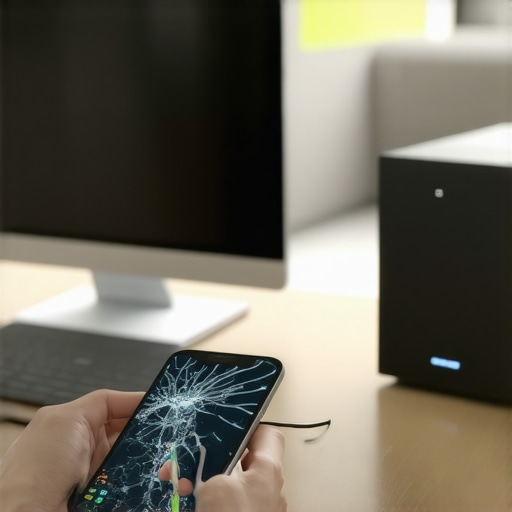
This industry standard applies to mobile glass service as well. If a windshield is not set with the correct rough opening tolerances or if the urethane bead is inconsistent, the glass cannot properly manage the thermal expansion that occurs in the heat of the day. Glass expands when it gets hot. If there is a pre-existing chip in the glass, this expansion creates localized stress. I have seen hundreds of cases where a tiny rock chip, which could have been a simple same-day chip repair, suddenly spider-webs across the entire surface because the owner left the car in the sun with the windows up. The glass expands, the chip acts as a stress concentrator, and the structural integrity of the laminate is compromised. Adding the heat of a charging phone nearby only adds to the localized thermal variance.
Understanding the NFRC Ratings in a Mobile Context
When we talk about performance, we must look at the National Fenestration Rating Council (NFRC) standards. While these are primarily for residential and commercial buildings, the physics remains the same for automotive applications. The U-Factor measures how well a product prevents heat from escaping, but in a hot climate, we are more concerned with the Visible Transmittance (VT) and the SHGC. A mobile service professional knows that a high VT allows more light in, but without a low SHGC, you are inviting a massive heat load. Your phone’s battery is sensitive to this load. Charging a battery involves moving ions through an electrolyte; this movement naturally generates heat. In a cool environment, this heat dissipates into the air. In a car where the interior surfaces have been baked to 140 degrees, there is no thermal gradient for the heat to move toward. The heat stays trapped in the phone, leading to the dreaded ‘Temperature’ warning on your screen.
“The National Fenestration Rating Council (NFRC) provides consistent and accurate information on the energy performance of windows, doors, and skylights to help consumers, architects, and builders compare products.” NFRC Performance Standards Overview
The Mechanics of Mobile Glass Repair and Thermal Stress
If you find yourself needing a glass installer for a same-day chip repair, it is often because of the very thermal cycles we are discussing. A mobile service technician must be careful when performing a repair on a hot day. If we inject resin into a hot windshield, the glass is at its maximum expansion. As it cools, the glass contracts, which can pull away from the repair resin if the chemistry isn’t perfect. We often have to use sunshades or cool the glass slowly before we can begin the work. This same level of care should be applied to your electronics. Charging your phone in a hot vehicle is effectively putting the battery through a ‘stress test’ it was never designed to pass. The heat affects the glazing bead and the trim around your windows as well, causing them to degrade over time. If the seal around your windshield fails due to excessive heat and UV exposure, you risk water leaks that can damage the very electronic systems you are trying to charge.
Practical Steps for Heat Management
To protect your vehicle’s glass and your personal electronics, you must manage the thermal envelope. First, utilize high-quality sunshades that have a reflective outer layer. This reflects the short-wave radiation back out through the glass before it can be converted into long-wave heat. Second, if you have a chip in your windshield, call for a same-day chip repair immediately. Do not wait for the heat of the afternoon to turn that chip into a full-length crack. Third, never leave your phone charging unattended in a parked car. The lack of airflow means the resistive heat from the charger has nowhere to go. We often talk about the ‘Rough Opening’ in a house, which is the space where the window sits; in a car, the entire cabin is the opening, and every seal, from the weatherstripping to the weep holes in the door frames, plays a part in managing the climate. A well-maintained vehicle with intact seals and clear glass will always run cooler than one with neglected glass and failing gaskets.
The Glazier’s Final Word
In my 25 years of experience, I have learned that you cannot fight physics; you can only manage it. The glass in your car is a marvel of engineering, but it is not a perfect barrier. It is a dynamic filter that is constantly reacting to the environment. By understanding the SHGC and the dangers of thermal expansion, you can extend the life of your windshield and your electronics. If you see a crack, don’t wait. A mobile service glass installer can often fix a chip in less than thirty minutes, saving you the cost of a full replacement. Keep your phone out of the sun, keep your glass clear of chips, and remember that heat is the silent enemy of all precision-engineered systems, whether they are made of silicon or glass.