
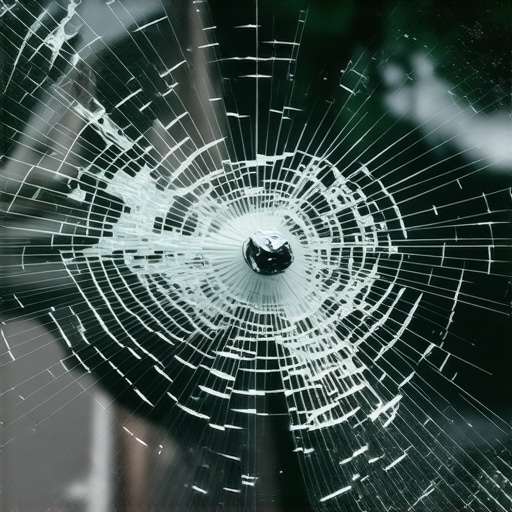
Why 2026 ADAS Fails After Poor Glass Installation and Repair
The Invisible Standard of 2026 Automotive Glazing
When we discuss the 2026 ADAS (Advanced Driver Assistance Systems) suites, we are no longer talking about simple panes of glass. We are discussing an optical lens that happens to be the size of a windshield. As a master glazier with a quarter-century in the trade, I have seen the industry shift from simple rubber-gasket installs to complex structural bonds that integrate LiDAR, radar, and stereoscopic cameras. If the glass installer treats your 2026 vehicle like a 1990 pickup, the safety systems will fail. It is that simple. The tolerances for a rough opening in a modern vehicle’s frame are tighter than any historic wood sash I have ever restored. A deviation of just two millimeters in the glass seat can throw a camera’s pitch off by several degrees, manifesting as a catastrophic failure of the lane-keep assist when you are traveling at seventy miles per hour.
“Installation is just as critical as the window performance itself. A high-performance window installed poorly will fail.” AAMA Installation Masters Guide
The Calibration Ghost: A Narrative of Failure
I pulled a premium windshield out of a high-end sedan last month in Houston where the owner complained the automatic emergency braking kept triggering for no reason. Upon inspection, the header was not rotted like an old house, but the urethane bead was inconsistent. The previous mobile service technician had relied on a standard manual caulk gun instead of a high-pressure electric dispenser, leaving voids in the bond. Because the installer did not use a proper shim to level the glass while the urethane was in its initial tack phase, the windshield slumped. The camera, mounted to the glass, was now looking at the asphalt three feet closer than it should have been. The car’s computer was ‘hallucinating’ obstacles. This is the reality of a ‘caulk-and-walk’ installation in the age of ADAS. The homeowner, or in this case the driver, was lucky the car only braked unnecessarily rather than failing to brake when it mattered.
The Physics of the Refractive Index and Chip Repair
Why does a simple chip repair matter for ADAS? It comes down to the refractive index of the resin versus the glass. When a glass installer performs a repair, they inject a polymer into the break. If that repair is located within the ‘camera window’—the specific area of the glass through which the sensors peer—the light path is altered. Even if the repair looks clear to the human eye, the diffraction of light can blind the sensor. In the 2026 models, the sensitivity of these sensors is dialed so high that a microscopic air bubble in the resin acts like a prism. This is why same-day repairs are often rushed, skipping the critical vacuum stage that removes all air from the break. If you are opting for a mobile service, you must ensure the technician uses a bridge tool capable of maintaining a perfect seal against the glass, or your ADAS will be effectively lobotomized.
Climate Logic: Solar Heat Gain and Sensor Tilt
In hot climates like Texas or Arizona, the Solar Heat Gain Coefficient (SHGC) of the glass is not just about cabin comfort; it is about sensor stability. The glass acts as a heat sink. If an aftermarket glass is used that lacks the proper Low-E coating on Surface #2, the area behind the rearview mirror—where the ADAS brain sits—can reach temperatures exceeding 140 degrees Fahrenheit. This extreme heat causes the plastic brackets holding the cameras to expand at a different rate than the glass. In the glazing world, we call this thermal stress. We see it in operable windows that stick in the summer, and we see it in 2026 vehicles where the camera literally tilts out of alignment due to heat soak. A master glazier knows that for these climates, the glass must be an exact match for the OEM thermal specifications to prevent this ‘thermal drift’ of the safety sensors.
“Proper flashing and sealing are the only defense against moisture intrusion and structural compromise in any glazing system.” ASTM E2112 Standard Practice
The Myth of the Same-Day Mobile Service
We all want convenience, but the physics of mobile service are often at odds with the requirements of 2026 ADAS. For a windshield to become a structural member of the car, the urethane must undergo a chemical cross-linking. This requires specific humidity and temperature ranges. When a technician does an install in a parking lot, they are at the mercy of the environment. If the humidity is too low, the urethane takes longer to reach its Safe Drive-Away Time (SDAT). If the installer moves the car too soon, the glass shifts. In my 25 years, I have seen more weep hole clogs and glazing bead failures from rushed mobile jobs than from any other source. For a 2026 vehicle, the calibration of the ADAS requires a perfectly level floor—something rarely found in a driveway. Without a level surface, the static calibration of the cameras is flawed from the start.
Structural Integrity: The Sill Pan of the Automotive World
In residential glazing, we use a sill pan to manage water. In automotive glazing, the pinch-weld and the cowl serve this function. A poor installation often damages the paint on the pinch-weld with a ‘cold knife’ during the removal of the old glass. If the installer does not prime those scratches, the metal will rust under the new bead of glue. Within two years, the seal will fail, and water will enter the cabin. But more importantly for ADAS, that rust creates a ‘soft’ mount. The glass is no longer rigid. As the car twists during normal driving, the glass flexes, and the ADAS sensors, which require a fixed point of reference, lose their zero-point. You wouldn’t install a sash into a rotted frame; why would you bond a high-tech sensor array to a rusting pinch-weld?
The Mathematics of Comfort and Safety
The ROI on high-quality glass isn’t just in the energy savings of a cooler cabin; it is in the avoidance of a $5,000 ADAS recalibration fee. When a glass installer uses ‘budget’ glass, the thickness of the laminate layers often varies. This variation creates optical distortion. Think of it like looking through an old muntin-filled window with wavy glass. To the human eye, it is a charm; to a LiDAR sensor, it is a wall of misinformation. 2026 safety systems rely on the glass being perfectly uniform. The flashing tape of the auto world is the specialized primer and activator system that ensures the bond is airtight and watertight. If these steps are skipped to provide a cheaper price point, the comfort of your ride is compromised by wind noise, and your safety is compromised by a system that cannot see the road clearly. Do not buy the hype of the lowest bidder; buy the numbers that prove the glass meets the refractive and thermal standards required for modern autonomy.
{ “@context”: “https://schema.org”, “@type”: “HowTo”, “name”: “How to Ensure Proper ADAS Function After Glass Replacement”, “step”: [ { “@type”: “HowToStep”, “text”: “Verify that the glass installer uses OEM or OEE glass that matches the original refractive index and SHGC ratings.” }, { “@type”: “HowToStep”, “text”: “Ensure the vehicle is on a completely level surface before beginning the static calibration process.” }, { “@type”: “HowToStep”, “text”: “Confirm the use of high-pressure urethane dispensing to avoid voids in the structural bond.” }, { “@type”: “HowToStep”, “text”: “Allow the full Safe Drive-Away Time (SDAT) based on current temperature and humidity before moving the vehicle.” } ] }