The truth about cheap replacement glass and your safety cameras
The Invisible Compromise of Budget Glazing
In the world of professional glass installation, there is a recurring nightmare that keeps master glaziers awake at night: the ‘bargain’ pane. To the untrained eye, one sheet of clear glass looks identical to another. But when you are dealing with integrated safety cameras, whether they are high-tech residential security arrays or automotive Advanced Driver Assistance Systems (ADAS), that piece of glass is no longer just a window. It is a lens. I have spent over 25 years in this trade, and I have seen the devastating results of ‘caulk-and-walk’ installers who prioritize speed over optical precision.
The Forensic Reality of Failed Installation
I pulled a poorly manufactured insulated glass unit out of a modern home in a high-wind zone recently and the header was completely black with rot. Why? The previous installer relied on a standard nailing fin instead of proper flashing tape and a dedicated Sill Pan. But the real kicker was the homeowner’s complaint: their expensive AI-tracking security cameras were constantly triggering false alarms. Upon inspection, the glass was so poorly tempered that it had ‘roller wave’ distortion. Every time the sun shifted, the glass acted like a warped mirror, throwing light ghosts across the sensor. This is the reality of choosing price over performance. When you hire a glass installer, you are paying for their ability to manage the physics of a Rough Opening, not just their ability to smear silicone.
“Installation is just as critical as the window performance itself. A high-performance window installed poorly will fail.” – AAMA Installation Masters Guide
The Physics of Optical Aberration
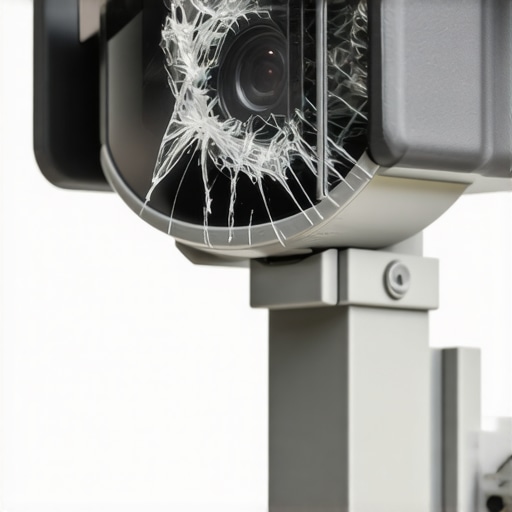
To understand why cheap glass fails your cameras, we have to look at the ‘Float Glass’ process. High-quality glass is created by floating molten silica over a bed of molten tin. The cooling process must be perfectly controlled to ensure the surfaces are parallel. Budget manufacturers often speed up this ‘annealing’ phase. The result is a microscopic variation in thickness across the Sash. When light hits these variations, it undergoes refractive error. For a human eye, it might be a slight shimmer. For a 4K safety camera, it is a catastrophic loss of data integrity. This is especially true if your mobile service provider uses glass with a high iron content, which absorbs more light and reduces the ‘Visible Transmittance’ (VT) required for clear night vision.
The North/Cold Context: Condensation and Clarity
In colder climates, the enemy of the camera is the Dew Point. If your glass installer fails to use a warm-edge spacer or a high-quality Argon gas fill, the inner surface of the glass (Surface #4) will drop below the dew point of the interior air. This leads to condensation. Even a microscopic layer of fog can render a safety camera blind. This is where the U-Factor becomes king. A lower U-Factor means better insulation, keeping the glass surface warm and dry. I always insist on a Glazing Bead that is perfectly seated to prevent any air infiltration that could bypass the thermal break and cause internal fogging between the panes.
The Myth of the Quick Fix
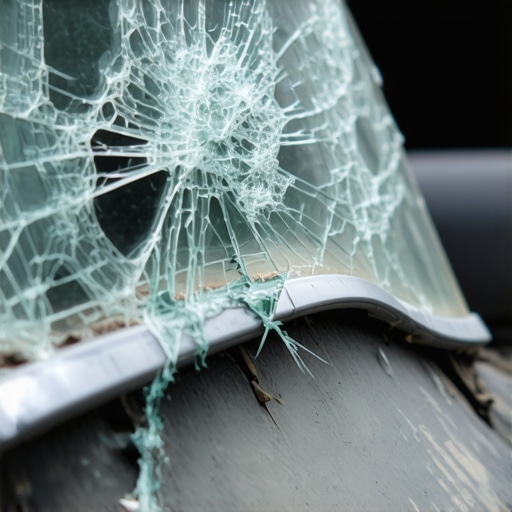
Many people search for same-day solutions or a quick chip repair when they see a small flaw. While resin injection is a miracle of modern chemistry for minor impacts, it has its limits. If a chip is in the ‘critical vision area’ of a camera sensor, a repair will never restore the 100 percent optical clarity required for light-to-frequency conversion in a CMOS sensor. A professional glass installer knows that once the structural integrity of the glass is compromised, the refractive index changes permanently at that point. You cannot ‘sand out’ a defect that sits in front of a safety system without creating a magnifying effect that will confuse the software algorithms.
“The fenestration system must be viewed as a whole, where the glass, frame, and sealant work in unison to maintain the building envelope’s integrity and the clarity of its apertures.” – ASTM E2112 Standard Practice
Structural Integrity: More Than Just a Pane
When we install a new window, we are looking at the Rough Opening tolerances. If the frame is Shimmed improperly, it puts stress on the glass. This stress can cause ‘birefringence,’ where the internal tension of the glass actually changes the polarization of the light passing through it. Most modern security cameras use polarized filters to cut down on glare. If your glass is under stress because the glass installer forced a Sash into a non-square opening, your camera’s image will appear dark or blotchy. We must ensure every Operable unit moves freely and every fixed unit is floated within the frame to avoid these optical death traps.
The Role of the Modern Glazier
The trade has changed. We are no longer just ‘window guys.’ We are technicians who must understand the ‘Shingle Principle’ of water management while simultaneously calculating the Solar Heat Gain Coefficient (SHGC). In a south-facing installation, we might use a Low-E coating on Surface #2 to reflect heat, but we must ensure that coating doesn’t interfere with the specific infrared wavelengths used by your camera’s night vision. A ‘cheap’ glass often uses a heavy-handed metallic coating that blocks the very signals your safety system needs to function. It is about the balance between thermal efficiency and spectral transparency.
Conclusion: Buying the Numbers, Not the Hype
Don’t be swayed by the mobile service that promises the world for a few hundred dollars. If they can’t explain the difference between a Muntin and a Glazing Bead, or if they don’t understand how a Weep Hole prevents pressure-mottling on the glass edge, they shouldn’t be touching your home or vehicle. The Rough Opening of your home is a gateway for both light and energy. Respect it by choosing glass that meets the rigorous NFRC standards for both durability and optical purity. Your safety cameras are only as good as the glass they look through. Invest in a specialist who treats every installation like the high-precision optical alignment that it truly is.