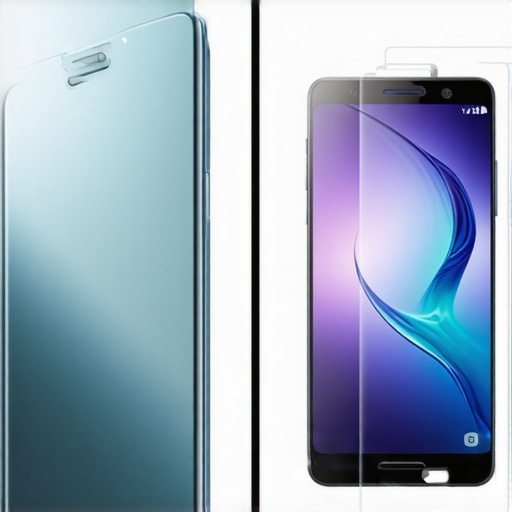
The truth about liquid glass screen protectors
The Invisible Science of Surface Coatings
In the twenty-five years I have spent as a professional glass installer, I have seen every gimmick in the trade. I have watched installers use cheap silicone instead of proper flashing tape and I have seen homeowners try to fix structural issues with a bucket of caulk. Lately, the buzz has shifted toward liquid glass screen protectors. People ask me if this technology can truly protect a device the way a tempered sash or a laminated architectural pane protects a building. To understand the truth, we have to stop looking at the glass as a solid, smooth object and start looking at it through the lens of molecular physics and thermal dynamics.
A homeowner recently called me in a panic because their new high-efficiency windows were ‘sweating’ profusely. I arrived at the site with my hygrometer in hand. I showed them that the humidity inside the house was sitting at 60 percent. It was not a failure of the window seal or the glazing bead; it was their lifestyle and the lack of mechanical ventilation. They thought a chemical spray could stop the physics of the dew point. This same misunderstanding of physics applies to liquid glass. People expect a wipe-on liquid to act as a structural chip repair solution, but glass does not work that way. Whether we are talking about a skyscraper’s curtain wall or the screen in your pocket, the rules of surface tension and hardness are absolute.
The Molecular Reality of SiO2 Coatings
Liquid glass is essentially a solution of Silicon Dioxide (SiO2) suspended in a solvent, typically ethanol or water. When you apply this to a surface, the solvent evaporates, leaving behind a nanoscopic layer of glass. From a glazier’s perspective, this is a form of ‘cold glazing.’ In architectural glass, we deal with Low-E coatings that are applied in a vacuum chamber through a process called magnetron sputtered vacuum deposition. Liquid glass is the ‘light’ version of this. It does not create a new piece of glass; it fills the microscopic voids in the existing surface.
When a manufacturer produces float glass, the surface looks smooth to the naked eye. However, under a microscope, it looks like a series of peaks and valleys. This is where chip repair becomes relevant. A mobile service technician knows that a chip is a fracture that has breached the surface tension. Liquid glass is far too thin to bridge a structural fracture. It is designed to fill the microscopic pores, reducing the surface area where oils and dust can collect. This is why these protectors are often marketed as ‘oleophobic.’ They aren’t making the glass stronger in a meaningful way; they are making it smoother.
“Installation is just as critical as the window performance itself. A high-performance window installed poorly will fail.” AAMA Installation Masters Guide
The Hardness Myth and the Mohs Scale
The marketing for liquid glass often cites a ‘9H hardness.’ As a professional who has worked with everything from annealed glass to hurricane-rated laminates, I find this terminology misleading. 9H refers to the pencil hardness scale, not the Mohs scale of mineral hardness. A standard piece of smartphone glass is already around a 6 or 7 on the Mohs scale. To provide actual protection against a dropped phone or a flying rock, you would need a material that increases the structural thickness or the elastic modulus of the assembly. Liquid glass, being only a few nanometers thick, adds zero structural integrity to the rough opening of the device frame.
In the world of professional glazing, if we need impact resistance, we don’t reach for a bottle of liquid; we use tempered glass or polycarbonate. Tempered glass is created by heating the glass to over 1,000 degrees Fahrenheit and then rapidly cooling it. This creates a state of permanent compression on the surface. If you drop a phone with a liquid protector, the glass will still flex beyond its breaking point because there is no sacrificial layer to absorb the energy. A physical tempered glass protector acts like a sill pan in a window installation; it is the first line of defense that takes the brunt of the impact so the underlying structure stays dry and intact.
Thermal Dynamics and Surface Emissivity
One aspect people overlook is how these coatings affect the thermal properties of the glass. In cold climates like Chicago or Minneapolis, we worry about the U-Factor, which measures heat loss. A lower U-Factor means the window is a better insulator. While a liquid screen protector won’t change your U-Factor, it does change the surface emissivity. In a hot climate like Phoenix, we prioritize the Solar Heat Gain Coefficient (SHGC). We want the glass to reflect long-wave infrared radiation. High-end liquid coatings can slightly alter how heat is felt on the touch-screen, but they cannot replace the performance of a thermally broken frame or a gas-filled IGU (Insulated Glass Unit).
“The surface condition of glass, including coatings and contaminants, significantly alters its mechanical durability and resistance to environmental degradation.” ASTM E2112 Standard Practice
When you hire a mobile service for same-day glass work, you are paying for the technician’s ability to manage the rough opening and ensure the shim placement is perfect. The same logic applies to glass protection. If the application is not done in a clean-room environment, you are simply sealing in dust and oils. This is why professional glass installer experts rarely rely on wipe-on solutions for anything other than basic water repellency. We know that a weep hole in a window frame is there for a reason; you cannot just seal everything up and hope for the best. You have to manage the environment.
The Final Verdict on Liquid Protection
Does liquid glass have a place? Yes, as a secondary coating to improve the ‘hand feel’ of the device and provide minor scratch resistance against sand (which is also SiO2). But it is not a replacement for a physical barrier. If you are looking for same-day peace of mind, you are better off with a physical tempered protector. Just like an operable window needs a proper muntin and sash to function correctly over decades, your device needs physical protection that understands the limits of glass. Do not be fooled by the marketing; physics cannot be bypassed by a liquid. When the pressure is on, and that glass hits the pavement, the nanoscopic layer will not be the thing that saves your screen. Real protection comes from thickness, compression, and proper installation. Trust the numbers, not the hype.