The specific reason your phone screen looks blue from an angle
The Glazier’s Perspective: Why Clear Glass is an Optical Illusion
In my twenty-five years as a glass installer, I have seen the industry shift from simple single-pane float glass to complex, multi-layered optical stacks. Most people look at a window or a phone screen and see a transparent surface. I see a high-stakes battle of physics involving photons, refractive indices, and dielectric layers. When a customer asks why their phone screen looks blue from an angle, they are asking the same question a homeowner asks when they notice a slight tint in their high-performance Low-E windows. The answer is not a defect: it is the fingerprint of advanced spectral selectivity.
A homeowner called me in a panic because their new windows were ‘sweating.’ I walked in with my hygrometer and showed them the humidity was 60%. It wasn’t the windows; it was their lifestyle. But more importantly, while we were looking at the condensation, they pointed at the glass from a sharp angle and asked why it looked like there was a blue oil slick on the surface. That client thought they had been sold a ‘seconds’ batch of glass. In reality, they were witnessing the physics of thin-film interference. This is the same principle that dictates why your mobile device shifts toward the blue or violet spectrum when you tilt it. Whether we are talking about a six-foot-tall operable sash or a six-inch-wide mobile screen, the laws of optics remain constant. We are dealing with thin films designed to manipulate light, and those films have a specific design angle.
The Anatomy of the Blue Shift: Thin-Film Interference
To understand the blue shift, we must first discuss the coating process. In the world of architectural glass, we use a process called DC magnetron sputtering to apply silver and metal oxide layers to the glass. These layers are measured in nanometers. We often apply these to Surface #2, which is the inward-facing side of the exterior pane in a dual-pane unit. For mobile devices, the glass undergoes a similar process, though it often involves chemical tempering through ion exchange, where smaller sodium ions are replaced by larger potassium ions to create a state of high compression. This compression makes the glass incredibly tough, but the coatings on top of that glass are what cause the color shift.
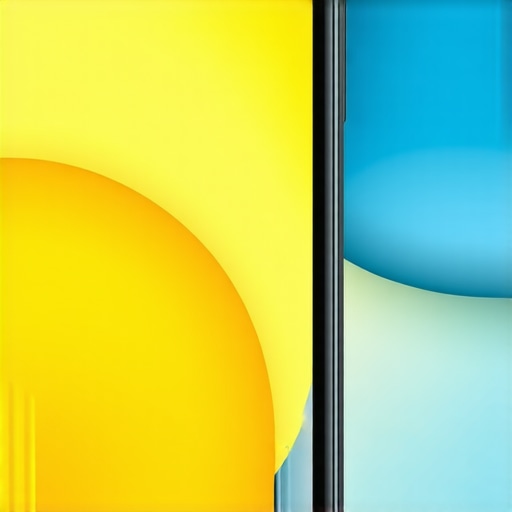
These coatings are designed to be anti-reflective. They use destructive interference to cancel out reflections. When light hits the coating, some reflects off the top surface and some reflects off the layer beneath it. If the thickness of the coating is exactly one-quarter the wavelength of the light, the two reflections cancel each other out. This is why high-end optics look ‘invisible’ when viewed head-on. However, when you tilt the screen or look at the window from an angle, the light has to travel a longer path through those coating layers. This change in the optical path length shifts the ‘tuning’ of the interference. Instead of canceling out the green or yellow parts of the spectrum, the system begins to allow shorter wavelengths, specifically the blue and violet ends of the spectrum, to become visible. This is not a failure of the glass installer: it is an inescapable reality of light moving through a medium with a different refractive index.
“Installation is just as critical as the window performance itself. A high-performance window installed poorly will fail.” – AAMA Installation Masters Guide
While that quote refers to the structural integrity of a window in a rough opening, it applies metaphorically to the optical stack of a screen. If the layers of the dielectric stack are not applied with absolute precision, the color shift becomes erratic. In high-performance glazing, especially in hot climates like Phoenix or Florida, we prioritize a low Solar Heat Gain Coefficient (SHGC). We want the glass to block the sun’s heat while letting in visible light. To achieve this, we use coatings on Surface #2 that reflect long-wave infrared radiation. These coatings are spectrally selective, meaning they ‘choose’ which wavelengths to let through. The blue shift you see on your phone is essentially the same spectral selectivity in action, just tuned for a different purpose.
The Critical Role of Surface #2 in Climate Control
In a southern climate, the enemy is the sun. We are not just trying to stop the air from moving: we are trying to stop the radiant energy from entering the building. When we install a window, we ensure the Low-E coating is on Surface #2. If it were on Surface #3, the heat would be absorbed by the glass and then re-radiated into the house, defeating the purpose of the high-performance glazing. The blue tint often associated with these high-performing units is a result of the silver layers used to reflect that heat. Just like a mobile device, when you stand at the end of a long hallway and look at a series of windows, you will notice that the glass looks more ‘saturated’ with color than when you look at it straight on. This is because your angle of incidence is increasing, which lengthens the path light takes through the silver atoms.
For those in the mobile service industry, this has massive implications for chip repair and glass replacement. When a technician performs a same-day chip repair on a windshield or a mobile screen, they aren’t just filling a hole with plastic. They are using a resin that must match the refractive index of the glass perfectly. If the resin’s refractive index is off by even a fraction, the repair will be visible because it will bend light differently than the surrounding material, creating a ‘halo’ effect. This is why professional glass installer services are required: a DIY kit cannot account for the spectral properties of modern, coated glass.
Understanding the NFRC Labels and Performance Metrics
When evaluating glass, whether for a high-rise or a handheld device, we look at several key metrics. The U-Factor tells us about heat loss, but the SHGC and Visible Transmittance (VT) are what define the ‘look’ of the glass. A window with a very low SHGC often has a lower VT, meaning it might look slightly darker or have a more pronounced color shift. In the glazing industry, we refer to this as the ‘color rendering index’ of the glass.
“The NFRC provides a fair, accurate, and credible rating system for the energy performance of windows, doors, and skylights.” – NFRC Certification Guide
If you are seeing a blue shift, it means your device or window is doing its job. It is filtering out specific wavelengths to protect the underlying components or to keep your home cool. In the context of a mobile device, these coatings are often designed to reduce blue light emission or to minimize glare from overhead lights. The same-day service technicians who replace these screens must ensure that the replacement glass meets the original manufacturer’s specifications for these coatings, or the user experience will be degraded.
Trade Cant: The Complexity of the Opening
Installing a window involves more than just dropping a frame into a hole. We have to consider the rough opening and the tolerances allowed for shimming. If a frame is bowed during installation because the installer was a ‘caulk-and-walk’ amateur, the glass will be under stress. This stress can actually change the optical properties of the glass, a phenomenon known as photoelasticity. You might see strange patterns or ‘oil spots’ in the glass, which are actually areas of high stress where the refractive index has been physically altered. We use a sill pan and flashing tape to ensure water management, but the glazing bead and the way the glass is held in the sash are what determine its long-term optical clarity.
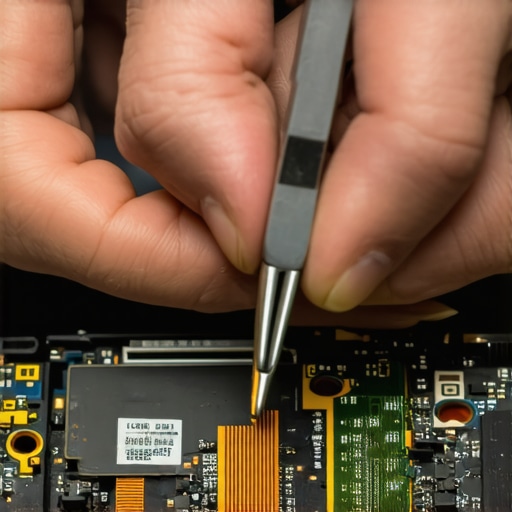
In mobile glass, we don’t have a traditional sash, but we have the frame of the phone. When a mobile service technician performs a screen replacement, they are essentially managing a micro-installation. The adhesive used acts as the flashing tape, preventing moisture from entering the sensitive internal components. A weep hole in a window allows water to escape the frame, but in a phone, we rely on a hermetic seal. If that seal fails, you get internal condensation, which is the death knell for electronics.
The ROI of Quality Glass
There is a common myth that new windows will pay for themselves in energy savings in just a few years. In reality, the ROI is often measured in decades. However, the ROI in comfort and visibility is immediate. The same applies to mobile devices. Using a glass installer who understands the technical nuances of coatings and chip repair ensures that the device remains functional and clear. A poor repair or a cheap replacement screen will lack the sophisticated dielectric stack required to manage glare, leading to eye strain and poor visibility in direct sunlight.
When you see that blue shift, remember that you are looking at a marvel of modern engineering. You are seeing the result of layers of metal and metal oxides, each only a few atoms thick, working in concert to manage the electromagnetic spectrum. Whether it is a large-scale commercial project or a quick chip repair on a smartphone, the science of glazing is what allows us to live and work in environments filled with light while still protecting us from the elements. Don’t settle for installers who don’t understand the dew point or the importance of a properly tuned optical stack. Glass is not just a commodity: it is a high-performance building material that requires expert handling.
[IMAGE_PLACEHOLDER]