The exact moment a rock chip becomes unrepairable
The Structural Integrity of Laminated Glass: Identifying the Point of No Return
In my twenty five years as a Master Glazier, I have learned that glass is not a static material. It is an amorphous solid that behaves like a slow moving liquid over decades, yet reacts with violent precision to thermal and mechanical stress. When we talk about a rock chip, we aren’t just talking about a cosmetic blemish on your field of vision. We are discussing a structural breach in a multi layered safety system. A window, whether it is a high performance storefront or a laminated windshield, is a managed hole in a structure. Once that management is compromised by a high velocity impact, the clock starts ticking toward a total structural failure.
The Condensation Crisis: A Master Glazier’s Perspective
I recall a specific incident that perfectly illustrates the volatility of glass tension. A driver called me in a panic because their new windshield had ‘spontaneously’ cracked across the entire passenger side. I walked out to the vehicle with my hygrometer and a thermal imaging camera. It was a frigid morning in Minneapolis, and I showed them the interior humidity was spiked at nearly 65 percent from a damp floor mat. They had jumped in the car, cranked the defroster to maximum heat, and directed that concentrated thermal energy right onto a tiny, neglected rock chip near the base. It wasn’t a glass defect; it was a failure to respect the laws of thermodynamics. The moisture trapped in the pit of that chip froze, expanded, and then the sudden heat created a massive thermal gradient. The glass did exactly what physics dictated: it relieved the stress by propagating a crack. This wasn’t a ‘sudden’ event; it was the inevitable conclusion of an untreated chip.
“Installation and maintenance are just as critical as the glass performance itself. A high performance glazing unit that is compromised by impact or improper handling will fail under normal environmental loads.” – NGA (National Glass Association) Technical Manual
The Anatomy of a Fracture: Why Every Chip is Different
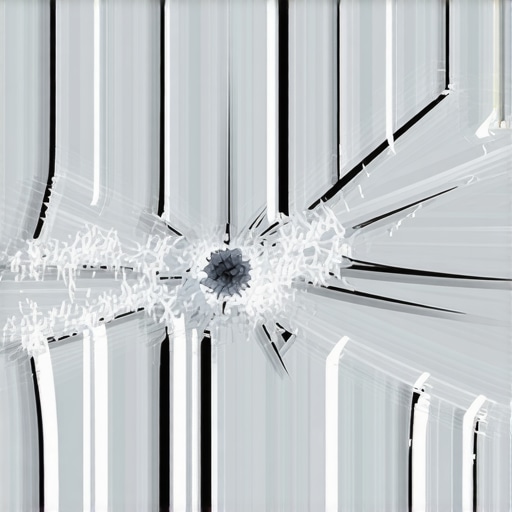
To understand when a chip becomes unrepairable, we must perform a structural autopsy on the break itself. In the glazing trade, we categorize these impacts by their fracture pattern. You have the Bullseye, which is a clean, circular break in the first layer of the laminated stack. Then there is the Star Break, which features micro cracks radiating from a central point. The most dangerous is the Combination Break, which involves both a pit and radiating legs. In architectural glazing, we look at the ‘Rough Opening’ tolerances to ensure glass doesn’t bind. In automotive glass, the entire frame acts as a tensioned environment. If a chip is located within the ‘acute area’ (the driver’s direct line of sight) or within two inches of the glass edge, the repairability drops significantly. An edge crack is particularly lethal to the glass because the perimeter is where the most significant stress is concentrated due to the bonding agents and the Frit (the black ceramic paint) absorbing more heat than the clear center.
The Critical Dimensions: When the Resin Fails
As a glass installer, I tell my apprentices that the Resin used in chip repair is a marvel of chemistry, but it is not magic. For a chip repair to be successful, the resin must have a refractive index nearly identical to the glass itself. It must also be able to penetrate the entire depth of the fracture in the outer layer of the laminated stack. The general rule of thumb used by any reputable glass installer is the ‘Quarter Rule.’ If the diameter of the impact point exceeds one inch (roughly the size of a quarter), the structural bond of the PVB (Polyvinyl Butyral) interlayer may be compromised. Once air and moisture penetrate that plastic interlayer, the glass begins to delaminate. You will see this as a milky white haze around the break. At that point, no amount of vacuum pressure or UV cured resin will restore the structural integrity. You are no longer looking at a repair; you are looking at a full replacement.
The Enemy: Thermal Stress and Environmental Loading
In northern climates like Chicago or Minneapolis, the primary enemy of a rock chip is the U-Factor and the resulting thermal shock. During winter, the exterior surface of your glass can be sub zero while the interior surface is being blasted with 120 degree air from the heater. This creates a massive ‘Delta T’ (temperature difference). Because glass has a specific coefficient of thermal expansion, the hot side wants to expand while the cold side stays rigid. The rock chip acts as a stress concentrator, a ‘weak link’ where the tension is focused. If you don’t utilize a mobile service for same-day repair, that chip will almost certainly ‘run’ the first time you use your defroster. We aren’t just filling a hole; we are restoring the surface tension of the glazing unit to prevent this catastrophic expansion.
“Standard practice for the repair of laminated automotive glass requires that the impact must be stabilized before environmental stresses cause the fracture to propagate beyond the repairable limits defined by the ROLAGS standard.” – ASTM E2112 Installation and Repair Guidelines
The Process of Professional Restoration
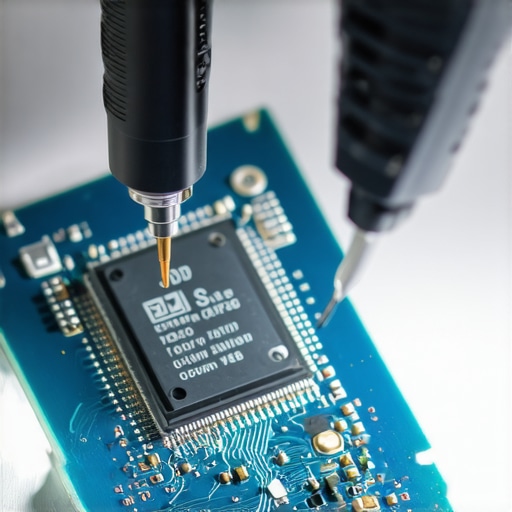
A true master doesn’t just ‘caulk and walk’ a glass repair. The process requires technical precision. First, we must clear the Rough Opening of the pit using a specialized drill to remove crushed glass and debris. If any moisture is present, it must be evaporated, or the resin will not bond. We then apply a vacuum bridge over the break to evacuate all air from the microscopic cracks. Using a high grade acrylic resin, we inject the material under pressure. This isn’t just about appearance; it’s about structural reinforcement. The final step is curing the resin with a specific UV wavelength to ensure it reaches its maximum shear strength. If a technician skips the vacuum phase, you are left with air pockets that will eventually expand and cause the repair to fail. This is why same-day service is vital. The longer you wait, the more road grime, windshield washer fluid, and wax from car washes get driven into the break. These contaminants act as bond breakers for the resin.
Why Mobile Service and Speed are Structural Requirements
Many people view mobile service as a mere convenience. In the glazing world, we view it as a necessity for preservation. Every mile you drive with an open rock chip, the vibrations of the road and the wind pressure (aerodynamic loading) are working to widen those microscopic fissures. A glass installer who comes to you is catching the glass in its most stable state. By performing a chip repair before the vehicle undergoes another thermal cycle, the success rate increases by nearly eighty percent. When I see a ‘spider web’ crack that has moved across the glass, I often ask the owner when it started. Usually, it was a tiny pit they ignored for a week. In this trade, procrastination is the most expensive mistake you can make. You go from a simple resin injection to a complex removal of the Sash or windshield, involving new seals, recalibration of ADAS sensors, and significantly higher costs.
The Final Verdict on Repairability
To summarize, a rock chip is unrepairable if it meets any of the following criteria: First, if it is larger than a one inch diameter. Second, if the crack has reached the edge of the glass, which compromises the perimeter seal and structural bond. Third, if the impact has penetrated both layers of the laminated glass (this is rare but happens with heavy debris). Fourth, if the ‘pit’ is so contaminated with dirt or oils that the resin cannot achieve a clear bond. As a specialist with over two decades in the field, my advice is to treat your glass with the respect it deserves. It is the only thing standing between you and the elements at sixty miles per hour. Don’t wait for the ‘Defroster Disaster’ to turn a minor fix into a major replacement. Seek professional same-day service the moment you hear that dreaded ‘pop’ against your glass. Structural integrity is not something you can negotiate with once the laws of physics take over.