The difference between glass resin and standard glue
Understanding the Molecular Bond: Why Surface Fixes Fail
As a Master Glazier with over a quarter-century in the field, I have seen every imaginable shortcut taken in the glass industry. One of the most egregious errors is the confusion between a structural glass resin and a standard adhesive or ‘superglue.’ To the untrained eye, both are clear liquids that harden. To a professional glass installer, the difference is the difference between a permanent chip repair and a catastrophic structural failure. When a window or windshield is compromised, the physics of the glass change instantly. You are no longer dealing with a solid surface; you are dealing with an interrupted crystalline structure that is subject to intense thermal stress and mechanical vibration.
I recall a specific instance that highlights this perfectly. A homeowner called me in a panic because their new architectural windows were ‘sweating’ and the small crack they tried to fix themselves had spidered across the entire lite. I walked in with my hygrometer and thermal camera and showed them that the humidity was nearly 60 percent, but more importantly, the ‘glue’ they used had trapped moisture inside the fracture. By using a standard hardware-store adhesive, they had sealed in the very humidity that was now expanding and contracting with every temperature shift. It wasn’t the window’s fault: it was the failure to understand that glass resin is engineered to displace air and moisture, whereas standard glue merely sits on top and traps it. This is why a mobile service that offers same-day repair must be equipped with high-grade resins, not off-the-shelf adhesives.
“Installation is just as critical as the window performance itself. A high-performance window installed poorly will fail.” AAMA Installation Masters Guide
The Physics of Refractive Indices and Light Transmission
When we talk about chip repair, we are really talking about optics. Standard glue has a refractive index that differs significantly from borosilicate or soda-lime glass. When light hits a crack filled with standard glue, the light bends at a different angle, making the repair look like a smear of grease. Professional glass resin is chemically formulated to match the refractive index of the glass (approximately 1.51 to 1.52). This is what we call ‘Glazing Zooming’: we aren’t just filling a hole; we are restoring the path of light through the substrate. A master glass installer knows that if the resin doesn’t match the light-bending properties of the pane, the structural integrity is moot because the visual clarity is ruined.
In northern climates where the U-Factor is the king of metrics, the performance of the repair resin is even more vital. In cities like Chicago or Minneapolis, the internal temperature of the glass might be 70 degrees while the exterior is negative ten. This creates a massive thermal gradient across the thickness of the glass. Standard glues are brittle; they do not have the elasticity to handle the Coefficient of Thermal Expansion (CTE) of the glass. The resin, however, is designed to expand and contract at a rate nearly identical to the glass itself. Without this synergy, the first time you turn on your defroster or heater, the ‘glue’ will pop out of the sash or the chip will propagate into a full-blown crack that reaches the glazing bead.
The Role of Capillary Action and Viscosity
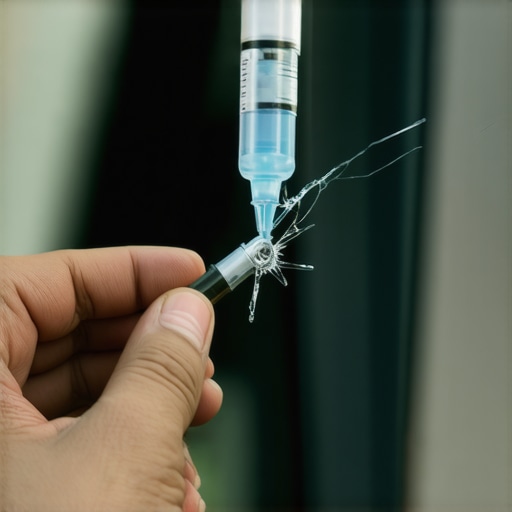
The technical superiority of resin lies in its viscosity. Standard glues are often too thick to penetrate the microscopic fissures of a star-break or a bullseye. Professional resins come in various weights, measured in centipoise (cP). A mobile service technician will assess the ‘Rough Opening’ of the crack and choose a resin with a low enough viscosity to use capillary action to pull itself into the very tip of the fracture. This ensures that no air pockets remain. Air pockets are the enemy of thermal performance; they act as tiny heat sinks that cause localized stress points. When we perform a same-day repair, we use vacuum pressure to evacuated the air before injecting the resin, something no standard glue bottle can achieve.
“Proper materials and methods for the installation of windows are essential to ensure the long-term performance of the building envelope.” ASTM E2112 Standard Practice
Consider the Rough Opening of a window frame. We use a shim to level the frame and flashing tape to manage water. The resin performs a similar role at the molecular level. It acts as the sill pan for the crack, directing stress away from the weak point and back into the structural body of the glass. If you use a standard adhesive, you are essentially skipping the weep hole in a window design: you’re giving the energy nowhere to go, so it breaks the glass. A professional glass installer understands that the muntin and sash provide the macro-structure, but the resin provides the micro-structure necessary for an operable window to remain safe over time.
UV Curing vs. Evaporative Drying
Another major technical divide is the curing process. Standard glues rely on evaporation or moisture-tripped reactions (like cyanoacrylates). This leads to shrinkage. As the solvent leaves the glue, the volume of the material decreases, leaving gaps in the repair. Professional glass resin is UV-cured. It is a cross-linking polymer that undergoes a phase change when exposed to specific ultraviolet wavelengths. There is virtually zero shrinkage. This maintains the ‘plug’ in the glass, ensuring that the chip repair remains airtight and watertight for the life of the lite. This is critical for same-day results: we don’t wait for a solvent to dry; we use a UV lamp to trigger a molecular bond in seconds, allowing the mobile service to move to the next job while the customer has a fully restored window.
Conclusion: The Professional Choice
Ultimately, relying on standard glue for glass work is a ‘caulk-and-walk’ mentality that has no place in high-end glazing. Whether you are dealing with a sash in a historic home or a modern operable storefront, the materials must match the engineering of the glass. The difference between resin and glue is the difference between a permanent restoration and a temporary mask. Always choose a glass installer who understands the chemistry, the physics, and the climate-specific needs of your glazing. “, “image”: {“imagePrompt”: “A close-up, high-detail macro photograph of a professional glazier using a vacuum injection tool to repair a bullseye chip in a glass pane. The resin is visible as a clear liquid filling the fracture, and a UV curing lamp is positioned nearby. The background shows a mobile service van.”, “imageTitle”: “Professional Resin Injection for Glass Repair”, “imageAlt”: “A technician performing a professional glass chip repair using structural resin and a UV curing tool.”}, “categoryId”: 0, “postTime”: “”}